Tracking environmental temperature changes for their impacts on food safety is increasingly important, as just a few degrees of change will shape how food risks develop and unfold, according to recent research.
Researchers from the U.S. Department of Agriculture’s Agricultural Research Service are using a bioplastic coating to naturally shield seeds from Aspergillus, a type of fungi that produces aflatoxin. Exposure to aflatoxins is a food safety issue due to the compound’s carcinogenic and other harmful effects.
The European Commission has recently updated its import controls regulation to increase checks for aflatoxins, pesticides, and microbiological contaminants.
The EU experienced more food safety notifications through its online Rapid Alert System for Food and Food Network in 2021 than in years prior, with pesticides, food contact materials, and fraud highlighted in a Administrative Assistance and Cooperative Network
report.
A recent study determined that ozone may be an effective way to reduce fungi and aflatoxin in nuts, although ozonation could affect the nutritional value of foods at long exposure times.
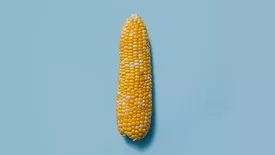
At the IAFNS 2022 Annual Meeting and Science Symposium, Dr. Felicia Wu discussed her recent study that suggests aflatoxin will become an increasing problem for U.S. corn producers—especially in the Corn Belt—and explored possible solutions.