Food Safety
search
Ask Food Safety AI
cart
facebook twitter linkedin
  • Sign In
  • Create Account
  • Sign Out
  • My Account
Food Safety
  • NEWS
    • Latest News
    • White Papers
  • PRODUCTS
  • TOPICS
    • Contamination Control
    • Food Types
    • Management
    • Process Control
    • Regulatory
    • Sanitation
    • Supply Chain
    • Testing and Analysis
  • PODCAST
  • EXCLUSIVES
    • Food Safety Five Newsreel
    • eBooks
    • FSM Distinguished Service Award
    • Interactive Product Spotlights
    • Videos
  • BUYER'S GUIDE
  • MORE
    • ENEWSLETTER >
      • Archive Issues
      • Subscribe to eNews
    • Store
    • Sponsor Insights
    • ASK FSM AI
  • WEBINARS
  • FOOD SAFETY SUMMIT
  • EMAG
    • eMagazine
    • Archive Issues
    • Editorial Advisory Board
    • Contact
    • Advertise
  • SIGN UP!
Supply ChainTraceability/Recall

The Future of Food Traceability
June 6, 2017

So what’s on the horizon for food traceability? Let’s look at consumers, the food supply itself and technology.

First, the consumers. The consumers of the future are conscious consumers. No longer do they passively consume foods based on what’s available, nor do they consume in isolation without thinking about the broader repercussions of their lifestyles. The consumer of the future tends to think about the nexus of food, water and energy as well as health and wellness. Recognizing how challenges in one area affect all others, for example, how food insecurity drives poor health as does scarcity of water due to climate change. Consumers consciously think about the impact their choices are having on the world around them. This will put increasing pressure on regulators and industry to do the right thing by being socially responsible, engaging in fair trade and eliminating illegal or unsustainable food production practices. Without traceability, none of that would be possible.

At the same time, the next generation would like to track all aspects of their lives using personalized tracking. However, portability and tracking is not enough. They would also like it to be personalized to meet their tastes and lifestyles, for example, how an iPod or iPhone can be customized with apps to match one’s tastes. Even consider the new Coca Cola vending machines that can mix and match nearly 250 flavors on the spot: Can you imagine the epidemiological and traceability implications of an outbreak associated with such technologies?

Finally, there is the trend of citizen science. Consumers of the future through the internet and using social media are likely to decide what a fact is and what a myth is regardless of what peer-reviewed science has to say about it. This creates a void for trust, a void potentially filled by celebrities. Celebrity science also poses significant challenges and opportunities when it comes to differentiating beliefs from facts from plain wishful thinking. Consumer perception is a big driver today in driving innovation in the food industry: It will be even more so in the future because most importantly, the consumer of the future is empowered to impact change.

Let’s turn to food next.

As you know, it is a global food supply. For example, while the U.S. produces the most tomatoes, Mexico accounts for 71 percent of tomato imports and Canada accounts for 27 percent. Fourteen percent of the raw buffalo milk used for mozzarella is made in Italy, while 86 percent of buffalo milk is produced in Asia.

Additionally, China produces 47 percent of mushrooms across the globe, followed by the U.S., which produces only 11 percent. Fifty-six percent of our anchovies are produced in Peru, while pizza anchovies come from Argentina, Croatia, Spain and Italy.

More than 11 percent of India’s spices are exported to the United Arab Emirates, the U.S., Europe and Malaysia, and 95 percent of unprocessed peppers are exported through China, India and the U.S.

Furthermore, 2.5 billion pounds of beef were exported to top markets in Canada, Japan, Mexico, South Korea and Hong Kong.

Are the changes in the food supply evolutionary or revolutionary? Evolutionary changes are defined as slow gradual changes that over a long period of time result in a dramatic shift in the norm. Revolutionary changes are defined as those that disrupt the status quo and transform an idea, an industry or a way of life overnight. For example, 3D printing is one such revolutionary technology that has opened up whole new possibilities for the food industry. Imagine a world where consumers can print their own foods on-demand as needed and only as much as they need, essentially eliminating food waste and food loss! But along with those opportunities come a great deal of challenges. Can you imagine the food safety implications of 3D printed foods? Who is liable? Who is responsible for ensuring the safety and quality of those foods? What are the regulatory implications of overseeing 3D printed foods? The economics and dynamics of the food system would change if 3D printed foods ever became a mainstream source of nutrition. Finally, what are the traceability implications of such foods? Are we tracking and tracing the protein-based ink used in these printers? The future of foods is incredible and incredibly scary at the same time.

Finally, technology is on the horizon.

A typical food supply chain today is considered linear from suppliers of raw agricultural commodities through producers and processors through distributors to retailers and finally consumers. However, the reality is a complex system of systems with interconnected network of nodes and edges making a complex web of the value chain.

The number of interfaces and exchanges our food go through today is mind-boggling. Without technology and advances in technology, managing this complex web is not just difficult, it’s impossible.

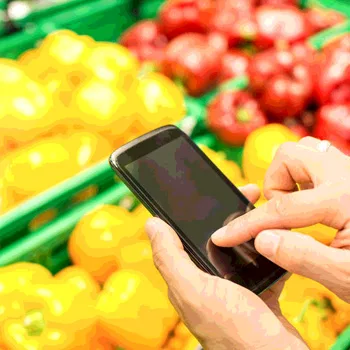
Innovations in technology is going to result in a food traceability system that becomes ubiquitous, from nanochip implants that can autonomously track and trace its host—whether a food, its case, its carrier or its consumer—through smart carts that can detect those nanochips to automatically check a shopper out from a retail store. There are also smart refrigerators that can detect when a particular food item is running low (e.g., a milk carton based on a weight sensor) and automatically order fresh groceries through the Internet. What if we can also program the technology to detect for spoilage or contaminants that would automatically trigger an alert for the consumer? That could mean the end of the currently confusing code dating practice within the food industry. Now if only we can use this same technology to track and trace our foods as it flows through the global supply chain. Consumers could use their smartphones to scan a barcode or other communication tag to automatically identify the source of the foods they are eating as well as any other value added information.

The technology of the future is not just smart, it’s eerily intelligent. There are currently in development traceability technologies that use DNA, genetic, molecular or radioisotope tracking to automatically track, trace and test foods as they move through their value chain. The key to the future of possibilities is turning all this data into meaningful information; to use this information to gain knowledge; and to act upon that knowledge to gain an understanding of the way we produce and consume our foods. No easy task, but it’s coming our way, whether we like it or not.

The bottom line to the future of food technology is reflected by the following list of clichés: “the future is coming,” “nothing is permanent but change” and “surprise is inevitable being unprepared is not.” There are several regulatory, industry and technology drivers that will influence this change. Most importantly, the future of traceability is in a revolutionary phase that will be about much more than merely keeping track of foods. It will be about using collaborative ubiquitous artificially intelligent system of systems to transform the way we live our lives and sustain ourselves though the foods we eat.

William Fisher is executive director emeritus of the Global Food Traceability Center.


Author(s): William Fisher

Looking for quick answers on food safety topics?
Try Ask FSM, our new smart AI search tool.
Ask FSM →


Share This Story

Recommended Content

JOIN TODAY
to unlock your recommendations.

Already have an account? Sign In

  • people holding baby chicks

    Serovar Differences Matter: Utility of Deep Serotyping in Broiler Production and Processing

    This article discusses the significance of Salmonella in...
    Methods
    By: Nikki Shariat Ph.D.
  • woman washing hands

    Building a Culture of Hygiene in the Food Processing Plant

    Everyone entering a food processing facility needs to...
    Facilities
    By: Richard F. Stier, M.S.
  • graphical representation of earth over dirt

    Climate Change and Emerging Risks to Food Safety: Building Climate Resilience

    This article examines the multifaceted threats to food...
    Contamination Control
    By: Maria Cristina Tirado Ph.D., D.V.M. and Shamini Albert Raj M.A.
Manage My Account
  • eMagazine Subscription
  • Subscribe to eNewsletter
  • Manage My Preferences
  • Website Registration
  • Subscription Customer Service

More Videos

Sponsored Content

Sponsored Content is a special paid section where industry companies provide high quality, objective, non-commercial content around topics of interest to the Food Safety Magazine audience. All Sponsored Content is supplied by the advertising company and any opinions expressed in this article are those of the author and not necessarily reflect the views of Food Safety Magazine or its parent company, BNP Media. Interested in participating in our Sponsored Content section? Contact your local rep!

close
  • Salmonella bacteria
    Sponsored byThermoFisher

    Food Microbiology Testing Methods: Salmonella species

  • a diagram explaining indicator organisms
    Sponsored byHygiena

    How Proactive Listeria Testing Helps Prevent Six- and Seven-Figure Recalls

  • woman grocery shopping
    Sponsored byCorbion

    Designing Safety Into Every Bite: Proactive Risk Mitigation for Refrigerated Foods

Popular Stories

NRTE breaded stuffed chicken

USDA Indefinitely Delays Enforcement of Salmonella as Adulterant in Raw Breaded, Stuffed Chicken

non-conforming product

How to Handle Non-Conforming Product

spoonfuls of food ingredients

FDA’s Developing Rule to Tighten GRAS Oversight Moves to White House

Events

December 11, 2025

How to Develop and Implement an Effective Food Defense Strategy

Live: December 11, 2025 at 2:00 pm EDT: From this webinar, attendees will learn common areas where companies encounter challenges in their food defense strategies and how to address them.

May 11, 2026

The Food Safety Summit

Stay informed on the latest food safety trends, innovations, emerging challenges, and expert analysis. Leave the Summit with actionable insights ready to drive measurable improvements in your organization. Do not miss this opportunity to learn from experts about contamination control, food safety culture, regulations, sanitation, supply chain traceability, and so much more.

View All

Products

Global Food Safety Microbial Interventions and Molecular Advancements

Global Food Safety Microbial Interventions and Molecular Advancements

See More Products

Related Articles

  • global supply chain

    Global Food Chain Traceability—Reflections on the Past, Present, and Insights into Future Directions

    See More
  • Food Safety Summit Press Releases

    THE 13TH ANNUAL TOWN HALL AT THE FOOD SAFETY SUMMIT WILL OFFER A CANDID CONVERSATION ON THE FUTURE OF FOOD SAFETY

    See More

Related Products

See More Products
  • 1118474600.jpg

    Practical Food Safety: Contemporary Issues and Future Directions

  • 1119053595.jpg

    Food Safety for the 21st Century: Managing HACCP and Food Safety throughout the Global Supply Chain, 2E

  • 9781498721776.jpg

    Handbook of Food Processing: Food Safety, Quality, and Manufacturing Processes

See More Products

Events

View AllSubmit An Event
  • May 15, 2025

    Town Hall: A Candid Dialogue on the Future of Food Safety

    On Demand: The 13th Annual Town Hall at the Food Safety Summit brings together top food safety leaders for an open and dynamic conversation about the most pressing challenges and opportunities in food safety today. 
View AllSubmit An Event

Related Directories

  • Institute of Food Technologists

    Since 1939, the Institute of Food Technologists (IFT) has served as the voice of the global food science community. IFT advocates for science, technology, and research to address the world’s greatest food challenges, guiding our community of more than 200,000. IFT convenes professionals from around the world – from producers and product developers to innovators and researchers across food, nutrition, and public health – with a shared mission to help create a global food supply that is sustainable, safe, nutritious, and accessible to all. IFT provides its growing community spanning academia, industry, and government with the resources, connections, and opportunities necessary to stay ahead of a rapidly evolving food system as IFT helps feed the minds that feed the world. For more information, please visit ift.org.
  • FoodReady

    FoodReady offers complete Traceability, Food Safety & Quality, and Supply Chain software to digitize everything related to quality, food safety, sanitation, and traceability. FoodReady also offers complete consulting services for GFSI audit-preparation, HACCP consulting and development, process authority, FDA consulting, USDA consulting, and master sanitation consulting services from a team of longtime auditors, former Directors of Quality at the largest food companies.
  • Saldesia "Goddess of Food Safety"

    Saldesia is a distributor of Food Safety products and solutions. We are focused on supplying the Quality, Production, Safety and Sanitation departments. Product lines include Color Coded, Metal Detectable, Antimicrobial Flooring & Mats, Workwear, Footwear, Spray Nozzles, and more!
×

Never miss the latest news and trends driving the food safety industry

eNewsletter | Website | eMagazine

JOIN TODAY!
  • RESOURCES
    • Advertise
    • Contact Us
    • Directories
    • Store
    • Want More
  • SIGN UP TODAY
    • Create Account
    • eMagazine
    • eNewsletter
    • Customer Service
    • Manage Preferences
  • SERVICES
    • Marketing Services
    • Reprints
    • Market Research
    • List Rental
    • Survey/Respondent Access
  • STAY CONNECTED
    • LinkedIn
    • Facebook
    • Instagram
    • X (Twitter)
  • PRIVACY
    • PRIVACY POLICY
    • TERMS & CONDITIONS
    • DO NOT SELL MY PERSONAL INFORMATION
    • PRIVACY REQUEST
    • ACCESSIBILITY

Copyright ©2025. All Rights Reserved BNP Media.

Design, CMS, Hosting & Web Development :: ePublishing