Food Safety
search
Ask Food Safety AI
cart
facebook twitter linkedin
  • Sign In
  • Create Account
  • Sign Out
  • My Account
Food Safety
  • NEWS
    • Latest News
    • White Papers
  • PRODUCTS
  • TOPICS
    • Contamination Control
    • Food Types
    • Management
    • Process Control
    • Regulatory
    • Sanitation
    • Supply Chain
    • Testing and Analysis
  • PODCAST
  • EXCLUSIVES
    • Food Safety Five Newsreel
    • eBooks
    • FSM Distinguished Service Award
    • Interactive Product Spotlights
    • Videos
  • BUYER'S GUIDE
  • MORE
    • ENEWSLETTER >
      • Archive Issues
      • Subscribe to eNews
    • Store
    • Sponsor Insights
    • ASK FSM AI
  • WEBINARS
  • FOOD SAFETY SUMMIT
  • EMAG
    • eMagazine
    • Archive Issues
    • Editorial Advisory Board
    • Contact
    • Advertise
  • SIGN UP!
News

Cornell: DNA Damage Possible After Salmonella Food Poisoning

February 23, 2017

Food scientists at Cornell University have discovered that some Salmonella serotypes can have a lasting, negative effect on one’s DNA.

While there’s over 2,500 serotypes of Salmonella, fewer than 100 actually cause the majority of foodborne illnesses.

Miller and Martin Wiedmann, the Gellert Family Professor in Food Safety, examined multiple serotypes of Salmonella that encode for cytolethal distending toxin, or S-CDT, a virulence component for serotype Typhi – the cause of typhoid fever. As it happens, the Salmonella serotypes called Javiana, Montevideo, Oranienburg and Mississippi – common culprits in the foodborne illness world – also carry the genetic material that encodes S-CDT, the researchers found.

In human cells grown in the lab, Salmonella strains with S-CDT were also found to lead to hallmark signatures that indicate the presence of DNA damage. The ability to cause DNA damage may contribute to long-term disease consequences, Miller said.

Cornell experts have likened DNA damage from a Salmonella illness to the lack of sunscreen use:

“We apply sunscreen to keep the sun from damaging our skin. If you don’t apply sunscreen, you can get a sunburn – and possibly develop skin problems later in life. While not the sun, Salmonella bacteria may work in a similar way. The more you expose your body’s cells to DNA damage, the more DNA damage that needs to be repaired, and there may one day be a chance that the DNA damage is not correctly repaired. We don’t really know right now the true permanent damage from these Salmonella infections.”

“A person’s damaged DNA from Salmonella could lead to long-term health consequences after the infection subsides, such as longer bouts with foodborne illness,” says Martin Wiedmann.

According to the U.S. Centers for Disease Control and Prevention, Salmonella causes about 1.2 million nontyphoidal Salmonella illnesses and about 450 deaths annually.

Looking for quick answers on food safety topics? Try Ask FSM, our new smart AI search tool. Ask FSM →

Cornell’s research, entitled “The Cytolethal Distending Toxin Produced by Nontyphoidal Salmonella Serotypes Javiana, Montevideo, Oranienburg, and Mississippi Induces DNA Damage in a Manner Similar to That of Serotype Typhi,” has been published in the journal mBio (November/December 2016), a publication by the American Society of Microbiology. The U.S. Department of Agriculture provided funding.

Sign up for Food Safety Magazine’s bi-weekly emails!



Author(s): Staff

Share This Story

Recommended Content

JOIN TODAY
to unlock your recommendations.

Already have an account? Sign In

  • people holding baby chicks

    Serovar Differences Matter: Utility of Deep Serotyping in Broiler Production and Processing

    This article discusses the significance of Salmonella in...
    Contamination Control
    By: Nikki Shariat Ph.D.
  • woman washing hands

    Building a Culture of Hygiene in the Food Processing Plant

    Everyone entering a food processing facility needs to...
    Sanitation
    By: Richard F. Stier, M.S.
  • graphical representation of earth over dirt

    Climate Change and Emerging Risks to Food Safety: Building Climate Resilience

    This article examines the multifaceted threats to food...
    International
    By: Maria Cristina Tirado Ph.D., D.V.M. and Shamini Albert Raj M.A.
Manage My Account
  • eMagazine Subscription
  • Subscribe to eNewsletter
  • Manage My Preferences
  • Website Registration
  • Subscription Customer Service

More Videos

Sponsored Content

Sponsored Content is a special paid section where industry companies provide high quality, objective, non-commercial content around topics of interest to the Food Safety Magazine audience. All Sponsored Content is supplied by the advertising company and any opinions expressed in this article are those of the author and not necessarily reflect the views of Food Safety Magazine or its parent company, BNP Media. Interested in participating in our Sponsored Content section? Contact your local rep!

close
  • Salmonella bacteria
    Sponsored byThermoFisher

    Food Microbiology Testing Methods: Salmonella species

  • a diagram explaining indicator organisms
    Sponsored byHygiena

    How Proactive Listeria Testing Helps Prevent Six- and Seven-Figure Recalls

  • woman grocery shopping
    Sponsored byCorbion

    Designing Safety Into Every Bite: Proactive Risk Mitigation for Refrigerated Foods

Popular Stories

mindy brashears USDA headshot

USDA-FSIS Under Secretary for Food Safety Nominee Reveals Priorities in Senate Hearing

researcher dropping liquid in petri dishes

First-of-its-Kind Study Shows How Listeria Strains Evolve Into Strong Biofilm Formers

restaurant kitchen training

Practical Training Aids for Effective Food Safety Training

Events

November 11, 2025

Feeding the Future: How Lessons From 2025 Will Shape 2026

Live: November 11, 2025 at 10:00 am EST: This webinar will bring together LRQA experts and industry leaders to explore how lessons from 2025 will shape 2026, focusing on building resilient, digitally enabled, and consumer-trusted food systems.

November 18, 2025

Dry Sanitation and Cleaning Techniques for Facilities and Equipment

Live: November 18, 2025 at 12:00 pm EDT: From this webinar, attendees will learn best practices employed by dry/low-moisture food processors for dry sanitation and equipment cleaning.

November 20, 2025

New U.S. Additive Bans: How to Prepare and Protect Your Brand

Live: November 20, 2025 at 11:00 am EST: From this webinar, attendees will learn the impact of ingredient restrictions on product development, sourcing, labeling, and market access.

View All

Products

Global Food Safety Microbial Interventions and Molecular Advancements

Global Food Safety Microbial Interventions and Molecular Advancements

See More Products

Related Articles

  • FSS recalls generic image

    Mical Seafood Inc. voluntarily expands tuna recall for possible Scombroid poisoning

    See More
  • FSS recalls generic image

    Mical Seafood Inc. recalls tuna products for possible Scombroid poisoning

    See More
  • sweetener and raspberry on a spoon

    Researchers Warn Against Sucralose After Finding it Damages DNA, Causes Leaky Gut

    See More

Related Products

See More Products
  • 1119053595.jpg

    Food Safety for the 21st Century: Managing HACCP and Food Safety throughout the Global Supply Chain, 2E

  • 9781498721776.jpg

    Handbook of Food Processing: Food Safety, Quality, and Manufacturing Processes

  • 1118474600.jpg

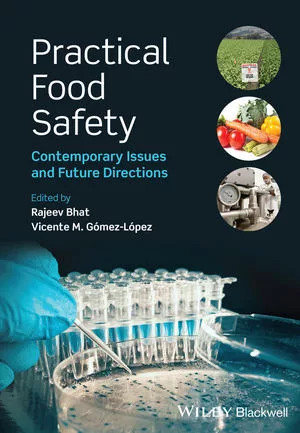
    Practical Food Safety: Contemporary Issues and Future Directions

See More Products

Related Directories

  • Crystal Diagnostics

    Crystal Diagnostics pioneers food safety with patented Liquid Crystal Technology and the AccuPath™ Series. Our systems deliver rapid, accurate pathogen detection—no DNA extraction or amplification needed. Designed for scalability, ease of use, and clarity, CDx empowers labs and processors to make confident, timely decisions that protect public health.
  • Integrated Chemistry Services LLC

    Integrated Chemistry Services (ICS) is a contract development and manufacturing partner based in Moorestown, New Jersey. In 2025, ICS acquired the PDX product line from Paradigm Diagnostics. These trusted, high-speed microbiological tests detect foodborne pathogens (Listeria, Salmonella, and STEC) quickly and affordably, minimizing downtime and protecting your bottom line.
  • Romer Labs

    Romer Labs is a global leader in innovative diagnostic solutions for food and feed safety. With a focus on mycotoxins, food allergens, GMOs, and microbial contaminants, we strive to meet the ever-changing demands of our customers. Furthermore, we operate a global network of 6 ISO accredited laboratories.
×

Never miss the latest news and trends driving the food safety industry

eNewsletter | Website | eMagazine

JOIN TODAY!
  • RESOURCES
    • Advertise
    • Contact Us
    • Directories
    • Store
    • Want More
  • SIGN UP TODAY
    • Create Account
    • eMagazine
    • eNewsletter
    • Customer Service
    • Manage Preferences
  • SERVICES
    • Marketing Services
    • Reprints
    • Market Research
    • List Rental
    • Survey/Respondent Access
  • STAY CONNECTED
    • LinkedIn
    • Facebook
    • Instagram
    • X (Twitter)
  • PRIVACY
    • PRIVACY POLICY
    • TERMS & CONDITIONS
    • DO NOT SELL MY PERSONAL INFORMATION
    • PRIVACY REQUEST
    • ACCESSIBILITY

Copyright ©2025. All Rights Reserved BNP Media.

Design, CMS, Hosting & Web Development :: ePublishing