In Whom Should We Trust? Case in Point: Red and Processed Meats
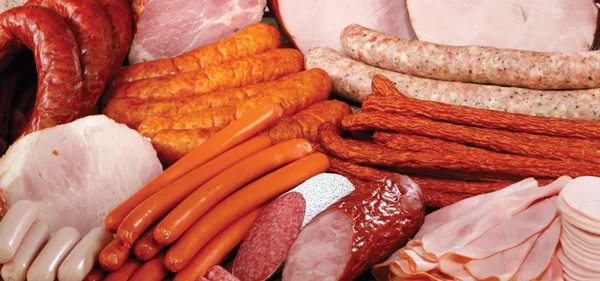
The International Agency for Research on Cancer (IARC), the specialized cancer agency of the World Health Organization (WHO) that publishes monographs on the evaluation of carcinogenic risk to humans, has declared red and processed meats to be probable human carcinogens. According to the IARC, “red meat” refers to unprocessed mammalian muscle meat including minced or frozen meat, whereas “processed meat” refers to meat that has been transformed through salting, curing, fermentation, smoking or other processes to enhance flavor or improve preservation. The outcome of the IARC deliberation is scheduled to appear in volume 114 of the IARC Monograph series.
In its attempt to identify the potential hazard that red or processed meat might pose in relation to colon and rectal cancers, IARC identified 800 studies that were screened for methodological consistency with only limited effort to address the underlying biology. Less than 6% of this database was deemed sufficiently useful for evaluating the putative association between meat and colorectal cancer. These studies were categorized by cohort, case control and processed versus red meat as independent variables. Results across all categories yielded a positive association in 26, with no association in 21 of the studies.
Bouvard et al.[1] suggested that consumption of 100 or 50 g per day of red or processed meat, respectively, increased the risk of colorectal cancer by 17 to 18%. This suggestion was based on the body of epidemiological data concerning colorectal cancer cited above. Interestingly, when Chan et al.[2] reviewed the same data of the 11 studies germane to red and processed meats and colorectal cancer, only 3 of the 11 studies presented a significant association, and only one of eight studies that evaluated red meat suggested a significant relationship. The dose-response curves generated in these studies with a 95% confidence interval were curvilinear, suggesting that daily consumption of red and processed meats above 140 g actually decreases the relative risk of developing colorectal cancer. The daily consumption of total red meat in 2014, based on data from the U.S. Department of Agriculture, was about 130 g per capita.[3]
It is important to remember that although a relative risk was calculated from the meta-analyses that the IARC evaluated, these findings are limited as to whether an agent is capable of causing cancer (“hazard”) and do not measure the likelihood that cancer will occur (“risk”) as a result of exposure. The distinction between hazard and risk is critical.[4] A chemical or agent may be considered a hazard if it is capable of causing cancer under some circumstances. Risk, however, measures the probability that cancer will occur, taking into account many factors including genetic predisposition, other environmental factors and the level of exposure to the agent. With regard to these studies, the WHO states: Although these risks are small, they could be important for public health because many people worldwide eat meat and meat consumption is increasing in low- and middle-income countries…With this in mind, it was important for IARC to provide authoritative scientific evidence on the cancer risks associated with eating red meat and processed meat.[5]
Cancer is a spectrum of hundreds of diseases that occur in every organ system and at every life stage,[6] involving exquisitely intricate interactions among the host and numerous environmental factors. Nothing about cancer is simple or easy, especially its etiology. As expressed by those who have lost loved ones to cancer, or who have cared for those with cancer, would that the answer were as simple as avoidance of a putative causal dietary factor. The number of flawed epidemiological studies suggests this is in fact the case highlights a global sociopolitical frustration and even desperation about the failure to effectively meet the ever-mounting challenge from this group of diseases.
The Nurses’ Health Study, the Health Professionals Follow-Up Study and the Multiethnic Cohort Study all report nonsignificant or inverse associations with red meat and colorectal cancer.[7,8] Ollberding and his colleagues[7] concluded that for two groups exceeding 165,000 and 130,000 subjects, respectively, there was no association between colorectal cancer and density-adjusted total meat, red meat or processed meat intake, or for total heterocyclic amine intake whether comparing quintiles of dietary exposure or using continuous variables. Bernstein et al.[8] validated these results by examining two health professional cohorts and found little evidence that higher intake of unprocessed red meat substantially increased the risk of colorectal cancer.
Much of the fervor around the alleged risk of red meat consumption seems to derive from errors in epidemiological inference in existing meta-analyses and systematic reviews. Specifically, study or author bias can confound the validity of the study conclusions, particularly the failure to appreciate the gravity of confounders or intervening variables. Ethanol and esophageal cancer or birth order and Down syndrome are classic examples. The first is a spurious association, because smoking is the intervening and more significant causal variable, whereas the latter is a forged association, because the intervening causal variable is maternal age. Birth order may be a rough proxy, but it is not the causal association.
Among heavy smokers (a significant confounder), red meat consumption and low adherence to a Mediterranean diet are associated with increased risk of lung cancer.[9] Arnold et al.[10] reported a higher burden of stomach cancer in certain indigenous populations globally in stark contrast to the decreasing global trend for stomach cancer. Policies that address improving nutrition and sanitation, and programs such as Helicobacter pylori eradication, a significant confounder in stomach cancer, are certainly approaches that have the potential to reduce inequalities in stomach cancer rates. Interestingly, the Mediterranean-style diet includes both red and processed meats, yet most dietary guidance suggests that such dietary patterns help reduce the risk of some cancers.[11,12]
So how does the IARC pronouncement regarding red or processed meat and colorectal cancer fit into the overall picture? As a hazard statement! Nonetheless, such an association should not be ignored, as statistically significant associations must be explored to determine if causality exists. The biomedical community must account for the limitations of in vitro models and the typically acute and exaggerated exposure of cell lines to putative procarcinogens dosed independently of the food matrix and, in most cases, without the presence of the many metabolic and repair processes found in the whole organism. Genomic differences between animal models and humans must be noted, and epidemiological studies need to control for variabilities in meat processing, preparation, cuts, sources, livestock feeds and genetics. Finally, in following human subjects, a high level of resolution is required to rigorously identify and quantify such factors as biometrics, lifestyle variables, and genetic and medical histories. Again, the WHO tempers the scant evidence by stating: Meat consists of multiple components, such as haem [heme] iron. Meat can also contain chemicals that form during meat processing or cooking. For instance, carcinogenic chemicals that form during meat processing include N-nitroso compounds and polycyclic aromatic hydrocarbons. Cooking of red meat or processed meat also produces heterocyclic aromatic amines as well as other chemicals including polycyclic aromatic hydrocarbons, which are also found in other foods and in air pollution. Some of these chemicals are known or suspected carcinogens, but despite this knowledge it is not yet fully understood how cancer risk is increased by red meat or processed meat.[5]
It is important to remember that without identification of the causal link, any series of epidemiological investigations where effects are shown some of the time and not at other times indicates that conflicting and inconsistent results may be due to as-yet unclassified confounders in the methodology. Observational epidemiology is hypothesis generating. Prospective studies allow investigators to define the importance of exposure to the outcome, but unlike randomized controlled trials, these kinds of studies cannot be used to establish causality. The biomedical community must exercise vigilance in not developing a policy path amid deceptively clean mathematical associations of variables that may in fact be related but in a nonlinear and noncausal fashion.
A. Wallace Hayes, Ph.D., DABT, is a visiting scientist at the Harvard T.H. Chan School of Public Health.
Claire L. Kruger, Ph.D., DABT, is president of Spherix Consulting.
Roger A. Clemens, Dr.Ph., is an adjunct professor in pharmacology and pharmaceutical sciences at the University of Southern California School of Pharmacy, International Center for Regulatory Science.
References
1. Bouvard, V. 2015. “Carcinogenicity of Consumption of Red and Processed Meat.” Lancet Oncol 16(16):1599–1600.
2. www.ncbi.nlm.nih.gov/pmc/articles/PMC3108955/.
3. ers.usda.gov/data-products/food-availability-(per-capita)-data-system.aspx.
4. www.food-safety.com/magazine-archive1/december-2015january-2016/understanding-the-difference/.
5. who.int/features/qa/cancer-red-meat/en/.
6. www.cancer.gov/about-cancer/what-is-cancer#related-diseases.
7. Ollberding, NJ et al. 2012. “Meat Consumption, Heterocyclic Amines, and Colorectal Cancer Risk: The Multiethnic Cohort Study.” Int J Cancer 131(7):E1125–1133.
8. www.ncbi.nlm.nih.gov/pmc/articles/PMC4549221/.
9. Gnagnarella, P et al. 2013. “Red Meat, Mediterranean Diet and Lung Cancer Risk among Heavy Smokers in the COSMOS Screening Study.” Ann Oncol 24(10):2606–2611.
10. Arnold, M et al. 2013. “The Burden of Stomach Cancer in Indigenous Populations: A Systematic Review and Global Assessment.” Gut 63(1):64–71.
11. Verberne, L et al. 2010. “Association between the Mediterranean Diet and Cancer Risk: A Review of Observational Studies.” Nutr Cancer 62(7):860–870.
12. Trichopoulou, A et al. 2010. “Conformity to Traditional Mediterranean Diet and Breast Cancer Risk in the Greek EPIC (European Prospective Investigation into Cancer and Nutrition) Cohort.” Am J Clin Nutr 92(3):620–625.
>
Looking for quick answers on food safety topics?
Try Ask FSM, our new smart AI search tool.
Ask FSM →