Food Safety
search
Ask Food Safety AI
cart
facebook twitter linkedin instagram youtube
  • Sign In
  • Create Account
  • Sign Out
  • My Account
Food Safety
  • NEWS
    • Latest News
    • White Papers
  • PRODUCTS
  • TOPICS
    • Contamination Control
    • Food Types
    • Management
    • Process Control
    • Regulatory
    • Sanitation
    • Supply Chain
    • Testing and Analysis
  • PODCAST
  • EXCLUSIVES
    • Food Safety Five Newsreel
    • eBooks
    • FSM Distinguished Service Award
    • Interactive Product Spotlights
    • Videos
  • BUYER'S GUIDE
  • MORE
    • NEWSLETTERS >
      • Archive Issues
      • Subscribe to eNews
    • Store
    • Sponsor Insights
    • ASK FSM AI
  • WEBINARS
  • FOOD SAFETY SUMMIT
  • EMAG
    • eMagazine
    • Archive Issues
    • Editorial Advisory Board
    • Contact
    • Advertise
  • SIGN UP!

Integrated Plant Approach Provides Sustainable Improvements

February 1, 2012

Today’s food and beverage processors face increasing operational challenges. Conserving water and energy and improving efficiency while protecting food safety and quality are major priorities for many processors.

To succeed, you need to take a proactive approach and scrutinize your entire plant operations. A partner that understands your operation and can tailor solutions to take advantage of hidden opportunities between interconnected systems is the key to achieving measurable results that translate to a significant, sustainable business value.

Do not underestimate the impact of taking a comprehensive, systematic approach to improving plant operations. One global food and beverage processor is on track to save an estimated 29 million gallons of water annually—the equivalent of 3.8 billion glasses of drinking water—as a result of its partnership with Ecolab and Nalco, an Ecolab company. Nalco (the world’s largest sustainability services company focused on industrial water, energy and air applications) recently merged with Ecolab (a global leader in cleaning, sanitizing, food safety and infection prevention products and services) to create a global company that leads the way in water, hygiene and energy solutions.

Measurable Results in Sanitation Program
To optimize clean-in-place (CIP) system water usage, Advantis® 330, a hot CIP program for beverage processing, helped reduce CIP water usage by 45 percent while reducing CIP labor cost by 48 percent. The innovative, three-step system eliminates two water-intensive CIP steps to reduce the amount of water and energy needed for cleaning and rinsing.

The processor also used several other Ecolab sanitation solutions to achieve measurable improvements, including Surpass® 100, an EPA-registered product that provides bacteria and fungi control in bottle and can warmers so warmer water does not have to be dumped daily. The antimicrobial additive provides water, time and utility savings while reducing microorganism risk. The DryExx® Conveyor Management System saved 3 million gallons of water annually for a five-line plant location; it also eliminated excess water and foam on plant floors, thereby creating a safer workplace. Exelerate® HS liquid pretreatment reduced cleaning time and saved water in fryer boil-out cleaning while helping protect workers through lower operating temperatures.

Cooling Water Management
As is common in beverage plants, the manufacturer uses two evaporative condensers for cooling and HVAC. By implementing the innovative 3D TRASAR® cooling water automation, Nalco enabled the systems to operate at a lower blow-down rate, thereby conserving 24 million gallons of water per year.

Water Treatment Processes
The manufacturer’s water pretreatment system was plagued by a number of issues, including oxidized membranes, poor reverse osmosis (RO), excessive water consumption and high operating costs. 3D TRASAR® Technology for Membranes provided superior dosing control, which reduced chemical use and decreased RO reject water by 27 percent. The company saved 2 million gallons per year while reducing its energy consumption (by significantly lowering operating pump pressure).

After Nalco conducted an extensive audit of the wastewater treatment processes, the manufacturer was able to reduce its sludge hauling by 90 percent, saving more than 1,000 million metric British thermal units of energy and avoiding 100 tons of carbon dioxide emissions per year. The plant’s initial aeration tank flow was re-engineered and a belt press chemical approach and feed system was tailored to increase production of profitable animal feed sludge.

Proactive Partnership
For companies looking to achieve measurable results and optimize operations, it pays to take a proactive approach and examine all plant processes. By working with the combined Ecolab-Nalco team, you can have confidence that every part of your operation is protected. Our unique Total Plant Assurance approach helps ensure you meet your goals in food safety and quality, sustainability and operational efficiency, while providing consistency across your operations.

ecolab.com

>
Author(s): Ecolab

Looking for quick answers on food safety topics?
Try Ask FSM, our new smart AI search tool.
Ask FSM →


Share This Story

Recommended Content

JOIN TODAY
to unlock your recommendations.

Already have an account? Sign In

  • people holding baby chicks

    Serovar Differences Matter: Utility of Deep Serotyping in Broiler Production and Processing

    This article discusses the significance of Salmonella in...
    Contamination Control
    By: Nikki Shariat Ph.D.
  • woman washing hands

    Building a Culture of Hygiene in the Food Processing Plant

    Everyone entering a food processing facility needs to...
    Personal Hygiene/Handwashing
    By: Richard F. Stier, M.S.
  • graphical representation of earth over dirt

    Climate Change and Emerging Risks to Food Safety: Building Climate Resilience

    This article examines the multifaceted threats to food...
    Best Practices
    By: Maria Cristina Tirado Ph.D., D.V.M. and Shamini Albert Raj M.A.
Manage My Account
  • eMagazine Subscription
  • Subscribe to Newsletters
  • Manage My Preferences
  • Website Registration
  • Subscription Customer Service

More Videos

Sponsored Content

Sponsored Content is a special paid section where industry companies provide high quality, objective, non-commercial content around topics of interest to the Food Safety Magazine audience. All Sponsored Content is supplied by the advertising company and any opinions expressed in this article are those of the author and not necessarily reflect the views of Food Safety Magazine or its parent company, BNP Media. Interested in participating in our Sponsored Content section? Contact your local rep!

close
  • NEVIFIT 3 Compartment BPA-FREE
    Sponsored byCorbion

    The Risks of Ready-to-Eat: Five Ways to Protect Today's Prepared Meals

  • a group of workers in a food production facility
    Sponsored bySkillUp by Registrar Corp

    How to Build a Better Training Program: Data and Insights from the Global Food Safety Training Survey

  • the use of dual-energy X-ray food inspection technology to identify foreign contaminants.
    Sponsored byEagle by METTLER TOLEDO

    Precision Inspection Starts with the Right X-ray Detector

Popular Stories

green powder/moringa in wooden mortar

FDA Opens Third Salmonella–Moringa Outbreak Investigation of the Year

FoodSafetyMattersFinal-900x550-(002).jpg

Ep. 218. Dr. Brady Carter: Water Activity, Shelf-Life Validation, and Food Safety Controls

fermented meat

Study is First to Analyze Trends in Foodborne Illness Outbreaks Linked to Non-Dairy Fermented Products

a practical guide to spoilage investigation webinar

Events

June 10, 2026

A Practical Guide to Spoilage Investigation and Prevention

Live: June 10, 2026 at 11:00 am EDT: Join this webinar to learn how to identify spoilage root causes, reduce risk, and apply data-driven strategies for prevention.

June 16, 2026

Sustainable Food Contact Materials: Where Regulation Meets Analytical Testing

Live: June 16, 2026 at 11:00 am EDT: This webinar explores how sustainability regulations are changing food contact material requirements, including packaging compliance, unintended substances, and per- and polyfluoroalkyl substances.

June 17, 2026

Living HACCP: Practical Steps for Implementation

Live: June 17, 2026, at 12:00 pm EDT: From this webinar, attendees will understand how social norms shape the way hazards are understood, how decisions are made, and how well risks are understood and acted on across companies.

View All

Products

Global Food Safety Microbial Interventions and Molecular Advancements

Global Food Safety Microbial Interventions and Molecular Advancements

See More Products

Related Articles

  • New Book Provides Comprehensive Approach to Food Safety Management

    See More
  • An Integrated Approach to Food Quality and Safety: A Case Study in the Cookie Industry

    See More
  • Integrated Cleaning and Measurement: A New Approach to Housekeeping and Sanitation

    See More

Related Products

See More Products
  • 9781138070912.jpg

    Trends in Food Safety and Protection

  • 9781138198463.jpg

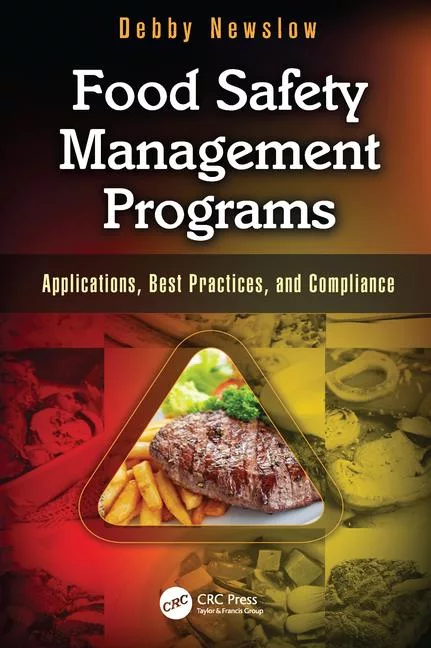
    Food Safety Management Programs: Applications, Best Practices, and Compliance

  • Food-Forensics-3D.jpg

    Food Forensics Handbook Practice, Instrumentation, Case Studies

See More Products

Related Directories

  • Foth | Food Plant Engineering LLC

    We are designers and builders of sustainable food production facilities. Using imagination, innovation, and ingenuity, we help food manufacturing companies improve food safety, gain productivity, and grow capacity.
  • Integrated Chemistry Services LLC

    Integrated Chemistry Services (ICS) is a contract development and manufacturing partner based in Moorestown, New Jersey. In 2025, ICS acquired the PDX product line from Paradigm Diagnostics. These trusted, high-speed microbiological tests detect foodborne pathogens (Listeria, Salmonella, and STEC) quickly and affordably, minimizing downtime and protecting your bottom line.
  • Computerway Food Systems

    Computerway Food Systems is a world leader in integrated plant floor and enterprise-level information systems designed specifically for food manufacturing and processing operations. Incorporated in 1986, Computerway modules include precise Recall and Traceability, real-time Production Control, accurate and aged Inventory of products and packaging, and scanned Shipping and Receiving operations.
×

Never miss the latest news and trends driving the food safety industry

Newsletters | Website | eMagazine

JOIN TODAY!
  • RESOURCES
    • Advertise
    • Contact Us
    • Directories
    • Store
    • Want More
  • SIGN UP TODAY
    • Create Account
    • eMagazine
    • Newsletters
    • Customer Service
    • Manage Preferences
  • SERVICES
    • Marketing Services
    • Reprints
    • Market Research
    • List Rental
    • Survey/Respondent Access
  • STAY CONNECTED
    • LinkedIn
    • Facebook
    • Instagram
    • X (Twitter)
  • PRIVACY
    • PRIVACY POLICY
    • TERMS & CONDITIONS
    • DO NOT SELL MY PERSONAL INFORMATION
    • PRIVACY REQUEST
    • ACCESSIBILITY

Copyright ©2026. All Rights Reserved BNP Media, Inc. and BNP Media II, LLC.

Design, CMS, Hosting & Web Development :: ePublishing