Food Safety
search
Ask Food Safety AI
cart
facebook twitter linkedin instagram youtube
  • Sign In
  • Create Account
  • Sign Out
  • My Account
Food Safety
  • NEWS
    • Latest News
    • Sponsored Insights
    • Sponsored White Papers
  • PRODUCTS
  • TOPICS
    • Contamination Control
    • Food Types
    • Management
    • Process Control
    • Regulatory
    • Sanitation
    • Supply Chain
    • Testing and Analysis
  • PODCAST
  • EXCLUSIVES
    • Food Safety Five Newsreel
    • eBooks
    • FSM Distinguished Service Award
    • Interactive Product Spotlights
    • Videos
  • BUYER'S GUIDE
  • MORE
    • NEWSLETTERS >
      • Archive Issues
      • Subscribe to eNews
    • Store
    • ASK FSM AI
  • WEBINARS
  • FOOD SAFETY SUMMIT
  • EMAG
    • eMagazine
    • Archive Issues
    • Editorial Advisory Board
    • Contact
    • Advertise
  • SIGN UP!
News

Fungal Researchers Fight Pathogens Killing Peach Trees
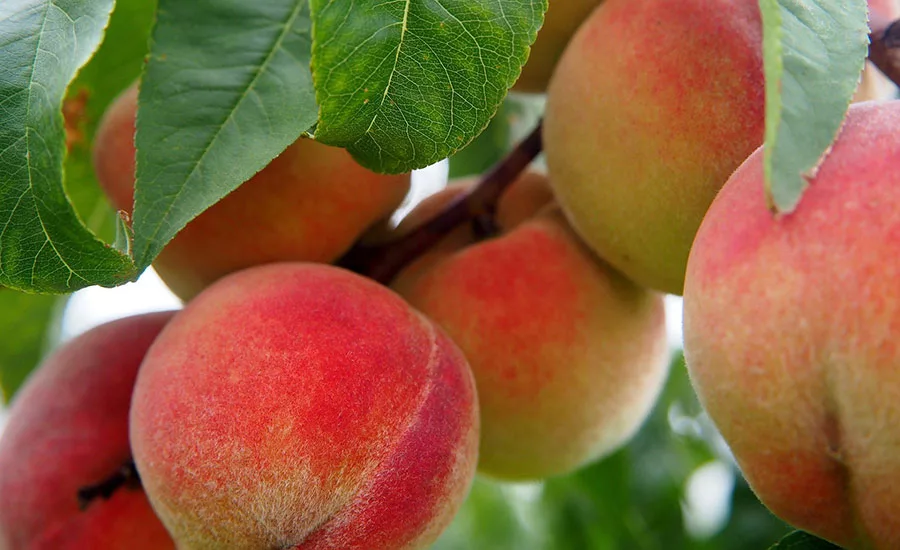
peaches growing on tree
May 20, 2021

Cytospora has wreaked havoc among Colorado peach orchards for decades, and scientists at Colorado State University's College of Agricultural Sciences are trying to stop the tree-killing fungal pathogen. 

Plant and fungal biologist and Colorado State University Assistant Professor Jane Stewart is leading a series of studies to arrive at a deeper understanding of the biology that makes up this pathogen, and to come up with an arsenal of best practices to ward off infections and help growers stay in the peach business. Strategies might range from choosing cultivars that are less susceptible to the fungus to changing how trees are cared for and pruned to limit the fungus's spread.

Stewart and her colleagues recently received three streams of federal funding which are aimed at aspects of tackling Cytospora canker on behalf of Colorado fruit growers. The National Institute of Food and Agricultural Research (NIFA) is supporting Stewart's team to research cultural practices currently used in peach orchards. The team aims to determine if infected, pruned, and mulched branches placed under trees leads to 1) increased incidence of Cytospora infections, 2) better understand the epidemiology of Cytospora, 3) determine species diversity. The sign of a Cytospora infection is a canker visible on the bark or branches of a tree.

Cytospora isn't just limited to peach trees, and Stewart's team will look at diversity of the species across peach, apple, and cherry trees and study population genomics of the fungus as it moves around and between orchards. The research will eventually lead to management strategies for the Cytospora canker built on an understanding of the biology and epidemiology of the various species of the fungus. 

In addition, NIFA will be supporting research by Stewart and colleague Dana Hoag of the Department of Agricultural and Resource Economics to provide new insights into the economic feasibility of various management practices. The work will evaluate tradeoffs of different choices like spraying trees with pesticides versus planting new ones.

Although Cytospora has created problems for peach growers since the 1950s, it has become worse over time and is now halving the lives of peach trees, which used to be in the ground for 40 years but now average around 20, says Stewart. 

A few years ago, Stewart and her colleagues collected isolates from different orchards and found that Colorado peach orchards are primarily impacted by Cytospora plurivora, while in other areas of the country, the species prevalence is more diverse.

Looking for quick answers on food safety topics?
Try Ask FSM, our new smart AI search tool.
Ask FSM →

After that, Stewart and graduate student Stephan Miller developed a chemical treatment plan for farmers and fact sheets about the pathogen in an effort to keep infections from killing trees before cankers do.

With the new funding, Stewart and graduate student Sean Wright will combine their expertise in fungal biology and population genomics with observations of farmers' habits for managing the disease. They will also research how those habits could be changed for the better in areas like watering techniques, chemical treatments, and mulching.


KEYWORDS: peaches

Share This Story

Recommended Content

JOIN TODAY
to unlock your recommendations.

Already have an account? Sign In

  • people holding baby chicks

    Serovar Differences Matter: Utility of Deep Serotyping in Broiler Production and Processing

    This article discusses the significance of Salmonella in...
    Contamination Control
    By: Nikki Shariat Ph.D.
  • woman washing hands

    Building a Culture of Hygiene in the Food Processing Plant

    Everyone entering a food processing facility needs to...
    Sanitation
    By: Richard F. Stier, M.S.
  • graphical representation of earth over dirt

    Climate Change and Emerging Risks to Food Safety: Building Climate Resilience

    This article examines the multifaceted threats to food...
    Management
    By: Maria Cristina Tirado Ph.D., D.V.M. and Shamini Albert Raj M.A.
Manage My Account
  • eMagazine Subscription
  • Subscribe to Newsletters
  • Manage My Preferences
  • Website Registration
  • Subscription Customer Service

More Videos

Sponsored Content

Sponsored Content is a special paid section where industry companies provide high quality, objective, non-commercial content around topics of interest to the Food Safety Magazine audience. All Sponsored Content is supplied by the advertising company and any opinions expressed in this article are those of the author and not necessarily reflect the views of Food Safety Magazine or its parent company, BNP Media. Interested in participating in our Sponsored Content section? Contact your local rep!

close
  • Man In Warehouse
    Sponsored byRentokil

    Mitigating Hidden Rodent Risks in Food Facilities

  • an industrial manufacturing or processing facility
    Sponsored bybioMérieux

    Get Ahead of Spoilage in Food Manufacturing with Metagenomics for Preventive Monitoring

  • an automated industrial production line used in a modern food factory
    Sponsored byIFC

    A Formula for Food Processing Pest Management

Popular Stories

iceberg lettuce growing

Cyclospora Outbreak Linked to Taylor Farms Lettuce Ends with Nearly 13,000 Illnesses, Two Deaths

baby being spoon-fed jarred baby food

EU Expands Maximum Levels for Three Contaminants in Infant and Baby Foods

Processed chips snacks and candies

Ultra-Processed Foods Cause Most High-Risk Food Safety Notifications for Acrylamide in EU

allergens ebook

Events

September 22, 2026

From EFSA to Enforcement: Managing the Growing Complexity of EU MRLs

Live: September 22, 2026 at 11:00 am EDT: Attend this webinar to evaluate best practices for monitoring regulatory changes and protecting market access.

September 24, 2026

Benchmarking Foreign Material Contamination in 2026: What the Data Shows

Live: September 24, 2026 at 2:00 pm EDT:  From this webinar, attendees will learn what is driving investment decisions, and the factors FSQA and ops leaders weigh when making the case for new prevention technology.

September 29, 2026

How to Talk to Your Board of Directors About Food Safety

Live: September 29, 2026 at 11:00 am EDT: Attend this webinar to learn how to position food safety as a material enterprise risk with measurable financial, operational, and reputational impacts relevant to Board-level decision-making.

View All

Products

Global Food Safety Microbial Interventions and Molecular Advancements

Global Food Safety Microbial Interventions and Molecular Advancements

See More Products

Related Articles

  • InvisiShield anti-pathogenic packaging

    Killing pathogens inside cut fruit and vegetable packages

    See More
  • spices and a spoon

    Winning the Fight against Pathogens on Spices

    See More
  • peaches in a crate

    Researchers Studying Efficacy of Sanitizers, Wash Practices Used at Peach Packinghouses

    See More

Related Products

See More Products
  • food-safety-making.jpg

    Food Safety: Making Foods Safe and Free From Pathogens

  • 9781138070912.jpg

    Trends in Food Safety and Protection

  • global food.jpg

    Global Food Safety Microbial Interventions and Molecular Advancements

See More Products

Events

View AllSubmit An Event
  • August 6, 2026

    Beyond Sanitation: Understanding the Hidden System Conditions That Allow Pathogens to Persist

    On Demand: Attend this webinar to learn strategies for strengthening environmental control programs through a layered approach to pathogen management.
View AllSubmit An Event

Related Directories

  • Serim Research Corp.

    Serim® Research is a leading manufacturer of specialized test strips for multiple industries including food safety and healthcare. Our tests for measuring chlorine and QAC sanitizing solutions are preferred by many customers including national restaurants, food production and processing companies. We also manufacture tests for residual glucose, water quality
×

Never miss the latest news and trends driving the food safety industry

Newsletters | Website | eMagazine

JOIN TODAY!
  • RESOURCES
    • Advertise
    • Contact Us
    • Directories
    • Store
    • Want More
  • SIGN UP TODAY
    • Create Account
    • eMagazine
    • Newsletters
    • Customer Service
    • Manage Preferences
  • SERVICES
    • Marketing Services
    • Reprints
    • Market Research
    • List Rental
    • Survey/Respondent Access
  • STAY CONNECTED
    • LinkedIn
    • Facebook
    • Instagram
    • X (Twitter)
  • PRIVACY
    • PRIVACY POLICY
    • TERMS & CONDITIONS
    • DO NOT SELL MY PERSONAL INFORMATION
    • PRIVACY REQUEST
    • ACCESSIBILITY

Copyright ©2026. All Rights Reserved BNP Media, Inc. and BNP Media II, LLC.

Design, CMS, Hosting & Web Development :: ePublishing