Food Safety
search
Ask Food Safety AI
cart
facebook twitter linkedin instagram youtube
  • Sign In
  • Create Account
  • Sign Out
  • My Account
Food Safety
  • NEWS
    • Latest News
    • Sponsored Insights
    • Sponsored White Papers
  • PRODUCTS
  • TOPICS
    • Contamination Control
    • Food Types
    • Management
    • Process Control
    • Regulatory
    • Sanitation
    • Supply Chain
    • Testing and Analysis
  • PODCAST
  • EXCLUSIVES
    • Food Safety Five Newsreel
    • eBooks
    • FSM Distinguished Service Award
    • Interactive Product Spotlights
    • Videos
  • BUYER'S GUIDE
  • MORE
    • NEWSLETTERS >
      • Archive Issues
      • Subscribe to eNews
    • Store
    • ASK FSM AI
  • WEBINARS
  • FOOD SAFETY SUMMIT
  • EMAG
    • eMagazine
    • Archive Issues
    • Editorial Advisory Board
    • Contact
    • Advertise
  • SIGN UP!
News

Food Standards Agency Evaluates Remote Audits Used during Pandemic

food and technology
April 7, 2021

The Food Standards Agency (FSA) asked consulting and technology services provider ICF to take a look at food firms and local authority experience of using remote assessment in England, Wales, and Northern Ireland during the COVID-19 pandemic. The goal was to look at food hygiene and food standard checks. 

Most local authorities raised the accuracy of remote assessments as a key concern, according to an evaluation of the technique's use during the pandemic. 

Local authorities were afraid that information was vulnerable to manipulation by food businesses, and problems could be missed, resulting in public health risks. With remote assessments, assessors are not able to use instincts and sensory awareness to assess businesses, such as the loss of smell to detect pests, and are unable to see how staff interact.

Upon revisiting a butchering operation that previously had been deemed to be operating satisfactorily during a remote check, a few cleanliness problems were identified, said one officer. These problems had not been picked up via phone calls or through images the company had shared. 

Another officer said that there had been a few incidences where food business claims made during remote check-ins via phone calls had not corroborated with what they saw in on-site follow-up visits. 

Remote assessments were allowed for lower-risk businesses, as there were reduced public health risks associated with failing to identify food hazards. 

The study involved 20 interviews with local authorities. Although three food businesses opted-in, only two interviews were completed, between October through December 2020, with a family-run café and a family-owned butcher shop.

Looking for quick answers on food safety topics?
Try Ask FSM, our new smart AI search tool.
Ask FSM →

The FSA said that it would use the findings to help inform decisions on any further testing or trials and to assess where remote approaches might be used more in the future. 

Previously, the FSA had allowed local authorities to use remote assessments in some circumstances. Food hygiene ratings could only be given or updated following an on-site visit. However, one officer admitted to issuing his/her ratings using a remote assessment, contrary to the FSA's guidelines.

Eighteen local officers used remote assessments. The two who did not opted to skip them because of limited resources, reduced access to technology, and the fact that they didn't think they could ease their workload or bring other benefits. 


Source: Food Safety News

KEYWORDS: England Food Standards Agency remote monitoring

Share This Story

Recommended Content

JOIN TODAY
to unlock your recommendations.

Already have an account? Sign In

  • people holding baby chicks

    Serovar Differences Matter: Utility of Deep Serotyping in Broiler Production and Processing

    This article discusses the significance of Salmonella in...
    Microbiological Control
    By: Nikki Shariat Ph.D.
  • woman washing hands

    Building a Culture of Hygiene in the Food Processing Plant

    Everyone entering a food processing facility needs to...
    Facilities
    By: Richard F. Stier, M.S.
  • graphical representation of earth over dirt

    Climate Change and Emerging Risks to Food Safety: Building Climate Resilience

    This article examines the multifaceted threats to food...
    Risk Assessment
    By: Maria Cristina Tirado Ph.D., D.V.M. and Shamini Albert Raj M.A.
Manage My Account
  • eMagazine Subscription
  • Subscribe to Newsletters
  • Manage My Preferences
  • Website Registration
  • Subscription Customer Service

More Videos

Sponsored Content

Sponsored Content is a special paid section where industry companies provide high quality, objective, non-commercial content around topics of interest to the Food Safety Magazine audience. All Sponsored Content is supplied by the advertising company and any opinions expressed in this article are those of the author and not necessarily reflect the views of Food Safety Magazine or its parent company, BNP Media. Interested in participating in our Sponsored Content section? Contact your local rep!

close
  • Man In Warehouse
    Sponsored byRentokil

    Mitigating Hidden Rodent Risks in Food Facilities

  • an industrial manufacturing or processing facility
    Sponsored bybioMérieux

    Get Ahead of Spoilage in Food Manufacturing with Metagenomics for Preventive Monitoring

  • an automated industrial production line used in a modern food factory
    Sponsored byIFC

    A Formula for Food Processing Pest Management

Popular Stories

lettuce leaves up close

Is Whole Head Lettuce Safer Than Bagged Salad?

Gummy supplements

FDA's Proposed Mandatory GRAS Rule: What Food Safety Professionals Need to Know

listeria

FDA’s Listeria Prevention Public Meeting: Experts Debate Zero Tolerance, Emphasize Environmental Monitoring and Fundamental Controls

allergens ebook

Events

September 1, 2026

Seafood Under the Microscope: FDA HACCP, Pathogen Risk, and Modern Testing Strategies

Live: September 1, 2026 at 2:00 pm EDT: Attend this webinar to learn how environmental monitoring, rapid pathogen detection, and risk-based testing strengthen seafood safety programs.

September 2, 2026

From Crisis to Control: A Listeria Elimination Journey in Food Manufacturing

Live: September 2, 2026 at 2:00 pm EDT: This webinar shares a real-world case study of a food processing facility that solved a persistent Listeria challenge after standard protocols fell short.

September 10, 2026

Stop Rodents in Their Tracks!

Live: September 10, 2026 at 2:00 pm EDT: Attend this webinar to understand rodent behavior and innovative strategies for rodent management.

View All

Products

Global Food Safety Microbial Interventions and Molecular Advancements

Global Food Safety Microbial Interventions and Molecular Advancements

See More Products

Related Articles

  • Campylobacter

    Food Standards Agency Survey Explores How Consumers Perceive Food-Related Risks

    See More
  • Food Standards Agency Issues Call for Research on Removing Norovirus from Oysters

    See More
  • broiler chickens on farm

    UK Food Standards Agency Reviews Farm-to-Fork Campylobacter Interventions for Chicken

    See More

Related Products

See More Products
  • 1119053595.jpg

    Food Safety for the 21st Century: Managing HACCP and Food Safety throughout the Global Supply Chain, 2E

  • 9781498721776.jpg

    Handbook of Food Processing: Food Safety, Quality, and Manufacturing Processes

  • 9781138198463.jpg

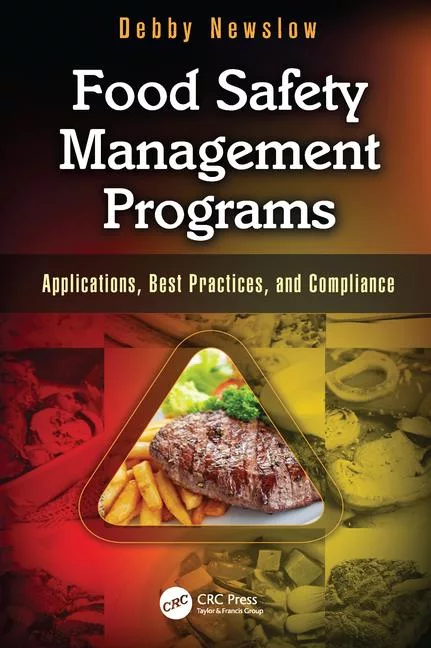
    Food Safety Management Programs: Applications, Best Practices, and Compliance

See More Products

Related Directories

  • Gold Standard Diagnostics

    Gold Standard Diagnostics develops and markets rapid test kits and analyzers for a wide range of food contaminants including allergens, pathogens, patulin and mycotoxins, glyphosate and pesticides, VDRs, GMOs and more. Get accurate results in minutes on-site with Gold Standard Diagnostics test kits.
  • GS1 US

    GS1 US® helps companies power their supply chains to deliver safe, consistent, authentic, and trusted experiences. Best known as the recognized source for UPC barcodes, GS1 is a not-for-profit, global data standards organization that creates the common language that helps companies and their trading partners identify, capture, and share trusted data that links their physical and digital supply chains. Millions of businesses around the world power commerce with GS1 Standards.
×

Never miss the latest news and trends driving the food safety industry

Newsletters | Website | eMagazine

JOIN TODAY!
  • RESOURCES
    • Advertise
    • Contact Us
    • Directories
    • Store
    • Want More
  • SIGN UP TODAY
    • Create Account
    • eMagazine
    • Newsletters
    • Customer Service
    • Manage Preferences
  • SERVICES
    • Marketing Services
    • Reprints
    • Market Research
    • List Rental
    • Survey/Respondent Access
  • STAY CONNECTED
    • LinkedIn
    • Facebook
    • Instagram
    • X (Twitter)
  • PRIVACY
    • PRIVACY POLICY
    • TERMS & CONDITIONS
    • DO NOT SELL MY PERSONAL INFORMATION
    • PRIVACY REQUEST
    • ACCESSIBILITY

Copyright ©2026. All Rights Reserved BNP Media, Inc. and BNP Media II, LLC.

Design, CMS, Hosting & Web Development :: ePublishing