Food Safety
search
Ask Food Safety AI
cart
facebook twitter linkedin
  • Sign In
  • Create Account
  • Sign Out
  • My Account
Food Safety
  • NEWS
    • Latest News
    • White Papers
  • PRODUCTS
  • TOPICS
    • Contamination Control
    • Food Types
    • Management
    • Process Control
    • Regulatory
    • Sanitation
    • Supply Chain
    • Testing and Analysis
  • PODCAST
  • EXCLUSIVES
    • Food Safety Five Newsreel
    • eBooks
    • FSM Distinguished Service Award
    • Interactive Product Spotlights
    • Videos
  • BUYER'S GUIDE
  • MORE
    • ENEWSLETTER >
      • Archive Issues
      • Subscribe to eNews
    • Store
    • Sponsor Insights
    • ASK FSM AI
  • WEBINARS
  • FOOD SAFETY SUMMIT
  • EMAG
    • eMagazine
    • Archive Issues
    • Editorial Advisory Board
    • Contact
    • Advertise
  • SIGN UP!
SanitationPest Control

Rodent Research at Food Distribution Centers: A Call for Collaboration
October 17, 2017

The 2011 Food Safety Modernization Act (FSMA) aims to prevent contamination of human foods through risk analysis and mitigation strategies. FSMA’s Preventive Controls for Human Food rule significantly affects pest management practices at food distribution centers (DCs) by calling for proactive programs that prevent pest problems before they arise.

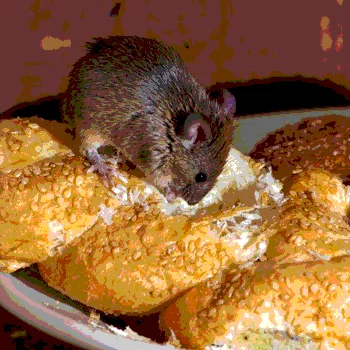
Currently, rodent management programs at many DCs are based on third-party auditor ‘guidelines.’ Using these templates, rodent stations are placed at 50–100 ft. intervals along exterior perimeter walls, and mousetraps are placed every 20–40 ft. along interior perimeter walls. These templates, however, are not based on rodent biology, have not been scientifically tested and may not improve the chance of intercepting a rodent. This is because rodents move in complex ways as they forage for food and water inside buildings. Therefore, portions of equipment installed via ‘yardstick templates’ may be ineffective if they are placed in areas where rodents are not active. Such devices may contribute to higher material costs (stations/bait) and service costs (time to visit stations).

Testing Predictions
In November 2016, researchers from the New York State Integrated Pest Management Program at Cornell University and industry expert Dr. Bobby Corrigan received funding to examine rodent management practices at food distribution centers in New York. This 3-year project will evaluate pest activity at devices placed in rodent vulnerable areas, compared to equipment installed according to simple, linear, yardstick templates.

The results of this real-world project can improve compliance of food DCs to the new FSMA regulations and demonstrate the effectiveness of preventative rodent control. These results may be extended to food manufacturing plants and food retail outlets that face the same challenges as distribution centers.

The Biggest Challenge
Pest professionals, quality assurance managers and operations personnel agree that this research is needed to advance the U.S. Food and Drug Adminsitration’s food safety goals. Nevertheless, researchers have struggled to find study sites that meet two important criteria: Sites must have some level of rodent activity and be located in the Hudson Valley, Long Island or New York City. According to a recent paper by Parsons and others in the Journal of Urban Ecology,[1] access to study sites is a common problem for rodent research. The authors explain that although rodents are pests of significant health risk to humans and that studies on their biology and management are critical, interest in rodent management research is historically lacking.

The authors claim that part of the problem is a conflict between the goals of pest management professionals and researchers. Whereas pest management professionals are hired to quickly and efficiently eliminate rodents, researchers require active populations that can be studied in their natural habitat to better understand rodent biology and behavior. Indeed, these studies are needed to develop more efficient control options that directly benefit the pest management industry.

Call for Collaboration
Pest management professionals, facility/operations personnel and quality assurance managers represent an important link between private organizations and researchers. They can facilitate communication about project details, and more important, understand the benefits that research offers for improving their operation in terms of efficiency, safety and perhaps financially. With this in mind, we are making a call for collaborators to participate in research focused in the Hudson Valley, Long Island and New York City. Features of this research include:

• Anonymity of sites and corporations. All identifying information is kept confidential at all times. Our goal is to study the system, not individual sites. No names of entities, organizations or locations will be used in reports.

• Publicity for PMPs (if desired). According to Parsons et al.,[1] participation in rodent research was beneficial for their collaborating pest management company. Arrow Exterminating Company, Inc. (Lynbrook, NY) was elevated through promotion of research publications and presentations, identifying the company as being forward-thinking and involved in novel approaches to pest management. Indeed, the company moved up in search engine results, making them easier for future clients to find.[1]

• Low investment, high return. For this project, we are requesting access to sites and historical trap catch data from pest professionals. In return, we will conduct regular evaluations of the site and provide free inspection reports to site management. We will create facility maps if they are not already available and offer suggestions about monitoring programs where needed. We will help develop management plans for long-term pest problems, and as industry professionals, will offer expertise to participating pest professionals and site management that would normally come at a high price.

Matt Frye, Ph.D., is an educator and researcher at the New York State Integrated Pest Management Program at Cornell University. For questions or to express interest in participating, please contact him at mjf267@cornell.edu or 914.285.4633.

Reference
1. academic.oup.com/jue/article-lookup/doi/10.1093/jue/jux005.


Author(s): Matt Frye, Ph.D.

Looking for quick answers on food safety topics?
Try Ask FSM, our new smart AI search tool.
Ask FSM →


Share This Story

Recommended Content

JOIN TODAY
to unlock your recommendations.

Already have an account? Sign In

  • people holding baby chicks

    Serovar Differences Matter: Utility of Deep Serotyping in Broiler Production and Processing

    This article discusses the significance of Salmonella in...
    Food Type
    By: Nikki Shariat Ph.D.
  • woman washing hands

    Building a Culture of Hygiene in the Food Processing Plant

    Everyone entering a food processing facility needs to...
    Management
    By: Richard F. Stier, M.S.
  • graphical representation of earth over dirt

    Climate Change and Emerging Risks to Food Safety: Building Climate Resilience

    This article examines the multifaceted threats to food...
    Risk Assessment
    By: Maria Cristina Tirado Ph.D., D.V.M. and Shamini Albert Raj M.A.
Manage My Account
  • eMagazine Subscription
  • Subscribe to eNewsletter
  • Manage My Preferences
  • Website Registration
  • Subscription Customer Service

More Videos

Sponsored Content

Sponsored Content is a special paid section where industry companies provide high quality, objective, non-commercial content around topics of interest to the Food Safety Magazine audience. All Sponsored Content is supplied by the advertising company and any opinions expressed in this article are those of the author and not necessarily reflect the views of Food Safety Magazine or its parent company, BNP Media. Interested in participating in our Sponsored Content section? Contact your local rep!

close
  • Salmonella bacteria
    Sponsored byThermoFisher

    Food Microbiology Testing Methods: Salmonella species

  • a diagram explaining indicator organisms
    Sponsored byHygiena

    How Proactive Listeria Testing Helps Prevent Six- and Seven-Figure Recalls

  • woman grocery shopping
    Sponsored byCorbion

    Designing Safety Into Every Bite: Proactive Risk Mitigation for Refrigerated Foods

Popular Stories

NRTE breaded stuffed chicken

USDA Indefinitely Delays Enforcement of Salmonella as Adulterant in Raw Breaded, Stuffed Chicken

digital map of europe

EU Publishes Food Fraud Tool Mapping Thousands of Cases Since 2016

non-conforming product

How to Handle Non-Conforming Product

Events

December 11, 2025

How to Develop and Implement an Effective Food Defense Strategy

Live: December 11, 2025 at 2:00 pm EDT: From this webinar, attendees will learn common areas where companies encounter challenges in their food defense strategies and how to address them.

May 11, 2026

The Food Safety Summit

Stay informed on the latest food safety trends, innovations, emerging challenges, and expert analysis. Leave the Summit with actionable insights ready to drive measurable improvements in your organization. Do not miss this opportunity to learn from experts about contamination control, food safety culture, regulations, sanitation, supply chain traceability, and so much more.

View All

Products

Global Food Safety Microbial Interventions and Molecular Advancements

Global Food Safety Microbial Interventions and Molecular Advancements

See More Products

Related Articles

  • repositrak

    ReposiTrak Introduces Touchless Traceability for Food Industry Distribution Centers

    See More
  • Balers

    Top 10 vulnerable zones for pests in food distribution centers, warehouses

    See More
  • dried edible seaweed with chopsticks

    Seaweed Food Safety Knowledge is Limited; FAO, WHO Call for Research, Regulation

    See More

Related Products

See More Products
  • 1119053595.jpg

    Food Safety for the 21st Century: Managing HACCP and Food Safety throughout the Global Supply Chain, 2E

  • 1118396308.jpg

    High Throughput Analysis for Food Safety

  • 1119160553.jpg

    Food Safety: Innovative Analytical Tools for Safety Assessment

See More Products

Events

View AllSubmit An Event
  • August 28, 2025

    Strategies for Rodent Control in Distribution Facilities

    On Demand: From this webinar, attendees will learn how to understand rodent behavior and innovative strategies for rodent management.
  • November 4, 2025

    Clues for Containment: Proactive Rodent Control Strategies

    On Demand: This webinar will cover how to identify signs of rodent activity in your facility.
View AllSubmit An Event

Related Directories

  • Seafood Collaborators LLC

    In today's complex seafood landscape, ever-stricter standards, regulations, and initiatives are proliferating. Decades of cross-functional, global expertise enable us to offer practical solutions to seafood firms across the value chain - food safety, QMS, regulatory, supply chain risk analysis, responsible sourcing, audits, operational improvement, certification, ESG programs and more.
×

Never miss the latest news and trends driving the food safety industry

eNewsletter | Website | eMagazine

JOIN TODAY!
  • RESOURCES
    • Advertise
    • Contact Us
    • Directories
    • Store
    • Want More
  • SIGN UP TODAY
    • Create Account
    • eMagazine
    • eNewsletter
    • Customer Service
    • Manage Preferences
  • SERVICES
    • Marketing Services
    • Reprints
    • Market Research
    • List Rental
    • Survey/Respondent Access
  • STAY CONNECTED
    • LinkedIn
    • Facebook
    • Instagram
    • X (Twitter)
  • PRIVACY
    • PRIVACY POLICY
    • TERMS & CONDITIONS
    • DO NOT SELL MY PERSONAL INFORMATION
    • PRIVACY REQUEST
    • ACCESSIBILITY

Copyright ©2025. All Rights Reserved BNP Media.

Design, CMS, Hosting & Web Development :: ePublishing