Food Safety
search
Ask Food Safety AI
cart
facebook twitter linkedin instagram youtube
  • Sign In
  • Create Account
  • Sign Out
  • My Account
Food Safety
  • NEWS
    • Latest News
    • White Papers
  • PRODUCTS
  • TOPICS
    • Contamination Control
    • Food Types
    • Management
    • Process Control
    • Regulatory
    • Sanitation
    • Supply Chain
    • Testing and Analysis
  • PODCAST
  • EXCLUSIVES
    • Food Safety Five Newsreel
    • eBooks
    • FSM Distinguished Service Award
    • Interactive Product Spotlights
    • Videos
  • BUYER'S GUIDE
  • MORE
    • NEWSLETTERS >
      • Archive Issues
      • Subscribe to eNews
    • Store
    • Sponsor Insights
    • ASK FSM AI
  • WEBINARS
  • FOOD SAFETY SUMMIT
  • EMAG
    • eMagazine
    • Archive Issues
    • Editorial Advisory Board
    • Contact
    • Advertise
  • SIGN UP!
RegulatorySanitationCleaners/SanitizersEnvironmental MonitoringAudits/Certification/GFSIHACCP

Save Time, Gain Efficiencies with Automated HACCP Management
February 1, 2016

With a new year comes new resolutions. We endeavor to set new goals and envision ensuing possibilities for improving performance throughout the facility. With a new year also comes another Hazard Analysis and Critical Control Points (HACCP) audit. For quality assurance (QA) managers and directors looking for ways to improve efficiencies, especially in preparing for audits, the new year brings a new solution:  

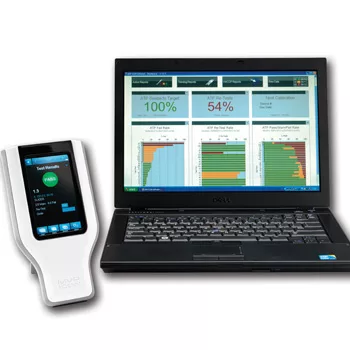
The MVP ICON® is a complete HACCP management system that combines high-sensitivity bioluminescent detection with room-stable sampling swabs that are resistant to sanitizer interference, allowing for fast, accurate detection of low levels of adenosine triphosphate (ATP) on surfaces after cleaning, and even after sanitizing. But for QA managers, the real value lies in the system’s ability to measure other parameters, such as chemical concentration, pH and temperature; present up-to-date visual performance indicators; and most importantly, provide audit-ready reporting. Unlike other ATP systems, which only measure and store ATP data, the MVP ICON offers QA managers time savings and peace of mind, knowing their hygiene-monitoring program is effective, in control and compliant, with the added benefit of being able to demonstrate the program’s effectiveness with relevant, print-ready reports.

For most ATP systems, the data management software is nothing more than simplified bar graphs/charts, pivot tables and raw data views that QA managers must spend time organizing in a meaningful way. But with the ICON Dashboard software, dedicated widgets and graphs instantly provide a clear, color-coded indication of key performance indicators, like Pass/Warn/Fail and Re-Test rates, by test point over user-adjustable time frames. These automatic reports can be quickly generated in preparation for an audit, saving countless hours of data manipulation and preparation.

Validating Chemical Concentration As Part of GMPs
In addition to ATP testing, sanitation managers need to verify and document that their cleaning and sanitizing chemicals are consistently prepared at the correct concentrations to ensure optimal performance. Prepared at too low a concentration, chemicals may be ineffective and can result in growth of unwanted microorganisms. And chemicals prepared at too high a concentration could result in unnecessary increases in chemical expenditures and adverse effects on equipment and food contact surfaces, and may even serve as adulterants.

Using the ICON Conductivity probe, sanitation managers quickly and accurately measure and validate that each batch of chemical standard used has been prepared at correct and effective concentrations. When synched to the ICON Dashboard, measurements from all parameters are downloaded from the ICON instrument for storage, tracking and reporting.

According to one HACCP manager of a ready-to-eat meat processor, “I knew a more accurate measurement of our sanitizers would be useful, but I had no idea it would prove its value so quickly. I estimate I’m using 35% fewer sanitizers than before I started using the Conductivity probe. Overusing sanitizers by that much runs into big expense. I’m very pleased with the results.”

As an alternative method, test strips can be less precise and are subject to incorrect visual interpretation. And other alternate methods, like titration kits and inline chemical injectors, are laborious and/or require lots of maintenance.

No-Muss, No-Fuss, Audit-Ready Reporting
In addition to ready-made corrective action and trending reports, the ICON Dashboard software also provides QA managers with four audit-ready HACCP reports that include numeric and graphical data: Sample Plan Summary, Test Point Frequency, ATP Swab Usage Count and Calibrations/Verifications.

All reports are user-adjustable to a desired date range or calendar frequency, as well as customizable to include corporate name and logo information on printouts. In addition, the ICON Dashboard software database can be stored on a local PC, or on a network shared drive where backup of the server data is done routinely.

Unlike other ATP systems on the market that require return-to-factory calibration or intensive calibration testing, the MVP ICON is the only multi-parameter hygiene-monitoring system that allows complete on-site, anytime instrument calibration using the MVP ICON Calibrator Rods. Calibrations are quick and simple to complete, and results can be synched to the ICON Dashboard software. The date of last calibration is displayed on the instrument screen as well as in an ICON Dashboard widget. Come audit time, QA managers can instantly produce a complete print-ready PDF report of calibration and verification records for each ICON instrument.

Take the Next Step
To learn more about the full capabilities of the MVP ICON system and how easy it is to integrate into your hygiene and sanitation program, contact BioControl Systems at 800.245.0113, info@biocontrolsys.com or www.biocontrolsys.com.


Author(s): BioControl

Looking for quick answers on food safety topics?
Try Ask FSM, our new smart AI search tool.
Ask FSM →


Share This Story

Recommended Content

JOIN TODAY
to unlock your recommendations.

Already have an account? Sign In

  • people holding baby chicks

    Serovar Differences Matter: Utility of Deep Serotyping in Broiler Production and Processing

    This article discusses the significance of Salmonella in...
    Contamination Control
    By: Nikki Shariat Ph.D.
  • woman washing hands

    Building a Culture of Hygiene in the Food Processing Plant

    Everyone entering a food processing facility needs to...
    Personal Hygiene/Handwashing
    By: Richard F. Stier, M.S.
  • graphical representation of earth over dirt

    Climate Change and Emerging Risks to Food Safety: Building Climate Resilience

    This article examines the multifaceted threats to food...
    Risk Assessment
    By: Maria Cristina Tirado Ph.D., D.V.M. and Shamini Albert Raj M.A.
Manage My Account
  • eMagazine Subscription
  • Subscribe to Newsletters
  • Manage My Preferences
  • Website Registration
  • Subscription Customer Service

More Videos

Sponsored Content

Sponsored Content is a special paid section where industry companies provide high quality, objective, non-commercial content around topics of interest to the Food Safety Magazine audience. All Sponsored Content is supplied by the advertising company and any opinions expressed in this article are those of the author and not necessarily reflect the views of Food Safety Magazine or its parent company, BNP Media. Interested in participating in our Sponsored Content section? Contact your local rep!

close
  • the use of dual-energy X-ray food inspection technology to identify foreign contaminants.
    Sponsored byEagle by METTLER TOLEDO

    Precision Inspection Starts with the Right X-ray Detector

  • This image depicts a worker cleaning stainless steel machinery in a food processing plant
    Sponsored byCintas

    Employee Uniforms: A Frontline Defense Against Food Contamination

  • This image depicts a healthcare professional managing a large volume of paperwork and transitioning to a digital workflow.
    Sponsored bySafetyChain

    The Invisible Plant Tax Starts with Your Records

Popular Stories

Don Prater at the 2026 Food Safety Summit

Donald Prater Becomes New Head of FDA Human Foods Program

town hall panelists on stage at the 2026 food safety summit

Top U.S. Food Safety Officials Discuss Regulatory Landscape at Food Safety Summit

digital 3d rendering of a biofilm

Plasma-Activated Mist Shows Promise for Biofilm Removal in Food Facilities


Events

May 28, 2026

Advanced Sanitation Strategies for Allergen Risk Reduction in Food Processing

Live: May 28, 2026, at 2:00 pm EDT: From this webinar, attendees will learn why validation and verification are necessary for allergen control, and how analytical tools can support allergen management programs.

June 3, 2026

How to Build a Better Food Safety Training Program

Live: June 3, 2026 at 2:00 pm EDT: Join this webinar to learn how AI is impacting food safety training, and how you can leverage AI in your programs.

June 4, 2026

Building a Stronger Food Safety Program in a Changing GFSI Landscape

Live: June 4, 2026 at 11:00 am EDT: Attend this webinar to understand how GFSI requirements are evolving and what those changes signal for quality programs at food and beverage facilities.

View All

Products

Global Food Safety Microbial Interventions and Molecular Advancements

Global Food Safety Microbial Interventions and Molecular Advancements

See More Products

Related Articles

  • Save Time, Gain Efficiencies with Automated ATP Test Tracking

    See More
  • How Prevention-Based Safety Chain Management Technology Increases Compliance Efficiencies

    See More
  • Is It Time for Retail HACCP?

    See More

Related Products

See More Products
  • 1119053595.jpg

    Food Safety for the 21st Century: Managing HACCP and Food Safety throughout the Global Supply Chain, 2E

  • 9781138198463.jpg

    Food Safety Management Programs: Applications, Best Practices, and Compliance

  • 9781032369990 (1).webp

    Food Safety Quality Control and Management

See More Products

Events

View AllSubmit An Event
  • May 6, 2026

    Allergen Uncertainty: Risk Assessment, Reference Doses, and Codex Management Guidance

    On Demand: Attendees will gain insight into the importance of preparing for the industry's shift from detection-based methods to risk-based allergen management.
View AllSubmit An Event
×

Never miss the latest news and trends driving the food safety industry

Newsletters | Website | eMagazine

JOIN TODAY!
  • RESOURCES
    • Advertise
    • Contact Us
    • Directories
    • Store
    • Want More
  • SIGN UP TODAY
    • Create Account
    • eMagazine
    • Newsletters
    • Customer Service
    • Manage Preferences
  • SERVICES
    • Marketing Services
    • Reprints
    • Market Research
    • List Rental
    • Survey/Respondent Access
  • STAY CONNECTED
    • LinkedIn
    • Facebook
    • Instagram
    • X (Twitter)
  • PRIVACY
    • PRIVACY POLICY
    • TERMS & CONDITIONS
    • DO NOT SELL MY PERSONAL INFORMATION
    • PRIVACY REQUEST
    • ACCESSIBILITY

Copyright ©2026. All Rights Reserved BNP Media, Inc. and BNP Media II, LLC.

Design, CMS, Hosting & Web Development :: ePublishing