Food Safety
search
Ask Food Safety AI
cart
facebook twitter linkedin instagram youtube
  • Sign In
  • Create Account
  • Sign Out
  • My Account
Food Safety
  • NEWS
    • Latest News
    • White Papers
  • PRODUCTS
  • TOPICS
    • Contamination Control
    • Food Types
    • Management
    • Process Control
    • Regulatory
    • Sanitation
    • Supply Chain
    • Testing and Analysis
  • PODCAST
  • EXCLUSIVES
    • Food Safety Five Newsreel
    • eBooks
    • FSM Distinguished Service Award
    • Interactive Product Spotlights
    • Videos
  • BUYER'S GUIDE
  • MORE
    • NEWSLETTERS >
      • Archive Issues
      • Subscribe to eNews
    • Store
    • Sponsor Insights
    • ASK FSM AI
  • WEBINARS
  • FOOD SAFETY SUMMIT
  • EMAG
    • eMagazine
    • Archive Issues
    • Editorial Advisory Board
    • Contact
    • Advertise
  • SIGN UP!
Testing & AnalysisMethodsMicrobiological Testing & Analysis

What’s Next in Automation for Pathogen Testing?

October 1, 2015

Labs conducting food safety testing are under more pressure than ever. The list of performance standards, accreditation requirements and client guidelines continues to grow. Coupled with these challenges are the expectations for cutting costs and increasing efficiencies, from what type of reagents to use to the throughput of the equipment. What may at first seem like a no-win situation can in fact be readily solved. The solution? Laboratory automation.

For many, the term “laboratory automation” conjures up very large and complicated pieces of instrumentation that require equally large budgets to purchase and maintain, as well as a cadre of skilled technicians to operate. Many of these traditional automation systems require a complete redesign of a lab and its workflow, turning automation into a complicated and expensive endeavor. According to a lab manager at a major commercial testing lab, “We are looking for automation to not only help increase our productivity, but also improve our bottom line. However, finding an economical system that has the simplicity needed for day-to-day operations has proved somewhat difficult.” Fortunately, new advancements in automation have allowed for the development of smaller, more flexible automation technologies that fit into existing laboratory configurations and workflows, and are available at a significantly lower price point than traditional systems. With these advancements, automation is within the reach of both low- and high-volume laboratories that wish to benefit from workflow automation and reduce handling steps.

Simplicity and Flexibility Are Essential
One example of modular automation is the Assurance GDS PickPen® PipetMAX® (PPMX): a new modular automation platform from BioControl for use with Assurance GDS®. The new PPMX provides labs with an easy, affordable and flexible means of automating sample preparation and processing. The PPMX dispenses all necessary reagents for running Assurance GDS assays and performs the proprietary immunomagnetic separation (IMS) using an automated PickPen device. “Automated systems placed in food testing labs must be able to withstand the rigors of round-the-clock testing without the need for lengthy and expensive maintenance procedures” according to one lab manager interested in automation. Modular automation focuses on completing one specific task rather than a series of more complex procedures, making operation easier and the instrument more robust in the long term. The cost for modular automation is also far lower, making this option appealing for growing labs seeking to become scalable with a fast return on investment.   

With the PPMX, all necessary reagents for Assurance GDS assays can be dispensed up to 1 day in advance, which streamlines the reagent preparation process and removes it from the critical path of achieving fastest time-to-results, ensuring consistency. “The PPMX has been easy to use and accurate; being able to set up reagents in advance has really helped to simplify our operations,” says a lab manager who recently installed a PPMX. “The unit has proven reliable and robust, plus, its small size makes it the perfect fit.” The PPMX uses standard disposables and reusable reservoirs, which helps keep costs low.  

IMS Takes PCR to the Next Level
The Assurance GDS method incorporates a proprietary IMS technology that utilizes antibody-coated magnetic particles to capture and concentrate target pathogens in the enriched sample. The Assurance GDS PickPen physically separates the IMS particles, with captured pathogen cells, from the enrichment and any potentially inhibitory background materials before transferring them to the PCR tubes for analysis. This effective process ensures that the reaction proceeds uninhibited without the need for dilution, which can compromise sensitivity. As part of the PPMX, the automated PickPen reduces hands-on labor by as much as 50 percent. “While the PPMX is completing the PickPen procedure, my staff is able to focus on other tasks—we are finally maximizing our productivity,” states another lab manager. In addition, the PPMX is programmed to follow an aseptic travel path during IMS, helping minimize the risk for cross-contamination during sample processing as compared with other automated systems currently available.

Good Things Come in Small Packages
Capable of processing over 400 samples in an 8-hour shift and providing results for all major foodborne pathogens in less than 24 hours, the PPMX makes Assurance GDS one of the fastest and most efficient PCR-based pathogen detection systems on the market today. It is also one of the most flexible as, in addition to its modular automation capabilities, assays can still be run manually if necessary. This flexibility makes Assurance GDS an ideal solution for labs of any size that are looking to accomplish more—with less.

To learn more about the latest in PCR automation, contact BioControl Systems: phone: 800.245.0113, email: info@
biocontrolsys.com
, web: www.biocontrolsys.com.

>
Author(s): BioControl

Looking for quick answers on food safety topics?
Try Ask FSM, our new smart AI search tool.
Ask FSM →


Share This Story

Recommended Content

JOIN TODAY
to unlock your recommendations.

Already have an account? Sign In

  • people holding baby chicks

    Serovar Differences Matter: Utility of Deep Serotyping in Broiler Production and Processing

    This article discusses the significance of Salmonella in...
    Microbiological Control
    By: Nikki Shariat Ph.D.
  • woman washing hands

    Building a Culture of Hygiene in the Food Processing Plant

    Everyone entering a food processing facility needs to...
    Food Prep/Handling
    By: Richard F. Stier, M.S.
  • graphical representation of earth over dirt

    Climate Change and Emerging Risks to Food Safety: Building Climate Resilience

    This article examines the multifaceted threats to food...
    Risk Assessment
    By: Maria Cristina Tirado Ph.D., D.V.M. and Shamini Albert Raj M.A.
Manage My Account
  • eMagazine Subscription
  • Subscribe to Newsletters
  • Manage My Preferences
  • Website Registration
  • Subscription Customer Service

More Videos

Sponsored Content

Sponsored Content is a special paid section where industry companies provide high quality, objective, non-commercial content around topics of interest to the Food Safety Magazine audience. All Sponsored Content is supplied by the advertising company and any opinions expressed in this article are those of the author and not necessarily reflect the views of Food Safety Magazine or its parent company, BNP Media. Interested in participating in our Sponsored Content section? Contact your local rep!

close
  • The image shows a variety of fresh produce packaged in plastic trays and wrap.
    Sponsored byWaters Corporation

    PFAS-Free Food Packaging by August 2026

  • This image displays a multi-stage water filtration system designed to remove contaminants from drinking water.
    Sponsored byWaterdrop Filter

    The 4.0 ppt Era: Future-Proofing Your Food Supply Chain Against "Forever Chemicals"

  • The image displays a bottling plant production line, commonly used in the beverage industry for filling and packaging soft drinks.
    Sponsored byBIOIONIX

    Sustainability with ROI: A Beverage Producer Case Study in Water Savings

Popular Stories

recalled Pâté en Croûte products from France

Fatal Listeriosis Outbreak in France Linked to RTE Meats

ensuring ready-to-eat food safety eBook

eBook | Ensuring Ready-to-Eat Food Safety from Processing to Retail

RAW FARM-brand raw cheddar cheese product

Multistate E. coli Outbreak Likely Caused by Raw Cheese, but Manufacturer Refuses to Recall

Events

March 26, 2026

Continuous Pathogen Control: Enhancing Sanitation and Environmental Monitoring in Food Processing

Live: March 26, 2026, at 2:00 pm EST: This session explores the role of continuous airborne pathogen control technology in supporting sanitation and environmental monitoring programs within food processing environments.

March 31, 2026

Regulatory Risk, Ingredient Safety, and GRAS: What Companies Need to Act on Now

Live: March 31, 2026, at 11:00 am EDT: From this webinar, attendees will recognize patterns in food policy affecting dietary guidelines, UPFs, state legislative actions, and expected GRAS reform.

April 8, 2026

Foreign Material Contamination: Why In-Line Reinspection Isn't Enough

Live: April 8, 2026, at 11:00 am EDT: From this webinar, attendees will learn why reinspecting with in-line equipment is not sufficient when it comes to potential foreign material contamination.

View All

Products

Global Food Safety Microbial Interventions and Molecular Advancements

Global Food Safety Microbial Interventions and Molecular Advancements

See More Products

Related Articles

  • The Time Is Right for Automation in Pathogen Testing Labs

    See More
  • Partnering Automation and Food Pathogen Testing

    See More
  • Faster, Better, Cheaper… What’s Most Important in a Pathogen Test?

    See More

Related Products

See More Products
  • 1118396308.jpg

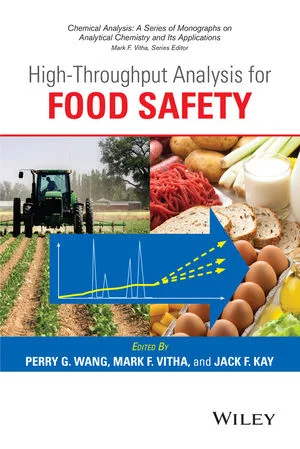
    High Throughput Analysis for Food Safety

  • 9781138070912.jpg

    Trends in Food Safety and Protection

  • 1119160553.jpg

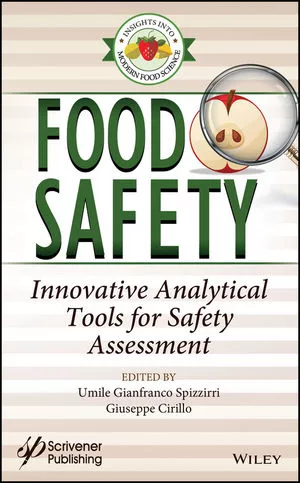
    Food Safety: Innovative Analytical Tools for Safety Assessment

See More Products
×

Never miss the latest news and trends driving the food safety industry

Newsletters | Website | eMagazine

JOIN TODAY!
  • RESOURCES
    • Advertise
    • Contact Us
    • Directories
    • Store
    • Want More
  • SIGN UP TODAY
    • Create Account
    • eMagazine
    • Newsletters
    • Customer Service
    • Manage Preferences
  • SERVICES
    • Marketing Services
    • Reprints
    • Market Research
    • List Rental
    • Survey/Respondent Access
  • STAY CONNECTED
    • LinkedIn
    • Facebook
    • Instagram
    • X (Twitter)
  • PRIVACY
    • PRIVACY POLICY
    • TERMS & CONDITIONS
    • DO NOT SELL MY PERSONAL INFORMATION
    • PRIVACY REQUEST
    • ACCESSIBILITY

Copyright ©2026. All Rights Reserved BNP Media, Inc. and BNP Media II, LLC.

Design, CMS, Hosting & Web Development :: ePublishing