Food Safety
search
Ask Food Safety AI
cart
facebook twitter linkedin
  • Sign In
  • Create Account
  • Sign Out
  • My Account
Food Safety
  • NEWS
    • Latest News
    • White Papers
  • PRODUCTS
  • TOPICS
    • Contamination Control
    • Food Types
    • Management
    • Process Control
    • Regulatory
    • Sanitation
    • Supply Chain
    • Testing and Analysis
  • PODCAST
  • EXCLUSIVES
    • Food Safety Five Newsreel
    • eBooks
    • FSM Distinguished Service Award
    • Interactive Product Spotlights
    • Videos
  • BUYER'S GUIDE
  • MORE
    • ENEWSLETTER >
      • Archive Issues
      • Subscribe to eNews
    • Store
    • Sponsor Insights
    • ASK FSM AI
  • WEBINARS
  • FOOD SAFETY SUMMIT
  • EMAG
    • eMagazine
    • Archive Issues
    • Editorial Advisory Board
    • Contact
    • Advertise
  • SIGN UP!
News

MSU Scientists Urge Opening Vacuum-Packed Fish Before Thawing

June 3, 2014

Michigan State University Extension (MSUE) scientists on May 31 published an article urging consumers and foodservice employees to "open your vacuum packed fish before thawing." The reason? Both Clostridium botulinum and Listeria monocytogenes can survive in reduced oxygen packaging at refrigerator temperatures, and thawing the fish before opening the package may promote the growth of those pathogens, according to the article.

The article provides additional information on both types of bacteria and the illnesses they can cause. It especially focuses on Clostridium botulinum, explaining that the anaerobic bacteria form spores which, under favorable conditions, develop into vegetative cells that can produce the toxin that causes botulism.

"In order to prevent the production of the toxin, Michigan State University Extension advises it is important to keep fish that is vacuum packaged at the proper temperature," the article states. It explains that as storage increases above 38º F, the time required for Clostridium botulinum to form toxins decreases significantly. Thawing fish in the refrigerator or in cold water may allow the fish's temperature to rise above 38º F.

Further, the article points out, "Labeling on frozen fish products in reduced-oxygen packaging will state: 'The fish should be kept frozen until time of use and prior to the fish being thawed under refrigeration or prior to or immediately upon completion of thawing, the fish should be removed from the packaging.' By opening the packaging when thawing the vacuum packaged fish, oxygen is present and the spores will not produce the vegetative cells that produce the toxin."


Author(s): Heidi Parsons

Looking for quick answers on food safety topics? Try Ask FSM, our new smart AI search tool. Ask FSM →

Share This Story

Recommended Content

JOIN TODAY
to unlock your recommendations.

Already have an account? Sign In

  • people holding baby chicks

    Serovar Differences Matter: Utility of Deep Serotyping in Broiler Production and Processing

    This article discusses the significance of Salmonella in...
    Microbiological
    By: Nikki Shariat Ph.D.
  • woman washing hands

    Building a Culture of Hygiene in the Food Processing Plant

    Everyone entering a food processing facility needs to...
    Facilities
    By: Richard F. Stier, M.S.
  • graphical representation of earth over dirt

    Climate Change and Emerging Risks to Food Safety: Building Climate Resilience

    This article examines the multifaceted threats to food...
    Contamination Control
    By: Maria Cristina Tirado Ph.D., D.V.M. and Shamini Albert Raj M.A.
Manage My Account
  • eMagazine Subscription
  • Subscribe to eNewsletter
  • Manage My Preferences
  • Website Registration
  • Subscription Customer Service

More Videos

Sponsored Content

Sponsored Content is a special paid section where industry companies provide high quality, objective, non-commercial content around topics of interest to the Food Safety Magazine audience. All Sponsored Content is supplied by the advertising company and any opinions expressed in this article are those of the author and not necessarily reflect the views of Food Safety Magazine or its parent company, BNP Media. Interested in participating in our Sponsored Content section? Contact your local rep!

close
  • Salmonella bacteria
    Sponsored byThermoFisher

    Food Microbiology Testing Methods: Salmonella species

  • a diagram explaining indicator organisms
    Sponsored byHygiena

    How Proactive Listeria Testing Helps Prevent Six- and Seven-Figure Recalls

  • woman grocery shopping
    Sponsored byCorbion

    Designing Safety Into Every Bite: Proactive Risk Mitigation for Refrigerated Foods

Popular Stories

newborn earing from bottle

Infants Nationwide Hospitalized With Botulism After Consuming ByHeart Formula

researcher dropping liquid in petri dishes

First-of-its-Kind Study Shows How Listeria Strains Evolve Into Strong Biofilm Formers

us capitol

MAHA Pushback Kills ‘Big Food’-Aligned Legislative Effort to Stop State Food Laws

Events

November 18, 2025

Dry Sanitation and Cleaning Techniques for Facilities and Equipment

Live: November 18, 2025 at 12:00 pm EDT: From this webinar, attendees will learn best practices employed by dry/low-moisture food processors for dry sanitation and equipment cleaning.

November 20, 2025

New U.S. Additive Bans: How to Prepare and Protect Your Brand

Live: November 20, 2025 at 11:00 am EST: From this webinar, attendees will learn the impact of ingredient restrictions on product development, sourcing, labeling, and market access.

December 4, 2025

Beyond Detection: How Integrated PCR Diagnostics Strengthen Food Safety in RTE Manufacturing

Live: December 4, 2025 at 2:00 pm EST: From this webinar, attendees will learn best practices for prevention of FM contamination at the corporate and plant levels.

View All

Products

Global Food Safety Microbial Interventions and Molecular Advancements

Global Food Safety Microbial Interventions and Molecular Advancements

See More Products

Related Articles

  • pouring tap water into pot

    Expert Scientists Urge WHO to Reconsider its Draft Guidelines on PFAS in Drinking Water

    See More
  • frozen freezer aisle

    EFSA Guidance Helps Food Firms Decide What Info to Give Consumers Besides Use-By or Best-Before Dates

    See More
  • red and pink candies

    Congress Members Urge FDA to Ban Red Dye 3 in Food

    See More

Related Products

See More Products
  • 1119160553.jpg

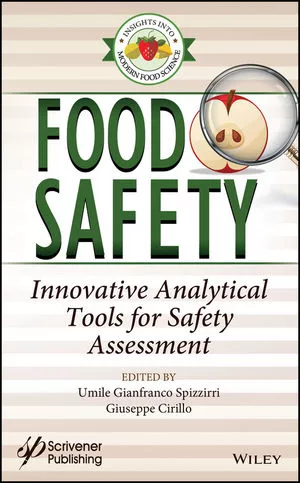
    Food Safety: Innovative Analytical Tools for Safety Assessment

  • global food.jpg

    Global Food Safety Microbial Interventions and Molecular Advancements

  • 1119258073.jpg

    FSMA and Food Safety Systems: Understanding and Implementing the Rules

See More Products

Related Directories

  • Harpak-ULMA

    Harpak-ULMA’s comprehensive, full-service solutions encompass installation, training, spare parts, service, and ongoing customer support. The company's capabilities include thermoforming, tray sealing, flow wrap, multihead weighing, stretch, filling, blister, skin pack, and vacuum packaging systems. In addition, Harpak-ULMA offers a robust suite of automation solutions, covering feeding, loading, secondary packaging, palletizing, robotics, centralized line control, and tote/basket management. These capabilities extend to specialized ready-meals applications, ensuring optimized packaging for fresh, frozen, and shelf-stable convenience foods.
  • North American Chemical Residue Workshop

    NACRW) formerly the Florida Pesticide Residue Workshop conducts an annual meeting for scientists particularly interested in trace level analysis of pesticides, veterinary drug residues, and other chemicals in food, animal feed, and environmental samples. The purpose of the meeting is to provide training, develop and improve technical knowledge, facilitate development and distribution of new analysis methods and techniques, and establish networking to promote professional cooperation between scientists of these interests.
×

Never miss the latest news and trends driving the food safety industry

eNewsletter | Website | eMagazine

JOIN TODAY!
  • RESOURCES
    • Advertise
    • Contact Us
    • Directories
    • Store
    • Want More
  • SIGN UP TODAY
    • Create Account
    • eMagazine
    • eNewsletter
    • Customer Service
    • Manage Preferences
  • SERVICES
    • Marketing Services
    • Reprints
    • Market Research
    • List Rental
    • Survey/Respondent Access
  • STAY CONNECTED
    • LinkedIn
    • Facebook
    • Instagram
    • X (Twitter)
  • PRIVACY
    • PRIVACY POLICY
    • TERMS & CONDITIONS
    • DO NOT SELL MY PERSONAL INFORMATION
    • PRIVACY REQUEST
    • ACCESSIBILITY

Copyright ©2025. All Rights Reserved BNP Media.

Design, CMS, Hosting & Web Development :: ePublishing