Food Safety
search
Ask Food Safety AI
cart
facebook twitter linkedin
  • Sign In
  • Create Account
  • Sign Out
  • My Account
Food Safety
  • NEWS
    • Latest News
    • White Papers
  • PRODUCTS
  • TOPICS
    • Contamination Control
    • Food Types
    • Management
    • Process Control
    • Regulatory
    • Sanitation
    • Supply Chain
    • Testing and Analysis
  • PODCAST
  • EXCLUSIVES
    • Food Safety Five Newsreel
    • eBooks
    • FSM Distinguished Service Award
    • Interactive Product Spotlights
    • Videos
  • BUYER'S GUIDE
  • MORE
    • ENEWSLETTER >
      • Archive Issues
      • Subscribe to eNews
    • Store
    • Sponsor Insights
    • ASK FSM AI
  • WEBINARS
  • FOOD SAFETY SUMMIT
  • EMAG
    • eMagazine
    • Archive Issues
    • Editorial Advisory Board
    • Contact
    • Advertise
  • SIGN UP!
White Papers

No Compromise GC-MS - Atmospheric Pressure GC (APGC)

May 3, 2014


Pesticide residues are often high on the list of consumer concerns and consequently analytical laboratories are tasked with screening samples for as many pesticides as possible in a single analysis. Most countries have clearly defined regulations governing pesticide residue levels, for example Maximum Residue Limits (MRLs) for pesticide residues in food commodities. To ensure compliance analytical techniques that are sensitive, accurate, and robust are required. Multi-residue analysis can prove challenging due to the low limits of detection required to achieve MRL compliance for a diverse range of pesticides in a wide range of food commodities. With more than 1000 pesticides known to be in use, laboratories are under increasing pressure to increase the scope of the analytical methods for routine monitoring purposes.

Various technologies are used to meet this challenge, the most common being Liquid Chromatography (LC) and Gas Chromatography (GC) coupled to tandem quadrupole mass spectrometry. Implementation of these techniques allows the laboratory to cover a range of compounds with varying chemistries as required by legislation. In GC/MS/MS the traditional ionization mode used is Electron Impact (EI). This is a relatively “hard” ionization method and results in a high degree of analyte fragmentation, which compromises the selectivity and sensitivity of the MS/MS measurement. Atmospheric Pressure Gas Chromatography (APGC) is a “soft” ionization technique resulting in less fragmentation and subsequently increasing the sensitivity and selectivity of MS/MS methods.

The Waters APGC source is readily interchangeable with the electrospray (ESI) source enabling a single, high performance platform to be used for the analysis of both GC and LC-amenable pesticides. GC/MS is commonly applied for non-polar, volatile, and thermally stable compounds, and ionization in GC/MS normally occurs under vacuum conditions using either electron ionization (EI) or chemical ionization (CI). APGC operates at atmospheric pressure and its soft ionization process can provide abundant molecular ions that in most cases can be used as precursor ions in MRM experiments for multi-residue GC-MS/MS analysis.

Key features/benefits:

  • Lower levels of fragmentation compared with traditional EI: Coupled with Waters' Xevo TQ MS or Xevo TQ-S, APGC enables low-level quantification of pesticide residues that have proved challenging to analyze using traditional EI+ GC-MS systems.
  • Analyze both GC and LC compounds on a single MS platform: APGC enables users access to Waters high performance MS systems and class leading technologies such as RADAR, MSE and Ion Mobility Separations (IMS) that were previously unavailable. Changeover from LC to GC is fast and easy, with equilibration time between modes of operation kept to a minimum.
  • Achieve ultra-trace detection levels using Xevo TQ-S tandem quadrupole MS with APGC. This allows compliance with regulatory limits and the ability to inject less sample matrix.

In this application note  we describe the development and validation of a highly sensitive, multi-class method for the routine determination of 142 pesticide residues in QuEChERS extracts of various fruit and vegetables using APGC and Xevo TQ-S.

For more information on APGC, visit www.waters.com/apgc

By Jody Dunstan, BSc MSc CChem MRSC, Product Manager, GC/MS Waters Corporation


Author(s): Jody Dunstan, BSc MSc CChem MRSC

Looking for quick answers on food safety topics?
Try Ask FSM, our new smart AI search tool.
Ask FSM →


Share This Story

Recommended Content

JOIN TODAY
to unlock your recommendations.

Already have an account? Sign In

  • people holding baby chicks

    Serovar Differences Matter: Utility of Deep Serotyping in Broiler Production and Processing

    This article discusses the significance of Salmonella in...
    Testing & Analysis
    By: Nikki Shariat Ph.D.
  • woman washing hands

    Building a Culture of Hygiene in the Food Processing Plant

    Everyone entering a food processing facility needs to...
    Training
    By: Richard F. Stier, M.S.
  • graphical representation of earth over dirt

    Climate Change and Emerging Risks to Food Safety: Building Climate Resilience

    This article examines the multifaceted threats to food...
    Risk Assessment
    By: Maria Cristina Tirado Ph.D., D.V.M. and Shamini Albert Raj M.A.
Manage My Account
  • eMagazine Subscription
  • Subscribe to eNewsletter
  • Manage My Preferences
  • Website Registration
  • Subscription Customer Service

More Videos

Sponsored Content

Sponsored Content is a special paid section where industry companies provide high quality, objective, non-commercial content around topics of interest to the Food Safety Magazine audience. All Sponsored Content is supplied by the advertising company and any opinions expressed in this article are those of the author and not necessarily reflect the views of Food Safety Magazine or its parent company, BNP Media. Interested in participating in our Sponsored Content section? Contact your local rep!

close
  • Salmonella bacteria
    Sponsored byThermoFisher

    Food Microbiology Testing Methods: Salmonella species

  • a diagram explaining indicator organisms
    Sponsored byHygiena

    How Proactive Listeria Testing Helps Prevent Six- and Seven-Figure Recalls

  • woman grocery shopping
    Sponsored byCorbion

    Designing Safety Into Every Bite: Proactive Risk Mitigation for Refrigerated Foods

Popular Stories

NRTE breaded stuffed chicken

USDA Indefinitely Delays Enforcement of Salmonella as Adulterant in Raw Breaded, Stuffed Chicken

non-conforming product

How to Handle Non-Conforming Product

spoonfuls of food ingredients

FDA’s Developing Rule to Tighten GRAS Oversight Moves to White House

Events

December 11, 2025

How to Develop and Implement an Effective Food Defense Strategy

Live: December 11, 2025 at 2:00 pm EDT: From this webinar, attendees will learn common areas where companies encounter challenges in their food defense strategies and how to address them.

May 11, 2026

The Food Safety Summit

Stay informed on the latest food safety trends, innovations, emerging challenges, and expert analysis. Leave the Summit with actionable insights ready to drive measurable improvements in your organization. Do not miss this opportunity to learn from experts about contamination control, food safety culture, regulations, sanitation, supply chain traceability, and so much more.

View All

Products

Global Food Safety Microbial Interventions and Molecular Advancements

Global Food Safety Microbial Interventions and Molecular Advancements

See More Products

Related Articles

  • White Paper: Atmospheric Pressure GC

    See More
  • Analysis of Pesticides in Baby Foods Using Triple Quad GC/MS/MS

    See More

Related Products

See More Products
  • 1118396308.jpg

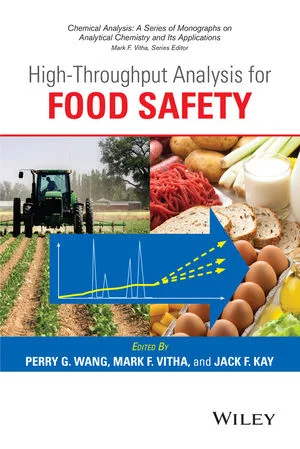
    High Throughput Analysis for Food Safety

  • 9781498721776.jpg

    Handbook of Food Processing: Food Safety, Quality, and Manufacturing Processes

See More Products

Related Directories

  • Linde

    Linde is a leading provider of industrial gases, cryogenic gases and equipment systems to freeze, chill, preserve and better control your process. We offer processors reduced per unit cost and improved productivity. Temperature control expertise matched with industry leading atmosphere application knowledge along with integrated systems & service support differentiate Linde in the market place.
×

Never miss the latest news and trends driving the food safety industry

eNewsletter | Website | eMagazine

JOIN TODAY!
  • RESOURCES
    • Advertise
    • Contact Us
    • Directories
    • Store
    • Want More
  • SIGN UP TODAY
    • Create Account
    • eMagazine
    • eNewsletter
    • Customer Service
    • Manage Preferences
  • SERVICES
    • Marketing Services
    • Reprints
    • Market Research
    • List Rental
    • Survey/Respondent Access
  • STAY CONNECTED
    • LinkedIn
    • Facebook
    • Instagram
    • X (Twitter)
  • PRIVACY
    • PRIVACY POLICY
    • TERMS & CONDITIONS
    • DO NOT SELL MY PERSONAL INFORMATION
    • PRIVACY REQUEST
    • ACCESSIBILITY

Copyright ©2025. All Rights Reserved BNP Media.

Design, CMS, Hosting & Web Development :: ePublishing