Buyer-Led Supply Chain Screening: Establish Trust Without Betting the Business
February 11, 2026
Buyer-Led Supply Chain Screening: Establish Trust Without Betting the Business
February 11, 2026
A shipment arrives with perfect paperwork: government certificates, a stamped inspection report, and a certificate of analysis that matches the specification sheet down to the last decimal. Lot codes align. The broker calls it "standard." The team files it, approves it, and moves on.
Later, a whistleblower story breaks. Inspectors were bribed. The certification system was compromised. The "official" certificate was effectively fraudulent. The documents were not sloppy. They were consistent, polished, and designed to pass routine checks.
This is the operating reality in modern food supply chains: paperwork can be correct in form and wrong in substance. When incentives are high and oversight is weak, documents become props. At that point, the buyer's job shifts from collecting evidence to verifying reality.
That shift matters because regulators increasingly expect the organization placing product on the market to have a defensible basis for supplier decisions. Under the U.S. Food and Drug Administration's (FDA's) Food Safety Modernization Act (FSMA) Preventive Controls for Human Food framework,1 receiving facilities must implement a risk-based supply chain program when a hazard requires a supply chain applied control. In the EU, the Deforestation Regulation2 pushes due diligence beyond documentation into traceability, risk assessment, and risk mitigation, with current timelines expected to begin December 30, 2026 for large operators and traders and June 30, 2027 for micro and small enterprises.
Different regimes, same direction: trust must be defensible with evidence, not just supported by a certificate.
Signaling vs. Screening: Same Problem, Opposite Starting Point
Supplier assurance practice often blurs "screening" into onboarding, audits, certifications, and supplier transparency. That sounds reasonable until it creates a blind spot: teams assume risk is "handled" because a program exists, while opportunism survives in the seams between documents, incentives, and weak verification.
Theory helps separate two mechanisms that often get mashed together:3–8
- Signaling theory: The informed party (the supplier) takes the first step by sending signals to reduce information asymmetry. In food, that includes certificates, audit reports, test results, and premium claims like organic and origin.
- Screening theory: The less informed party (the buyer) takes the first step by designing tests, rules, and decision gates that force separation between lower- and higher-risk supplier types.
Supplier signals can be useful inputs, especially for low-risk, low-volume suppliers where intensive screening is not viable. However, signals are not a substitute for buyer-led screening in high-risk or high-dependency categories.
Looking for quick answers on food safety topics?
Try Ask FSM, our new smart AI search tool.
Ask FSM →
Looking for a reprint of this article?
From high-res PDFs to custom plaques, order your copy today!
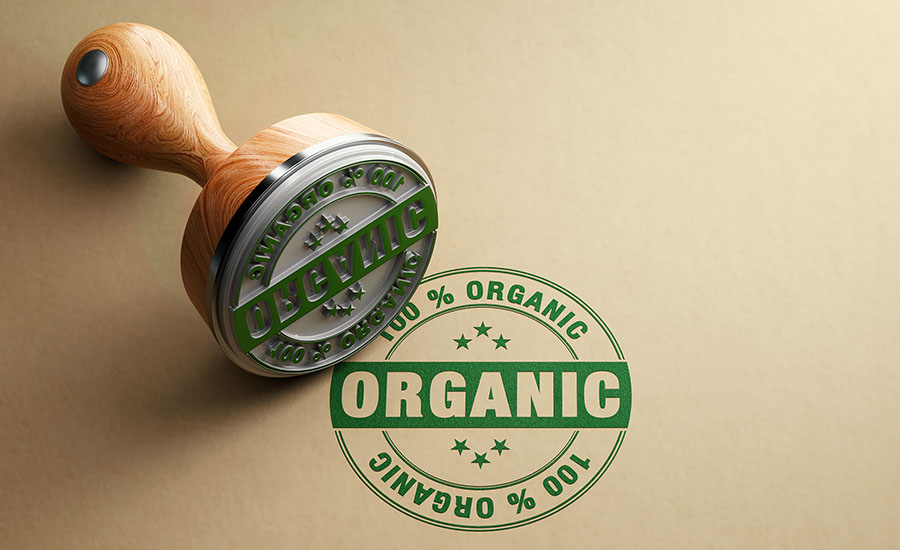
A simple illustration: "Organic" is a price multiplier, so it attracts misrepresentation (Figure 1). USDA's National Organic Program publicly posts a list of reported fraudulent Organic certificates in a searchable spreadsheet. The point is not the count. The point is that forged documentation is common enough to require a standing, system-level response.9
What Was Tested: Screening as a Buyer Capability, Not a Supplier Promise
In my recent research on buyer screening of new suppliers (n=194), screening is treated as a distinct ex ante buyer construct grounded in screening theory: buyer-led actions taken before (or at the earliest stage of) a new supplier relationship to reduce information asymmetry and filter out high-risk suppliers.
Using PLS-SEM (Partial Least Squares Structural Equation Modeling), the study examined relationships among four measured variables: buyer-led screening (a newly developed 14-item scale), trust, asset specificity, and opportunism.
The model is intentionally simple, but the results capture a real executive tension:
- Screening predicts trust
- Screening predicts asset specificity (buyers invest more when screening increases confidence)
- Trust reduces opportunism
- Asset specificity increases vulnerability to opportunism.
In plain terms: screening does not just help you "approve a supplier." It helps you decide whether it is rational to commit to the relationship.
What Buyer-Led Screening Looks Like in Practice
Buyer-led screening is not "more paperwork." It is a governance discipline that separates plausible claims from verified reality, including claims about food safety, authenticity, sustainability, quality attributes, and premium process claims (e.g., Organic, origin, animal welfare, and similar).
Here is what buyer-led screening looks like when it is properly executed:
- Validate the evidence behind certificates, not the existence of certificates. Do not just collect the COA. Ask about sampling plan, lab identity, chain of custody, and how results are tied to the specific lot shipped. Where the risk warrants it, independently test a pilot lot.
- Cross-check documents for internal consistency and external plausibility. Compare COA, spec, lot codes, production dates, shipping documents, and prior history. Consistency is necessary but not sufficient. Watch for "too perfect" patterns, sudden step changes in performance, or results that do not match process capability.
- Probe the process, not the brochure. Ask targeted questions about critical control steps and deviation handling: hold and release, allergen changeovers, sanitation verification, complaint handling, and stop-ship authority. A supplier that cannot clearly describe its own controls is a risk signal.
- Verify high-value claims explicitly (Organic, authenticity, origin, and other premium attributes). Claims like "Organic," "single-origin," "PDO/PGI" (Protected Designation of Origin/Protected Geographical Indication), "wild-caught," "halal/kosher," "no antibiotics," or "free-range" are price multipliers. Screening should test whether the supplier can prove these claims with traceable evidence and controls, not just a logo. Use mass balance logic, segregation and identity preservation practices, certificate validity and scope checks, and where appropriate, independent authenticity testing.
- Assess food safety culture and governance as first-order risk variables. Screening should reveal whether food safety is operationally real or decorative: how near-misses are logged, whether corrective actions close with evidence, how production targets and quality assurance (QA) decisions get reconciled, and whether QA has real decision rights.
- Include a whistleblower and speak-up capability check. Whistleblowing is one of the few mechanisms that reliably surfaces concealed noncompliance. Screening can test whether a supplier has a confidential reporting channel, explicit non-retaliation expectations, training, and credible triage and investigation processes.
- Use trigger rules for deeper verification when conditions shift. Price drops, unusual lead time improvements, sudden specification flexibility, new intermediaries, supply shocks, rapid growth, or capacity constraints should automatically escalate checks. Those are classic moments when corner-cutting becomes economically tempting.
- Verify traceability by doing, not asking. Run a traceback and trace-forward exercise (tabletop or live) on a pilot lot with a time limit. Ask for records, not summaries. See whether traceability holds under pressure.
- Verify financial and legal status, and check prior violations, sanctions, and enforcement actions. Do a structured integrity and viability check before meaningful commitment: legal entity verification, registrations and licenses, basic financial stability indicators (including insurance coverage), and history of recalls, prosecutions, or sanctions involving the supplier and key subcontractors. Patterns matter.
- Confirm independence from potentially compromised systems. Where oversight is uneven, add independent verification such as third-party testing, unannounced checks where feasible, or triangulation through multiple data sources. The goal is resilience when signals are manipulated.
Why Opportunism Still Belongs in a Food Supply Chain Conversation
Opportunism is an uncomfortable word, but it describes a real governance problem: when incentives exist, some actors exploit gaps. Williamson's transaction cost economics frame opportunism as "self-interest seeking with guile," that includes "the incomplete or distorted disclosure of information, especially to calculated efforts to mislead, distort, disguise, obfuscate, or otherwise confuse."10 That framing can be criticized when it becomes a default attitude toward every supplier. Ghoshal and Moran11 famously argued that transaction cost reasoning can be "bad for practice" if it normalizes distrust and drives control-heavy governance that undermines cooperation.
The practical synthesis is simple: do not treat suppliers like adversaries by default, but do not design assurance systems that collapse the moment incentives turn ugly.
Food crime makes this more than theory. INTERPOL and Europol's annual Operation OPSON, running since 2011, targets counterfeit and substandard food and beverages and aims to disrupt organized crime groups involved in these trades.12,13 In the UK, the Food Standards Agency estimates the annual cost of food crime at between £410 million and £1.96 billion.14
The Technology Twist: Governance can Fail at Machine Speed
Modern traceability and assurance technology is often sold as "trust automation." Some of it is genuinely valuable: immutability, faster traceability, faster recall.
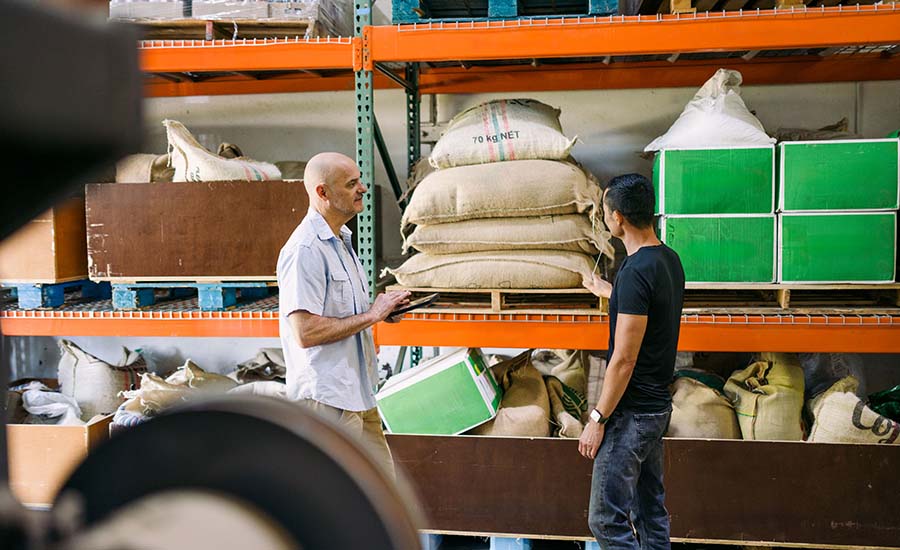
But digitization and digitalization add a failure mode: if you encode brittle rules, or treat data as inherently truthful, you can automate confidence faster than you can validate inputs. Opportunism can change shape rather than disappear. Lumineau and Oliveira15 argue that opportunism becomes harder to observe as governance structures and contexts evolve, which is exactly what digitization does (Figure 2).
Framing ROI Starts with Framing Risk
Most companies use standard ROI tools to evaluate investments, such as new equipment, software systems, or facility upgrades. These typically include:
- Return on investment (ROI)
- Net present value (NPV)
- Internal rate of return (IRR)
- Payback period.
These tools help justify capital spending by projecting cost savings, efficiency gains, or revenue growth. When it comes to food safety investments, however, the equation becomes more complex, because the "return" is often measured in costs avoided, risks reduced, and trust preserved, rather than direct revenue or throughput.
It's true that components like allergen-prevention infrastructure, analytical testing, and foreign material detection often go through cost-benefit analysis. But how do you measure the true return, or cost avoidance, of preventing a single catastrophic event?
Are you framing your ROI on the low-end costs of a market withdrawal, or the high-end consequences of widespread injury, illness, or even death? That framing makes all the difference. On the low end, food safety becomes a debate. On the high end, it becomes a "no-brainer" (Figure 2).
If Not Done Right, Technology Enables "Claim Laundering"
The implication is not "avoid technology"; instead, treat technology as an accelerant. It can reduce some forms of manipulation while enabling others if bad actors can launder claims through credible-looking systems.
Four moves leaders should make now include:
- Measure screening as a capability, not a checkbox. If you cannot measure screening quality, then you cannot manage it. A practical screening scale gives leaders a way to compare business units, suppliers, and categories, and to spot where "supplier approval" is mostly paperwork.
- Manage the asset specificity paradox explicitly. As dependency rises, opportunism exposure can increase. Governance should scale with dependency. That means tighter verification cycles, escalation triggers, and contractual safeguards that reflect lock-in risk.
- Design assurance for adversarial conditions. Assume that documents can be forged. Assume that certifications can be compromised. Assume that criminal capability exists in high-margin categories. Build verification that does not collapse when signals are manipulated. This aligns with the risk-based logic embedded in FSMA supply chain controls.
- Build relational trust deliberately, because it does not exist at the start. In new supplier relationships, trust is not necessarily missing. It is unproven. Treat trust-building as an explicit workstream supported by screening, verification, and governance.
Relational trust is not "be nice." It is a structured progression from limited commitment to durable reliance:
- Start with small, reversible commitments (e.g., pilot lots, staged volumes, short renewal cycles).
- Create shared operating routines (e.g., joint defect reviews, disciplined root cause analysis, change control, clear escalation paths).
- Make the trust rules explicit (e.g., what counts as a breach, what triggers enhanced verification, what triggers exit).
- Treat transparency as two-way (e.g., predictable ordering, realistic forecasts, fair dispute handling, paying on time). Buyers also shape incentives.
This connects directly to the model logic: screening helps establish early confidence, but trust is what stabilizes the relationship once asset specificity rises and opportunism becomes more economically tempting.
Bottom Line
Buyer-led screening is not bureaucracy. It is the discipline that allows trust to be established early without blind commitment, and it is what enables relationship investment without betting the company on hope.
Trust is still essential. But trust that cannot be defended with evidence is not trust; it is exposure.
References
- U.S. Food and Drug Administration (FDA). FSMA Final Rule for Preventive Controls for Human Food. September 2015. https://www.fda.gov/food/food-safety-modernization-act-fsma/fsma-final-rule-preventive-controls-human-food.
- European Union (EU). "Regulation (EU) 2025/2650 of the European Parliament and of the Council of 19 December 2025 amending Regulation (EU) 2023/1115 as regards certain obligations of operators and traders." Updated December 19, 2025. https://eur-lex.europa.eu/legal-content/EN/TXT/?uri=OJ:L_202502650.
- Spence, M. "Job Market Signaling." The Quarterly Journal of Economics 87, no. 3, (August 1973): 355–374. https://academic.oup.com/qje/article-abstract/87/3/355/1909092.
- Stiglitz, J.E. (1975). "The Theory of 'Screening' Education and the Distribution of Income." The American Economic Review 65, no. 3 (June 1975): 912–927. https://www.jstor.org/stable/1804834.
- Rothschild, M. and J. Stiglitz. "Equilibrium in Competitive Insurance Markets: An Essay on the Economics of Imperfect Information." The Quarterly Journal of Economics 90, no. 4 (November 1976): 629–649. https://www.jstor.org/stable/1885326.
- Bergh, D.D., B.L. Connelly, D.J. Ketchen Jr., and L.M. Shannon. "Signalling Theory and Equilibrium in Strategic Management Research: An Assessment and a Research Agenda." Journal of Management Studies 51, no. 8 (December 2014). https://onlinelibrary.wiley.com/doi/abs/10.1111/joms.12097.
- Connelly, B.L., W. Shei, X. Cheng, and C. Yin. "Short Sellers: A Screening Theory Perspective on B2B Relationships." Journal of Business Research 134 (September 2021): 393–404. https://www.sciencedirect.com/science/article/abs/pii/S0148296321003581.
- Riley, J.G. "Silver Signals: Twenty-Five Years of Screening and Signaling." Journal of Economic Literature 39, no. 2: 432–478. https://www.jstor.org/stable/2698245.
- U.S. Department of Agriculture, Agricultural Marketing Service (USDA-AMS). "Fraudulent Organic Certificates." https://www.ams.usda.gov/services/enforcement/organic/fraudulent-certificates.
- Williamson, O.E. The Economic Institutions of Capitalism: Firms, Markets, Relational Contracting. New York: The Free Press, 1985.
- Ghoshal, S. and P. Moran. "Bad for Practice: A Critique of the Transaction Cost Theory." The Academy of Management Review 21, no. 1 (January 1996): 13–47. https://www.jstor.org/stable/258627.
- Europol. "Operation OPSON." December 3, 2025. https://www.europol.europa.eu/operations-services-and-innovation/operations/operation-opson.
- INTERPOL. "Food crime operations." https://www.interpol.int/en/Crimes/Illicit-goods/Food-crime-operations.
- Cox, A., D. Shepherd, L. Jack, G. Miller, E. Smart, M. Button, A. Wohlschlegel, and K. Everstine. "The Cost of Food Crime, Phase 2." Food Standards Agency. March 2023. https://www.food.gov.uk/sites/default/files/media/document/Cost%20of%20Food%20Crime%20report.pdf
- Lumineau, F. and N. Oliveira. "Reinvigorating the Study of Opportunism in Supply Chain Management." Journal of Supply Chain Management 56, no. 1 (November 2019): 73–87. https://onlinelibrary.wiley.com/doi/10.1111/jscm.12215.