Food Safety
search
Ask Food Safety AI
cart
facebook twitter linkedin instagram youtube
  • Sign In
  • Create Account
  • Sign Out
  • My Account
Food Safety
  • NEWS
    • Latest News
    • Sponsored Insights
    • Sponsored White Papers
  • PRODUCTS
  • TOPICS
    • Contamination Control
    • Food Types
    • Management
    • Process Control
    • Regulatory
    • Sanitation
    • Supply Chain
    • Testing and Analysis
  • PODCAST
  • EXCLUSIVES
    • Food Safety Five Newsreel
    • eBooks
    • FSM Distinguished Service Award
    • Interactive Product Spotlights
    • Videos
  • BUYER'S GUIDE
  • MORE
    • NEWSLETTERS >
      • Archive Issues
      • Subscribe to eNews
    • Store
    • ASK FSM AI
  • WEBINARS
  • FOOD SAFETY SUMMIT
  • EMAG
    • eMagazine
    • Archive Issues
    • Editorial Advisory Board
    • Contact
    • Advertise
  • SIGN UP!
Products

New 'Do Not Refreeze' Label Helps Ensure Commercial Food Safety
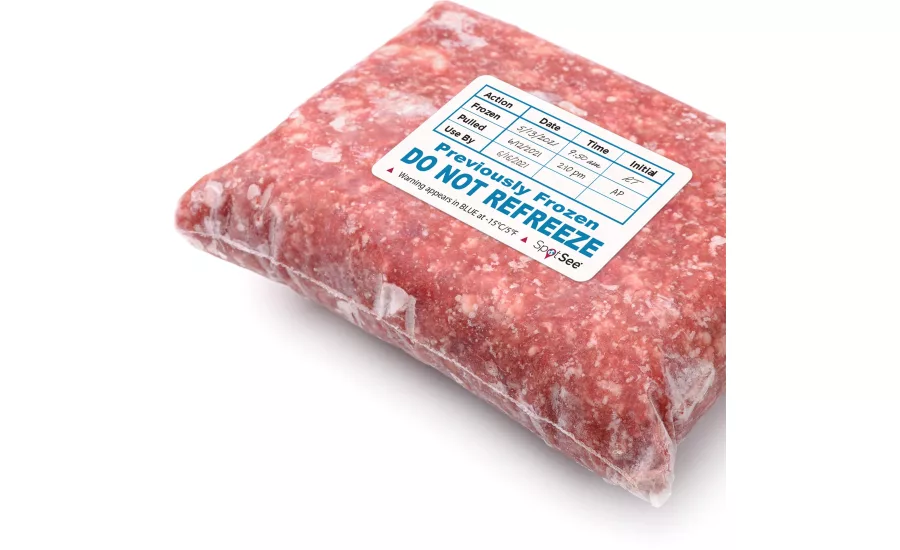
SpotSee Do Not Refreeze Label
November 11, 2021

SpotSee has released its Do Not Refreeze label, now part of its temperature-monitoring product line, to ensure food quality and safety throughout the supply chain and within commercial food environments.

“Do not refreeze” are important words when considering food quality and safety. But how do you know if the product has been frozen when it is already thawed?

The Do Not Refreeze label from SpotSee is a simple solution for this situation. The very act of placing this label on a food to be frozen is an important safeguard. When the temperature is below -15 °C, the label automatically and permanently displays the warning: “Do Not Refreeze.”

Food manufacturers and service workers can place the label on a product’s packaging at the point of manufacture or before placing fresh food in a commercial freezer. Prior to freezing, the blue text on the label is light, indicating the product has not yet been frozen. When the temperature drops below -15 °C, the label automatically and permanently displays "Do Not Refreeze" in dark blue. This color-changing feature enables quick identification for food handlers overseeing large quantities of temperature-sensitive products.

Food handlers can note the date and time of specific actions—frozen, pulled, and use-by date—directly on the label. The Do Not Refreeze label becomes a standard part of HACCP plans.

Anywhere in the farm-to-fork supply chain, it becomes clear when a product has been previously frozen. With a simple label, it is possible to improve food quality all the way into the home kitchen.

Knowing that food has been previously frozen is important, as quality and safety can be compromised if temperature-sensitive products are frozen, thawed, and then refrozen. The Do Not Refreeze label will benefit those in food service, catering, and food manufacturing, and allow them to stay accountable and knowledgeable of the food’s environment.

Looking for quick answers on food safety topics?
Try Ask FSM, our new smart AI search tool.
Ask FSM →

The label includes a chart for users to track the date and time a product was frozen, pulled from the freezer, and when it should be used by. The Do Not Refreeze label is single-use and has been approved for indirect food contact.


SpotSee | https://spotsee.io/temperature/do-not-refreeze-label

KEYWORDS: SpotSee temperature monitoring temperature monitoring sensor

Share This Story

Recommended Content

JOIN TODAY
to unlock your recommendations.

Already have an account? Sign In

  • people holding baby chicks

    Serovar Differences Matter: Utility of Deep Serotyping in Broiler Production and Processing

    This article discusses the significance of Salmonella in...
    Methods
    By: Nikki Shariat Ph.D.
  • woman washing hands

    Building a Culture of Hygiene in the Food Processing Plant

    Everyone entering a food processing facility needs to...
    Personal Hygiene/Handwashing
    By: Richard F. Stier, M.S.
  • graphical representation of earth over dirt

    Climate Change and Emerging Risks to Food Safety: Building Climate Resilience

    This article examines the multifaceted threats to food...
    International
    By: Maria Cristina Tirado Ph.D., D.V.M. and Shamini Albert Raj M.A.
Manage My Account
  • eMagazine Subscription
  • Subscribe to Newsletters
  • Manage My Preferences
  • Website Registration
  • Subscription Customer Service

More Videos

Sponsored Content

Sponsored Content is a special paid section where industry companies provide high quality, objective, non-commercial content around topics of interest to the Food Safety Magazine audience. All Sponsored Content is supplied by the advertising company and any opinions expressed in this article are those of the author and not necessarily reflect the views of Food Safety Magazine or its parent company, BNP Media. Interested in participating in our Sponsored Content section? Contact your local rep!

close
  • Man In Warehouse
    Sponsored byRentokil

    Mitigating Hidden Rodent Risks in Food Facilities

  • an industrial manufacturing or processing facility
    Sponsored bybioMérieux

    Get Ahead of Spoilage in Food Manufacturing with Metagenomics for Preventive Monitoring

  • an automated industrial production line used in a modern food factory
    Sponsored byIFC

    A Formula for Food Processing Pest Management

Popular Stories

a label seal that says "California Certified Not Ultraprocessed" with the California Republic bear on it

California Passes Bill to Create Certification Seal for Non-Ultra-Processed Foods

Beltsville Agricultural Research Center grounds

News That USDA Cyclospora Research Was Defunded in 2026 Emerges as Nation’s Largest-Ever Cyclosporiasis Outbreak Continues

Cattle ranch

Cattlemen’s Associations Oppose Trump’s Push to Allow On-Farm Meat Processing: ‘Food Safety is NOT Red Tape’

allergens ebook

Events

September 10, 2026

Stop Rodents in Their Tracks!

Live: September 10, 2026 at 2:00 pm EDT: Attend this webinar to understand rodent behavior and innovative strategies for rodent management.

September 22, 2026

From EFSA to Enforcement: Managing the Growing Complexity of EU MRLs

Live: September 22, 2026 at 11:00 am EDT: Attend this webinar to evaluate best practices for monitoring regulatory changes and protecting market access.

September 24, 2026

Benchmarking Foreign Material Contamination in 2026: What the Data Shows

Live: September 24, 2026 at 2:00 pm EDT:  From this webinar, attendees will learn what is driving investment decisions, and the factors FSQA and ops leaders weigh when making the case for new prevention technology.

View All

Products

Global Food Safety Microbial Interventions and Molecular Advancements

Global Food Safety Microbial Interventions and Molecular Advancements

See More Products

Related Articles

  • gene editing dna strands

    EFSA Concludes New Genetic Modification Techniques for Food Animals do Not Pose Novel Risks

    See More
  • olive oil bottle and olives on gray background

    Auditors Find EU Countries Do Not Consistently Check Safety, Authenticity of Olive Oil

    See More
  • farmland with sunset in distance

    European Commission Wants to Stop Agri-Food Imports That Do Not Meet EU Production Standards

    See More

Related Products

See More Products
  • 1119053595.jpg

    Food Safety for the 21st Century: Managing HACCP and Food Safety throughout the Global Supply Chain, 2E

  • 9781498721776.jpg

    Handbook of Food Processing: Food Safety, Quality, and Manufacturing Processes

  • 1119160553.jpg

    Food Safety: Innovative Analytical Tools for Safety Assessment

See More Products

Related Directories

  • Food Safety News

    Food Safety News advances public health by delivering timely, accurate, and comprehensive coverage of foodborne illness outbreaks, recalls, and regulatory developments that impact the safety of our global food supply.
  • Active Food Safety

    Active Food Safety consists of an experienced team of food safety professionals who are thought-leaders in the food industry, and have each led enterprise level food safety management programs in several of the most well-known and respected brands in the food industry. We continuously help our clients ensure food safety based on proven business best practices designed specifically to the brand - to maximize risk reduction to prevent foodborne disease illnesses and outbreaks, to meet all government regulatory requirements, and to improve sales and brand reputation.
  • Women In Food Safety

    Women in Food Safety is a US-based global nonprofit organization dedicated to empowering and advancing women in the food safety and quality industry. Women In Food Safety provides a platform for professionals at all stages of their careers to grow, share knowledge, and support one another. Through community events, educational initiatives, and leadership development, we are building a more inclusive and resilient future for food safety worldwide. Together, we can do BETTER!
×

Never miss the latest news and trends driving the food safety industry

Newsletters | Website | eMagazine

JOIN TODAY!
  • RESOURCES
    • Advertise
    • Contact Us
    • Directories
    • Store
    • Want More
  • SIGN UP TODAY
    • Create Account
    • eMagazine
    • Newsletters
    • Customer Service
    • Manage Preferences
  • SERVICES
    • Marketing Services
    • Reprints
    • Market Research
    • List Rental
    • Survey/Respondent Access
  • STAY CONNECTED
    • LinkedIn
    • Facebook
    • Instagram
    • X (Twitter)
  • PRIVACY
    • PRIVACY POLICY
    • TERMS & CONDITIONS
    • DO NOT SELL MY PERSONAL INFORMATION
    • PRIVACY REQUEST
    • ACCESSIBILITY

Copyright ©2026. All Rights Reserved BNP Media, Inc. and BNP Media II, LLC.

Design, CMS, Hosting & Web Development :: ePublishing