Food Safety
search
Ask Food Safety AI
cart
facebook twitter linkedin instagram youtube
  • Sign In
  • Create Account
  • Sign Out
  • My Account
Food Safety
  • NEWS
    • Latest News
    • White Papers
  • PRODUCTS
  • TOPICS
    • Contamination Control
    • Food Types
    • Management
    • Process Control
    • Regulatory
    • Sanitation
    • Supply Chain
    • Testing and Analysis
  • PODCAST
  • EXCLUSIVES
    • Food Safety Five Newsreel
    • eBooks
    • FSM Distinguished Service Award
    • Interactive Product Spotlights
    • Videos
  • BUYER'S GUIDE
  • MORE
    • NEWSLETTERS >
      • Archive Issues
      • Subscribe to eNews
    • Store
    • Sponsor Insights
    • ASK FSM AI
  • WEBINARS
  • FOOD SAFETY SUMMIT
  • EMAG
    • eMagazine
    • Archive Issues
    • Editorial Advisory Board
    • Contact
    • Advertise
  • SIGN UP!
News

Norway Releases Risk Ranking Report, Toxoplasma gondii Tops List

Toxoplasma gondii
June 24, 2021

Norway has released a risk ranking report of 20 pathogens, and Toxoplasma gondii is at the top of the list. 

It was followed by Campylobacter, Echinococcus multilocularis, enterohaemorrhagic Escherichia coli (EHEC), Listeria monocytogenes, and non-typhoidal Salmonella, according to the Norwegian Scientific Committee for Food and Environment (VKM).

The report was commissioned by the Norwegian Food Safety Authority, and it will be used for risk-based prioritization of programs for monitoring and controlling pathogens in food and water.

Risk ranking was based on a few factors, including the number of water and foodborne illnesses, severity of acute and chronic disease, fraction of chronic illness, fatality rate, and the probability for future increased disease burden. The overall risk score for each pathogen was calculated by weighing six criteria related to public health. 

VKM looked at data from national surveillance and monitoring programs, prevalence surveys, outbreak investigations, and research, including epidemiological studies. When there was a lack of Norwegian data, international reports were used.

The bottom five pathogens were Clostridium botulinum, Staphylococcus aureus, Clostridium perfringens, Bacillus cereus, and Anisakidae.

If number of foodborne illnesses was the most important criterion, the highest ranked pathogens would become norovirus and Campylobacter. When morbidity severity has maximal importance, the order is Toxoplasma, E. multilocularis, EHEC, C. botulinum, and Listeria.

Looking for quick answers on food safety topics?
Try Ask FSM, our new smart AI search tool.
Ask FSM →

VKM also noticed which foods the pathogens are commonly found in, the importance of food as a source of infection, and the main risk factors.

Fresh vegetables were one of the most important food sources for 12 of the 20 infectious agents, drinking water was associated with 8, and 5 were linked to raw milk products.

The main food vehicles of T. gondii were undercooked meat from sheep, pigs, and cattle, and unwashed fresh produce. For E. multilocularis it was eating unwashed raw vegetables, herbs, fruits, or berries contaminated with parasite eggs or drinking contaminated water.

Drinking water and poultry are the main vehicles for Campylobacter as well as consumption of raw, unpasteurized milk and dairy products. For Salmonella, it was various imported foods of animal or vegetable origin and foreign travel.

The top culprits for EHEC were undercooked meat from sheep and cattle, fresh produce, and unpasteurized milk products. For Listeria, the list included cold cuts, soft cheeses, fermented fish (rakfisk), and unpasteurized milk products.

KEYWORDS: Norway Toxoplasma gondii

Share This Story

Recommended Content

JOIN TODAY
to unlock your recommendations.

Already have an account? Sign In

  • people holding baby chicks

    Serovar Differences Matter: Utility of Deep Serotyping in Broiler Production and Processing

    This article discusses the significance of Salmonella in...
    Testing & Analysis
    By: Nikki Shariat Ph.D.
  • woman washing hands

    Building a Culture of Hygiene in the Food Processing Plant

    Everyone entering a food processing facility needs to...
    Training
    By: Richard F. Stier, M.S.
  • graphical representation of earth over dirt

    Climate Change and Emerging Risks to Food Safety: Building Climate Resilience

    This article examines the multifaceted threats to food...
    Best Practices
    By: Maria Cristina Tirado Ph.D., D.V.M. and Shamini Albert Raj M.A.
Manage My Account
  • eMagazine Subscription
  • Subscribe to Newsletters
  • Manage My Preferences
  • Website Registration
  • Subscription Customer Service

More Videos

Sponsored Content

Sponsored Content is a special paid section where industry companies provide high quality, objective, non-commercial content around topics of interest to the Food Safety Magazine audience. All Sponsored Content is supplied by the advertising company and any opinions expressed in this article are those of the author and not necessarily reflect the views of Food Safety Magazine or its parent company, BNP Media. Interested in participating in our Sponsored Content section? Contact your local rep!

close
  • NEVIFIT 3 Compartment BPA-FREE
    Sponsored byCorbion

    The Risks of Ready-to-Eat: Five Ways to Protect Today's Prepared Meals

  • a group of workers in a food production facility
    Sponsored bySkillUp by Registrar Corp

    How to Build a Better Training Program: Data and Insights from the Global Food Safety Training Survey

  • the use of dual-energy X-ray food inspection technology to identify foreign contaminants.
    Sponsored byEagle by METTLER TOLEDO

    Precision Inspection Starts with the Right X-ray Detector

Popular Stories

clover hill dairy recalled cheese products

Eight Sick, One Dead in Three-Year Listeria Outbreak Linked to Soft Cheese

diverse friends eating meal together

Global Foodborne Disease Burden Comparable to Malaria, Per Updated WHO Estimates

baby having a bottle fed by his moms

After Infant Botulism Outbreak, FDA Shares Root Cause Analysis Findings from ByHeart Formula Plants

Events

June 16, 2026

Sustainable Food Contact Materials: Where Regulation Meets Analytical Testing

Live: June 16, 2026 at 11:00 am EDT: This webinar explores how sustainability regulations are changing food contact material requirements, including packaging compliance, unintended substances, and per- and polyfluoroalkyl substances.

June 17, 2026

Living HACCP: Practical Steps for Implementation

Live: June 17, 2026, at 12:00 pm EDT: From this webinar, attendees will understand how social norms shape the way hazards are understood, how decisions are made, and how well risks are understood and acted on across companies.

June 25, 2026

Rethinking Food Safety: Eliminating Biofilm and Building a Smarter Food Safety System

Live: June 25, 2026 at 2:00 pm EDT: Join this webinar to explore a modern approach to decontamination that goes beyond surface-level cleaning to combat biofilm and persistent pathogens.

View All

Products

Global Food Safety Microbial Interventions and Molecular Advancements

Global Food Safety Microbial Interventions and Molecular Advancements

See More Products

Related Articles

  • dried meat

    Northern Canadians More Likely to Contract Foodborne Parasite Toxoplasma Gondii

    See More
  • e coli rendering

    Researchers Explore New Risk-Ranking Methods for STEC Strains

    See More
  • FDA Releases Draft Risk Profile on Pathogens and Filth in Spices, Seeks Industry Comments

    See More

Related Products

See More Products
  • 1119071127.jpg

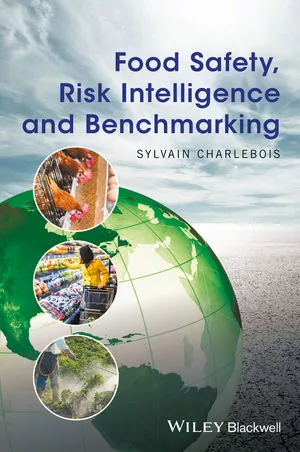
    Food Safety, Risk Intelligence and Benchmarking

  • food safety.jpg

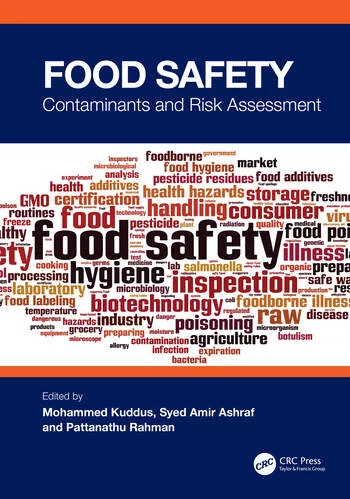
    Food Safety Contaminants and Risk Assessment

  • 9781032369990 (1).webp

    Food Safety Quality Control and Management

See More Products

Events

View AllSubmit An Event
  • May 6, 2026

    Allergen Uncertainty: Risk Assessment, Reference Doses, and Codex Management Guidance

    On Demand: Attendees will gain insight into the importance of preparing for the industry's shift from detection-based methods to risk-based allergen management.
View AllSubmit An Event

Related Directories

  • ATAGO USA Inc.

    Established in 1940 with the motto of “You ask, we create,” we have continuously released state-of-the-art quality control instruments for the food processing industry using cutting edge technology. At this exciting cross-point of manufacturing and automation convergence, our inline Brix meters are evermore an integral part of many industries.
  • Recall InfoLink Inc.

    Recall InfoLink is a subscription software that makes recall process management easier and more effective. The cloud platform enables companies across the supply chain to easily distribute recall information, track progress in real time, generate reports for compliance needs, and complete modernized mock recall exercises.
×

Never miss the latest news and trends driving the food safety industry

Newsletters | Website | eMagazine

JOIN TODAY!
  • RESOURCES
    • Advertise
    • Contact Us
    • Directories
    • Store
    • Want More
  • SIGN UP TODAY
    • Create Account
    • eMagazine
    • Newsletters
    • Customer Service
    • Manage Preferences
  • SERVICES
    • Marketing Services
    • Reprints
    • Market Research
    • List Rental
    • Survey/Respondent Access
  • STAY CONNECTED
    • LinkedIn
    • Facebook
    • Instagram
    • X (Twitter)
  • PRIVACY
    • PRIVACY POLICY
    • TERMS & CONDITIONS
    • DO NOT SELL MY PERSONAL INFORMATION
    • PRIVACY REQUEST
    • ACCESSIBILITY

Copyright ©2026. All Rights Reserved BNP Media, Inc. and BNP Media II, LLC.

Design, CMS, Hosting & Web Development :: ePublishing