Food Safety
search
Ask Food Safety AI
cart
facebook twitter linkedin
  • Sign In
  • Create Account
  • Sign Out
  • My Account
Food Safety
  • NEWS
    • Latest News
    • White Papers
  • PRODUCTS
  • TOPICS
    • Contamination Control
    • Food Types
    • Management
    • Process Control
    • Regulatory
    • Sanitation
    • Supply Chain
    • Testing and Analysis
  • PODCAST
  • EXCLUSIVES
    • Food Safety Five Newsreel
    • eBooks
    • FSM Distinguished Service Award
    • Interactive Product Spotlights
    • Videos
  • BUYER'S GUIDE
  • MORE
    • ENEWSLETTER >
      • Archive Issues
      • Subscribe to eNews
    • Store
    • Sponsor Insights
    • ASK FSM AI
  • WEBINARS
  • FOOD SAFETY SUMMIT
  • EMAG
    • eMagazine
    • Archive Issues
    • Editorial Advisory Board
    • Contact
    • Advertise
  • SIGN UP!

Online training modules for hygienic design provide practical knowledge

3-A SSI introduced three new hygienic equipment design e-learning modules available for free.

By Timothy Rugh
3AToday.jpg
February 14, 2017

Where can food industry professionals interested in hygienic equipment design find great practical foundation knowledge?  Technical educational programs offered by universities and/or related institutions account for a lot, if and where such specialized training exists. In addition, many for-profit providers offer in-depth customized training, but it typically comes at a considerable cost which could limit its widespread delivery.

3-A SSI ventured into the education arena in May with the introduction of three new e-learning modules in a series designed to bring the world of hygienic equipment design to audiences around the world at any time of the day or night, free of charge. To be clear, the modules are not intended to compete with high-level university or corporate training programs, but they do offer valuable insights, especially for early career professionals of all stripes.

The three new modules include:

1.0. Overview of Principles of Hygienic Design & Foundation Elements

This module begins with a brief introduction to 3-A SSI and the important role it plays in hygienic design. This module emphasizes the holistic approach to hygienic design and the link between hygienic equipment design, facility design, cleaning and sanitation, operational design and the basics of quality and regulation.

2.0. The Basics of Hygienic Equipment Design

This training module covers the basic principles of hygienic equipment design for equipment that will be used to produce or process a wide variety of products for human consumption, as well as pet foods.

3.0. Basics of Hygienic Facility Design & Environmental Controls

Looking for quick answers on food safety topics?
Try Ask FSM, our new smart AI search tool.
Ask FSM →

This module provides the basics of design and environmental controls for food processing facilities. It covers non-product contact surfaces, air, water, steam utilities, as well as building interior, exterior and the overall site location. The subject matter addresses contamination and cross-contamination from a variety of sources that may create or transfer unhygienic conditions, including improper facility design, environmental sources, pests and operating personnel.

Each module is about one hour in length, and the specific learning objectives are clearly listed at the beginning of each one. Interactive assessment tools are included to support the learning experience. Each module is narrated and a script is provided for convenience.  

Much of the content for the modules is derived from the comprehensive “ANSI/3-A 00-00-2014, 3-A Sanitary Standards for General Requirements,” a compendium of baseline sanitary (hygienic) criteria for design, materials and fabrication/installation of equipment and systems in various 3-A Sanitary Standards and 3-A Accepted Practices. The General Requirements standard is intended for use on a voluntary basis by equipment and machinery fabricators, processors and regulatory agencies, and by other Standard Developer Organizations (SDOs) to help assure that adequate public health protections exist for the equipment or systems used in the production of food products.  The modules also reference criteria from the European Hygienic Engineering & Design Group (EHEDG) and other organizations.

Since May, 658 users from 23 countries around the world have completed the modules.  The users represent a diversity of experience levels from a variety of organizations, including recognized processors, fabricators, regulatory professionals and universities.  In fact, some universities intend to incorporate the modules into their other coursework. 

User feedback is provided below:

  • Great module, good explanations. Very good material. All maintenance supervisors and engineers in a food company should take modules as refresher courses if they had any previous training in these areas. (Processor)
  • I found the questions throughout the module very helpful in keeping my attention, and was also a good check for myself as to whether or not I understood the information being presented to me. (Processor)
  • Excellent info. Plan to use this for our plant staff. (Processor)
  • Very helpful, even when not working in food industry. (Fabricator)
  • I worked through the program with an eye toward using it as a teaching tool for extension and undergraduate education.  I was pleased with the quality of the production and the ease of understanding. (University)
  • I wanted to review this before recommending it to new designers and engineers.  Having done so, I am going to recommend this is used as a training tool for all new employees in my organization.  (Fabricator)

The modules are now available at www.3-a.org in the Knowledge Center or go directly to:http//www.3-a.org/Knowledge-Center/E-learning-Modules. Three new basics modules will be introduced in 2017, along with two advanced modules that will be available at a nominal price.  3-A SSI also expects to introduce onsite and on-location training programs based on the e-learning content in 2017.  

This article was originally posted on www.dairyfoods.com.

This article was originally posted on www.dairyfoods.com.

KEYWORDS: dairy food safety dairy processing hygenic guidelines

Share This Story

Timothy R. Rugh is the executive director of 3-A Sanitary Standards Inc., www.3-a.org.

Recommended Content

JOIN TODAY
to unlock your recommendations.

Already have an account? Sign In

  • people holding baby chicks

    Serovar Differences Matter: Utility of Deep Serotyping in Broiler Production and Processing

    This article discusses the significance of Salmonella in...
    Contamination Control
    By: Nikki Shariat Ph.D.
  • woman washing hands

    Building a Culture of Hygiene in the Food Processing Plant

    Everyone entering a food processing facility needs to...
    Sanitation
    By: Richard F. Stier, M.S.
  • graphical representation of earth over dirt

    Climate Change and Emerging Risks to Food Safety: Building Climate Resilience

    This article examines the multifaceted threats to food...
    International
    By: Maria Cristina Tirado Ph.D., D.V.M. and Shamini Albert Raj M.A.
Manage My Account
  • eMagazine Subscription
  • Subscribe to eNewsletter
  • Manage My Preferences
  • Website Registration
  • Subscription Customer Service

More Videos

Sponsored Content

Sponsored Content is a special paid section where industry companies provide high quality, objective, non-commercial content around topics of interest to the Food Safety Magazine audience. All Sponsored Content is supplied by the advertising company and any opinions expressed in this article are those of the author and not necessarily reflect the views of Food Safety Magazine or its parent company, BNP Media. Interested in participating in our Sponsored Content section? Contact your local rep!

close
  • Salmonella bacteria
    Sponsored byThermoFisher

    Food Microbiology Testing Methods: Salmonella species

  • a diagram explaining indicator organisms
    Sponsored byHygiena

    How Proactive Listeria Testing Helps Prevent Six- and Seven-Figure Recalls

  • woman grocery shopping
    Sponsored byCorbion

    Designing Safety Into Every Bite: Proactive Risk Mitigation for Refrigerated Foods

Popular Stories

NRTE breaded stuffed chicken

USDA Indefinitely Delays Enforcement of Salmonella as Adulterant in Raw Breaded, Stuffed Chicken

digital map of europe

EU Publishes Food Fraud Tool Mapping Thousands of Cases Since 2016

non-conforming product

How to Handle Non-Conforming Product

Events

December 11, 2025

How to Develop and Implement an Effective Food Defense Strategy

Live: December 11, 2025 at 2:00 pm EDT: From this webinar, attendees will learn common areas where companies encounter challenges in their food defense strategies and how to address them.

May 11, 2026

The Food Safety Summit

Stay informed on the latest food safety trends, innovations, emerging challenges, and expert analysis. Leave the Summit with actionable insights ready to drive measurable improvements in your organization. Do not miss this opportunity to learn from experts about contamination control, food safety culture, regulations, sanitation, supply chain traceability, and so much more.

View All

Products

Global Food Safety Microbial Interventions and Molecular Advancements

Global Food Safety Microbial Interventions and Molecular Advancements

See More Products

Related Articles

  • 3AToday.jpg

    Best practices for maintaining hygienic design

    See More
  • 3AToday.jpg

    Here’s what to know now about hygienic equipment design fundamentals

    See More
  • 3AToday.jpg

    Verifying the integrity of hygienic equipment design

    See More

Related Products

See More Products
  • 1118474600.jpg

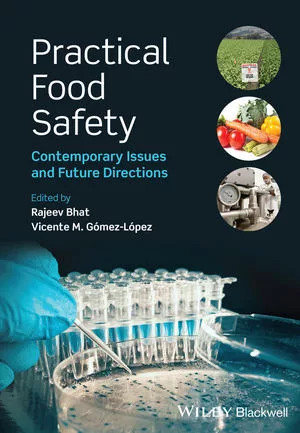
    Practical Food Safety: Contemporary Issues and Future Directions

  • 1119053595.jpg

    Food Safety for the 21st Century: Managing HACCP and Food Safety throughout the Global Supply Chain, 2E

  • 1118396308.jpg

    High Throughput Analysis for Food Safety

See More Products

Events

View AllSubmit An Event
  • July 15, 2025

    Hygienic Design Risk Management: Industry Challenges and Global Insights

    On Demand: From this webinar, attendees will learn the importance of hygienic design to ensure food safety and sanitation effectiveness.
View AllSubmit An Event

Related Directories

  • Michigan State University Online Food Safety Program

    MSU's Online Food Safety program strives to educate professionals on how to make global food systems safe. The program consists of a master’s degree and graduate certificate, both entirely online. Each program will provide students with applicable knowledge to navigate the ever-changing concerns surrounding food safety, food protection, and public health.
  • Responsible Training

    Responsible Training has been a trusted leader in compliance education since 1999, providing accessible and reliable training solutions for businesses across highly regulated industries. With deep local expertise in Texas and a nationwide reach, we specialize in helping kitchens across industries get tailored, regulation-focused content that ensures businesses seamlessly meet their compliance requirements. Contact us for more information about our Food Manager Certification, Food Handler Courses, Alcohol Server and Cannabis Vendor courses.
×

Never miss the latest news and trends driving the food safety industry

eNewsletter | Website | eMagazine

JOIN TODAY!
  • RESOURCES
    • Advertise
    • Contact Us
    • Directories
    • Store
    • Want More
  • SIGN UP TODAY
    • Create Account
    • eMagazine
    • eNewsletter
    • Customer Service
    • Manage Preferences
  • SERVICES
    • Marketing Services
    • Reprints
    • Market Research
    • List Rental
    • Survey/Respondent Access
  • STAY CONNECTED
    • LinkedIn
    • Facebook
    • Instagram
    • X (Twitter)
  • PRIVACY
    • PRIVACY POLICY
    • TERMS & CONDITIONS
    • DO NOT SELL MY PERSONAL INFORMATION
    • PRIVACY REQUEST
    • ACCESSIBILITY

Copyright ©2025. All Rights Reserved BNP Media.

Design, CMS, Hosting & Web Development :: ePublishing