Clover Sonoma: Doing Dairy Right
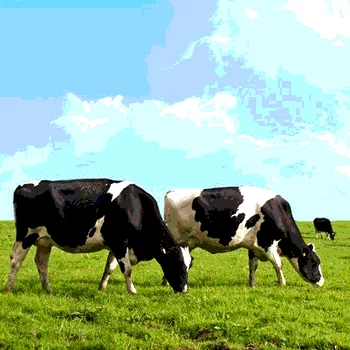
At Clover Sonoma, we believe how you treat your animals—the food, water, and shelter you provide—has a direct impact on the quality of food they produce. Simply put: Healthy cows are happy cows that produce healthy food.
As a third-generation family owned dairy that recently received its B Corporation re-certification, Clover Sonoma is committed to doing dairy right. Food safety, protection of the environment, and animal welfare are at the core of our belief system. Without the relationships with our dairy farmers we have so carefully fostered over the years, we would not be where we are today.
At Clover Sonoma, we’ve worked with many of our dairy families for generations. We work with 30 independent family farms, not hundreds or thousands. And, our long-standing partnership has grown from a mutual understanding that we need to treat each other and our animals like family in order to produce the highest quality, best tasting milk. Furthermore, our farmers also have a mutual motivation to take care of their land so that it can be productive and sustainable for them for generations to come.
In recognizing our ethical dairy practices, American Humane (AH) named Clover Sonoma the first dairy to be American Humane Certified. To date, there are just four dairies across the U.S. with this certification. AH’s standards, and the standards for Clover Sonoma’s dairy farms, are clearly defined by the governing five freedoms:
1. Freedom from hunger and thirst by ready access to fresh water and diet to maintain health and vigor. This must be specific to the animal.
2. Freedom from discomfort by providing an appropriate environment including shelter and a comfortable resting area. This means you should provide soft bedding and an area with appropriate temperature, noise levels, and access to natural light. If an animal is outside, it must have shelter from the elements as well as appropriate food and water bowls that will not freeze or tip over.
3. Freedom from pain, injury, or disease by prevention or rapid diagnosis and treatment. This includes vaccinating animals, monitoring animals, physical health, treating any injuries, and providing appropriate medications.
4. Freedom to express normal behavior by providing sufficient space, proper facilities, and company of the animal’s own kind. Animals need to be able to interact with—or avoid—others of their own kind as desired. They must be able to stretch every part of their body (from nose to tail), and run, jump, and play. This can be particularly challenging when animals are housed in individual kennels.
5. Freedom from fear and distress by ensuring conditions and treatment which avoid mental suffering. The mental health of an animal is just as important as its physical health—as psychological stress can quickly transition into physical illness. These conditions can be achieved by preventing overcrowding and providing sufficient enrichment and safe hiding spaces.
How Do We Ensure This?
We are in constant contact with our farmers and visit them frequently. We know the names of each family farmer and understand their different management styles, which allows us to cater to each farm individually. Big agriculture cannot do this, because their scale is too large. As an independent family owned dairy company, we are fortunate enough to be able to work directly with our farmers to ensure they are upholding the highest animal welfare standards.
Challenges of Big Farms vs. Small Family Farms:
 Beyond the frequent farm visits Clover Sonoma conducts, a selection of Clover Sonoma farms are randomly audited by AH every single year. In 2000, AH pioneered the first third party audit and certification program in the United States to encourage and support the humane treatment of animals used for food. The program promotes clear, reasoned communication with consumers and retailers about the meaning and value of humanely raised food and the benefits not only to animals but also to people.[1]
As part of this audit, our farms are inspected for various components that have a direct effect on animal welfare and treatment which includes, but is not limited to:
• Ensuring and auditing company policy and employee code of conduct
° The Company Policy and Employee Code of Conduct must be available to all personnel, in their native language. Personnel must sign and date that they have been provided a copy of, and that they understand their responsibilities.
• Maintaining comprehensive production records and documentation
° Each producer must maintain and make available comprehensive production records for at least one year in electronic, graphic, or tabular form, recording performance parameters including but not limited to: animal movement logs, numbers, and ages of mortalities and date, numbers and ages of cull cattle, and numbers and ages of downer cattle and date; monthly milk production and monthly average herd SCCs.
• Confirming an effective herd health plan with oversight by a veterinarian and nutritionist
° A nutrition plan must be available at the main office. This plan must include certification or proof that the diet has been developed in consultation with a qualified dairy nutritionist or in consultation with a veterinarian or other qualified individual using commercially mixed feed. The lighting system in the barns must also be designed and maintained to regulate a daily cycle for all animals.
• Biosecurity and sanitation plans
° A biosecurity plan must be available which describes methods for reducing the risk of disease introduction to the herd.
• Inspections of livestock
° Inspections encompass the monitoring of animals’ body condition and feed/water consumption; signs of lameness; condition of the coat, udder, and leg; cleanliness of the animals; and any signs of disease. All cattle must be inspected and monitored regularly to confirm animal health and for the early detection of injuries and early signs of lameness, sickness, and disease so that appropriate and timely actions may be taken.
At the completion of each dairy audit, a score is given. If there are any areas of concern needing improvements, the dairy must submit their plan of action to AH with follow up by our producer relations team and further confirmation of compliance at the next audit.
How Do We Measure the Quality of Our Farms and Products?
We do this through our Clover Promise of Excellence. The Clover Promise of Excellence, formerly known as the North Coast Excellence program, was established in 1994 and is a set of criteria each of our family farms must adhere to in the areas of animal welfare, environmental stewardship, and milk quality.
Our Promise of Excellence is broken down into five parts:
1. Cows not treated with the growth hormone recombinant bovine somatotropin
2. Farms adhere to the high standards of U.S. Department of Agriculture National Organic Program and Non-GMO Project
3. Cows cared for under American Humane Certified animal welfare standards
4. Daily and weekly testing of milk to ensure low bacteria counts, 3–6 times lower than state and federal standards
5. Farms strive to make annual environmental improvements to their land
As part of our Clover Promise of Excellence, our milk is tested to ensure that bacteria counts are 3–6 times lower than state and federal standards. Low numbers of bacteria cells and somatic cells indicate that the cows are healthy and free from infection, the udders were properly cleaned before milking, and the milking equipment is being properly cleaned as well. This ensures that our milk has that signature: fresh, clean Clover flavor that we all enjoy.
As we’ve said before, healthy cows are happy cows. This isn’t simply a saying, but a statement we live by. We know that their quality of life directly impacts the quality and taste of their milk. As evidenced by our strong commitment to AH and our consistent low bacteria scores (governed by the Clover Promise of Excellence), the cows that are raised on our family farms have a good life: fine weather and open pasture, a diet of fresh grass, hay and grains, and most importantly, the five freedoms that we all deserve.
At Clover Sonoma, we are committed to continuing to raise the bar in the dairy industry, and we will not settle for anything less than doing what is right for our animals, farmers, employees, and community.
The dairy industry is known for being its own worst enemy, and animal welfare needs to be at the forefront of our business as it is an industry that millions of Americans rely on. In choosing Clover Sonoma products, consumers can be sure they are supporting a business that is doing dairy right.
Kristel Corson is the vice president of sales and marketing at Clover Sonoma.
Reference
1. humaneheartland.org/index.phpoption=com_content&view=article&id=3&Itemid=106&jsmallfib
=1&dir=JSROOT/Animal+Welfare+Full+Standards+%2B+Supplements&download_file=JSROOT/
Animal+Welfare+Full+Standards+%2B+Supplements/Dairy+Cattle+Full+Standards.pdf.
Looking for quick answers on food safety topics?
Try Ask FSM, our new smart AI search tool.
Ask FSM →