Improving sanitary design of production lines in legacy facilities
Legacy snack and bakery facilities pose their fair share of sanitation challenges
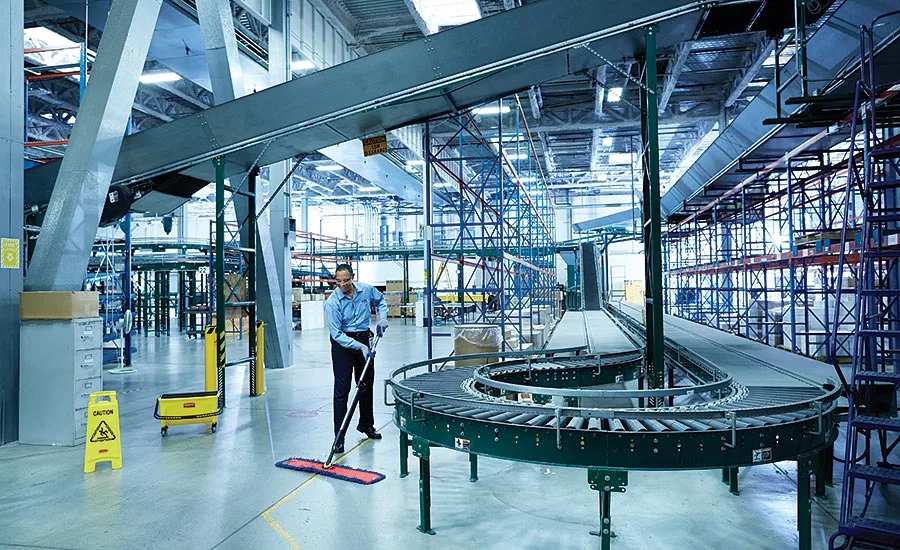
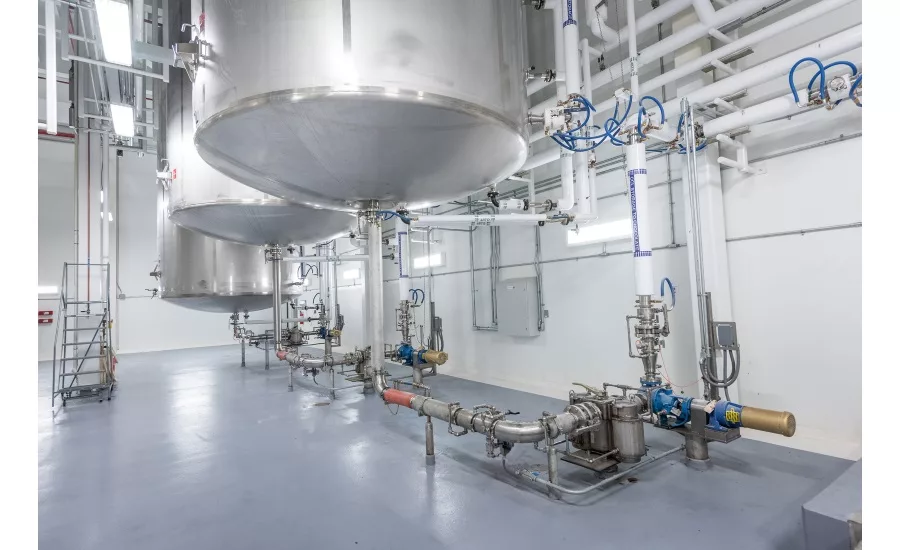
Sound sanitary facility design is vital in the snack and baking industry in order to maintain peak food safety—especially for facilities making products with tricky ingredients or processes from a sanitation perspective. Associated sanitation procedures can also prove a challenge in older facilities.
Pinpointing challenges
“Some of the most-challenging snack and bakery products to work with are sticky substances such as molasses and chocolate, or very fine products such as flour and cinnamon, as clean-up of these types of ingredients can be more time-consuming,” says Rocco A. Santopietro, vice president of operations, ABM Industries, New York.
Pablo Coronel, Ph.D., director, food processing and food safety, CRB, Kansas City, MO, notes that sanitation complexity increases for dough-based products with fillings. “This process creates several sanitation challenges.” Creamy fillings can be sticky, which can create problems during application. “Spills are not easy to clean and may stick to any nook and cranny in the machine or in floor crevices,” he says.
The age of the facility and the condition of the equipment can also pose sanitation challenges, adds Santopietro. “Old or broken equipment will leak ingredients—both wet and dry. And many plants, especially older ones, are not sanitation-friendly.”
In an older facility, there may be no room to clean equipment due to the layout of the facility, making it very difficult to clean certain areas in the plant, notes Santopietro. Structural issues can also create safety challenges for any sanitation program.
Sometimes—when it comes to flooring—the biggest threat stems from the sanitation methods used within the facility, notes David Senn, global accounts manager, Stonhard, Maple Shade, NJ. “The use of extremely hot water or steam can damage floor coatings if the right products are not selected. In addition, the introduction of certain corrosive cleaning products can cause premature coating deterioration, as well.”
A common mistake is only considering how well a floor coating will hold up during production, says Senn. “To be successful, the cleaning processes must be included in discussions, as well.” This includes the amount and temperature of the water used for cleaning—if any will be used. “Facilities that use a lot of water will likely look for a more-aggressive floor texture to prevent slip falls. Facilities that use extremely hot water should consider polyurethane technologies over epoxy.”
Looking for quick answers on food safety topics?
Try Ask FSM, our new smart AI search tool.
Ask FSM →
Lack of maintenance on caulk joints and cracks around drains are often the top areas that need attention in order to get them up to speed, says Stuart Jernigan, preconstruction director, A M King, Charlotte, NC.
"These areas are prime spots for Listeria and other bacterial growth, and should be addressed on a routine basis," he says. "A M King is now utilizing urethane cants where possible to eliminate floor-to-curb and curb-to-wall joints, and therefore the need for caulk. It is a little more expensive upfront but much easier and less expensive to maintain."
Floor drain design and installation has improved dramatically, he adds.
"Elimination of trench drains if at all possible is a good way to eliminate potential problems. The proper floor drain design with secondary strainers, concrete anchors and proper installation methods are also key."
Older facilities were typically built under a former set of codes, both in terms of construction and food safety. Floors, walls, ceilings, drains, waste processing and, in some cases, electrical supply are usually in need of a refresh, says Coronel.
"Floors carry the load of the entire plant, and they are built on top of the concrete which is poured early in the construction process. Maintenance of floors and aging concrete must be taken into account. Flooring details, such as slope, barriers for water, stains, discolorations, etc. can impact the look and even the safety of the plant," he says.
Coronel also mentions that walls and ceilings, drains, and waste management systems are important for sanitation. In addition, some water and electrical installations may require a large amount of time and expenditure to upgrade, and process equipment must be evaluated using a life-cycle analysis and hygienic design analysis on each piece that will show the next steps to be taken for said piece of equipment.
One top issue that must be addressed in older facilities is air quality, he adds.
"Proper pressures and filtration are a must. Many older facilities are beginning to upgrade these systems, usually at a substantial monetary investment, but the ability to record data and food safety concerns have become more important."
Wisdom from the field
One of the most-difficult challenges in snack and bakery is access, says John Koury, architect, A M King, Charlotte, NC. “Frequently, sanitary design has as much to do with preventing places for bacteria to hide as it has to do with controlled access in low-care and high-care areas. This can be at odds with the most-direct lines of access within the facility for operators and maintenance.”
An example is post-completion facility operations that may add a door from a ready-to-eat area directly into a non-sanitary room, to make access easier for maintenance, Koury says. That can facilitate access for unwanted pathogens. “Sometimes, the goal can be accomplished with just an access portal instead of a full main door, thus allowing the desired access without opening the room up to the full exposure of a cart being rolled in from a non-sanitary maintenance room.”
Senn says that one of the most-difficult challenges is providing sanitary coatings around equipment legs. These legs are typically made from metal or stainless steel and have been bolted into the concrete. “The question we are most-commonly asked is, ‘Should we bury the base of these legs or leave them exposed?’ If there is heavy vibration, covering the legs is not recommended. Instead, the floor coating is separated from the equipment leg with a flexible caulking material.” However, if significant vibration is not a factor, then the base plate of the equipment can be covered with a base.
Coronel says that one recurring challenge is the need to renovate or make changes in existing plants while the lines are producing. “This requires careful planning and coordination with the client, vendors and subcontractors in order to accommodate the work. To maintain existing operations, work is performed during available shutdown windows and can sometimes be performed within partitioned areas.”
Santopietro points to the cost of chemicals, supplies and equipment required for sanitation. Since sanitation programs do not produce revenues for their companies, these programs are considered an overhead cost. “Many companies do not want to heavily invest in sanitation programs, so as the costs of chemicals, supplies and equipment continue to rise, this is an area where funds are often cut.”
Other challenges include scheduling and safety concerns. “Sanitary departments function at the mercy of production, and scheduled downtime can change at a moment’s notice,” says Santopietro. “If production runs late, sanitation has less time to effectively clean the facility—which has an impact on the scope of work and the master sanitation schedule.”
Finally, with increasing rates of serious food allergies—and the high number of costly recalls related to allergens—special care is needed to ensure allergens are not inadvertently transferred between food products. Sanitation departments must meet all food safety guidelines, emphasizes Santopietro, and train their sanitors in safe cleaning methods and procedures for allergens and cross-contamination.
Eric Kirchhoefer, vice president sales and strategic accounts, ABM, New York, agrees.
"Another aspect that is sometimes overlooked that warrants attention is the propagation and awareness of different allergens that are introduced into a facility’s environment," he says. "This means, that facilities need to be proactive in order to prevent cross-contamination through effective sanitation standard operating procedures."
Kirchhoefer also says that another top issue is asset protection.
"What we mean by that is with respect to the actual infrastructure of a facility and its production equipment. To avoid sanitation and safety hazards, companies should replace or properly maintain with the help of a preventative maintenance program, deteriorating equipment and building components," he adds.
When older machinery breaks or when building infrastructure is compromised, the resulting downtime has a ripple effect. For example, depending on the stage of production where a breakdown occurs, ingredients can be wasted and can cause a backup, even finished product can be lost. All of this costs time and money to resolve, Kirchhoefer continues.
"Then to make up for lost time and product, production is increased and employees are forced to work overtime resulting in fatigue and possible safety hazards. A quick fix for older facilities that is often overlooked is something as simple as stopping leaks. Leaks, whether they be from water at handwashing stations, oil from machinery or even ingredients on the production line, can cause costly and dangerous employee slips and falls."