Tetra Pak Expert’s Tips for Safe—and Efficient—Separation
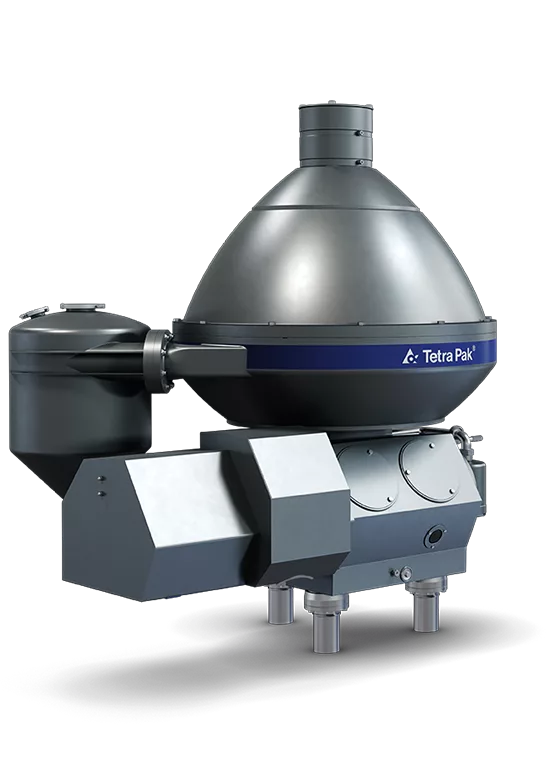
The general concept of separation—whereby cream and fat are removed from milk—has been a constant since 1894, when Swedish engineer Gustaf de Laval popularized and patented the first centrifugal milk cream separator. Though the end goal of separation has remained the same, the processes and technologies driving it have evolved considerably alongside its growing range of applications. Here, Tetra Pak provides an expert perspective on ensuring safe and efficient separation in the 21st century.
Sealing in Product Quality—and Process Efficiency
There are two types of modern separators: semi-open and closed (or airtight) ones. In the latter design—which was introduced in 1933 as the first hermetic separator—the bowl is completely filled with milk and there is no air in the center. This offers several performance and food safety advantages, including:
- Superior skimming efficiency: Air and mechanical treatment are a risky combination. The presence of air during the separation process can cause damage to fat globules. With an airtight separator, this potential risk is nullified, and the overall separation process is made more efficient.
- Enhanced flexibility: An airtight separator also enables the production of cream with 60 percent fat content without compromising skimming efficiency and product quality. Moreover, Tetra Pak’s AirTight design can be adapted to a wide range of capacities so that different recipes can run in the same machine, safely and efficiently.
- No risk of overflow or foaming: While an open-type separator can pose the risk of product overflow, an AirTight separator is fully sealed, eliminating this hazard. With no air entering the separator, the risk of product foaming is also significantly reduced.
- Low energy consumption: Due to gentle product treatment and the use of efficient co-rotating outlet pumps rather than paring discs, airtight separators use up to 20 percent less energy than traditional paring disc designs, which reduces both cost and environmental impact. By reducing the atmospheric pressure around the spinning bowl with Encapt Technology, total energy savings including AirTight can be up to 40 percent.
Not All Steel is Made Equal
When choosing a separator, it’s important to consider not just how it works but what it’s made of.

For instance, Tetra Pak separators are made with higher grades of steel, with improved corrosion resistance. Though these can represent a higher initial investment relative to lower grade alternatives, they earn their pay off in the long run by virtue of a lengthy life span. With a grade of steel good enough to withstand seawater, Tetra Pak separators can be operational for as long as 50 years.
While milk is not normally corrosive, milk deposits can react with cleaning or sterilizing agents to create aggressive liquids that erode the surface of ordinary grades of stainless steel and create pitting or crevices, that can eventually turn into cracks.
Moreover, if a product more corrosive than milk is switched into a separator made from a lower grade material (such as martensitic stainless steel), it will accelerate corrosion, further shortening the equipment’s working life and jeopardizing safety.
From Cream to Coconuts—Air-free is Care-free
Though safety and quality concerns can differ depending on the product being processed, they often involve the effect of air.
For instance, in a dairy context, air during production disrupts the membranes surrounding the fat globules in the milk, causing free fatty acids to leak into the product or fat globules to fracture into smaller entities. Liberation of free fatty acids can cause lumping issues further downstream and raises the risk of oxidation, which can have a negative impact on the sensory properties of the product. An airtight separator limits the risk of this happening and helps preserve the quality of the milk throughout the line, which is important whether dairies produce skimmed milk or milk for cheese or powder production.
When it comes to processing coconut water, safety concerns revolve on both air and time. Coconuts are naturally hermetically sealed but, as soon as their shell is broken, a race against the clock begins before the liquid changes color, the nutrients and flavor degrade, and—if left long enough—the liquid can become rancid and unusable. An important part of the solution to this challenge is rapid processing with a separator with the same airtight properties as the coconut shell itself. These closed separators prevent air from encountering the coconut water, while gently and effectively removing fine particles and fats—thereby protecting but also improving the final product’s quality.
Looking for quick answers on food safety topics?
Try Ask FSM, our new smart AI search tool.
Ask FSM →
Saving for the Future
As consumer trends increase the popularity of separation-derived products such as coconut water, quark, and whey protein, it is clear that—as far as separation has come since the turn of the 20th century—it will likely advance even further.
Looking for the future, Tetra Pak will be continuing to drive water and energy consumption savings, pursuing the realization of technologies that will improve efficiency by significantly increasing volume capacity.
Fredrik Johansson is manager of separators at Tetra Pak. During his more than 11 years with the company, he has served in a variety of roles, including mechanical engineer and technical product manager.
With experience across mechanical design, product development, technical product management, and commercial areas, Fredrik has acquired broad and in-depth insight into separation technology and related industry requirements. He has worked with the full range of the Tetra Pak Separator portfolio both from a technical and commercial perspective.
Fredrik has a M.Sc. in mechanical engineering from Chalmers University of Technology in Gothenburg, Sweden.