Food Safety
search
Ask Food Safety AI
cart
facebook twitter linkedin instagram youtube
  • Sign In
  • Create Account
  • Sign Out
  • My Account
Food Safety
  • NEWS
    • Latest News
    • White Papers
  • PRODUCTS
  • TOPICS
    • Contamination Control
    • Food Types
    • Management
    • Process Control
    • Regulatory
    • Sanitation
    • Supply Chain
    • Testing and Analysis
  • PODCAST
  • EXCLUSIVES
    • Food Safety Five Newsreel
    • eBooks
    • FSM Distinguished Service Award
    • Interactive Product Spotlights
    • Videos
  • BUYER'S GUIDE
  • MORE
    • NEWSLETTERS >
      • Archive Issues
      • Subscribe to eNews
    • Store
    • Sponsor Insights
    • ASK FSM AI
  • WEBINARS
  • FOOD SAFETY SUMMIT
  • EMAG
    • eMagazine
    • Archive Issues
    • Editorial Advisory Board
    • Contact
    • Advertise
  • SIGN UP!

Rapid, 24-Hour Listeria Environmental Testing

October 1, 2011

In the past 30 years, Listeria monocytogenes has caused more headaches and challenges for ready-to-eat (RTE) meat producers than any other food safety issue. Listeria can be found anywhere in the environment and has been isolated from different types of foods, most importantly from RTE products. In such products, cross-contamination can occur after pasteurization or cooking, potentially leading to illness if not detected. The routine testing of both environmental surfaces and finished products for Listeria has become very important in the industry to prevent illness and to avoid costly recalls.

Test and Hold Becomes Mandatory
Recently, the U.S. Department of Agriculture (USDA) Food Safety and Inspection Service (FSIS) proposed a rule that requires meat processors to hold product undergoing pathogen testing until negative test results are achieved. Most meat processors were voluntarily following this practice prior to the rule, but it was not standardized across the industry. According to USDA, dozens of recalls within the last 3 years could have been prevented if the industry routinely followed this practice. From 2007 to 2009, 44 meat and poultry recalls were prompted by FSIS tests that revealed the presence of E. coli O157:H7 and Listeria monocytogenes, resulting in two infections, one fatal. A mandatory test-and-hold rule could have prevented these illnesses and saved $46 million per year.

The Problem: New Rule Requires a Faster, More Reliable Listeria Method for the Industry
RTE meat processors have responded to this new rule by implementing changes in their test-and-hold programs. Many processors are being required to switch from 40- to 48-hour Listeria methods to faster, 24-hour methods. While processors need a faster result to ensure that test and hold does not interrupt business work flow, they must also ensure that the faster test method is effective in the detection of the organism. This poses a challenge because Listeria is a slow-growing pathogen. Although it has been documented to survive for long periods even under adverse conditions, it is a poor competitor against other microorganisms and takes much longer to reach detectable levels. The industry is now faced with adopting a faster rapid method for detection of an organism that does not like to grow.

The Solution: SDIX’S RapidChek® Listeria F.A.S.T.™
SDIX has developed a highly accurate, true 24-hour test to meet the industry’s current need: the RapidChek Listeria F.A.S.T. (Fast. Accurate. Sensitive. Technology.) test system. Processors can now take their programs from “test and hold” to “test and sold” by reducing time-to-result while still maintaining highly accurate results.

Fast
The RapidChek system delivers results in 24 hours. Most other rapid methods require a 24-hour or longer enrichment followed by further sample processing and assay time that leads to a time-to-result of 26–32 hours. With this system, results are achieved within 15 minutes of enrichment.

Accurate
Studies have shown that the RapidChek system has 100 percent specificity and sensitivity against inclusivity and exclusivity panels tested. These panels included organisms spanning all six species of Listeria and several non-Listeria, Gram-positive organisms. The system has also proven equivalent to the regulatory, 48-hour cultural method for the detection of Listeria on various environmental surfaces.

Sensitive
This system detects all six species of Listeria for a complete solution for environmental monitoring programs. Missing a single species of Listeria in your environmental monitoring plan is denying yourself the knowledge of potential growth niches and possible contamination areas.

Technology
The RapidChek detection device is based on advanced immunoassay technology that is used in several health-related diagnostics worldwide. SDIX produces antibodies exclusive to the RapidChek test systems. The unique, proprietary media coupled with the advanced immuno-detection device allows for the best resuscitation of stressed or injured cells and better selectivity against nontarget organisms, leading to faster and more accurate results.

Benefits of RapidChek Listeria F.A.S.T.
•    Faster product release

•    Accurate, actionable results

•    Reduced unnecessary confirmation and re-cleaning costs and time

•    Cost-effective testing program with minimal upfront investment

•    Less technician hands-on time = Fewer errors = Fewer false results

•    No overtime for increased sample volumes

•    Meets regulatory testing requirements

RapidChek. Simply accurate.

sdix.com

>
Author(s): SDIX

Looking for quick answers on food safety topics?
Try Ask FSM, our new smart AI search tool.
Ask FSM →


Share This Story

Recommended Content

JOIN TODAY
to unlock your recommendations.

Already have an account? Sign In

  • people holding baby chicks

    Serovar Differences Matter: Utility of Deep Serotyping in Broiler Production and Processing

    This article discusses the significance of Salmonella in...
    Food Type
    By: Nikki Shariat Ph.D.
  • woman washing hands

    Building a Culture of Hygiene in the Food Processing Plant

    Everyone entering a food processing facility needs to...
    Management
    By: Richard F. Stier, M.S.
  • graphical representation of earth over dirt

    Climate Change and Emerging Risks to Food Safety: Building Climate Resilience

    This article examines the multifaceted threats to food...
    Risk Assessment
    By: Maria Cristina Tirado Ph.D., D.V.M. and Shamini Albert Raj M.A.
Manage My Account
  • eMagazine Subscription
  • Subscribe to Newsletters
  • Manage My Preferences
  • Website Registration
  • Subscription Customer Service

More Videos

Sponsored Content

Sponsored Content is a special paid section where industry companies provide high quality, objective, non-commercial content around topics of interest to the Food Safety Magazine audience. All Sponsored Content is supplied by the advertising company and any opinions expressed in this article are those of the author and not necessarily reflect the views of Food Safety Magazine or its parent company, BNP Media. Interested in participating in our Sponsored Content section? Contact your local rep!

close
  • The image displays a person selecting packaged fresh chicken meat from a supermarket display cooler.
    Sponsored byCorbion

    Developing a Future-Proof Food Safety Strategy for Meat and Poultry Products

  • The image shows a variety of fresh produce packaged in plastic trays and wrap.
    Sponsored byWaters Corporation

    PFAS-Free Food Packaging by August 2026

  • This image displays a multi-stage water filtration system designed to remove contaminants from drinking water.
    Sponsored byWaterdrop Filter

    The 4.0 ppt Era: Future-Proofing Your Food Supply Chain Against 'Forever Chemicals'

Popular Stories

half shredded block of cheddar cheese and pile of cheese shreds on wooden cutting board

Patient Count in Raw Farm E. coli Outbreak Grows, Majority are Young Children

smiling employee in bottling factory looking at camera with arms crossed in front of production line

GFSI Unveils Updated Food Safety Culture Framework

spinach strawberries and blueberries, foods on the 2026 Dirty Dozen

EWG Publishes 2026 ‘Dirty Dozen’ List of ‘Pesticide-Contaminated’ Produce—but is it Scientifically Sound?

foreign material webinar


Events

April 8, 2026

Foreign Material Contamination: Why In-Line Reinspection Isn't Enough

Live: April 8, 2026, at 11:00 am EDT: From this webinar, attendees will learn why reinspecting with in-line equipment is not sufficient when it comes to potential foreign material contamination.

April 16, 2026

Recordkeeping and Document Management for Food Safety Compliance

Live: April 16, 2026, at 2:00 pm EDT: From this webinar, attendees will learn why recordkeeping and document control are essential to food safety and business management.

May 11, 2026

The Food Safety Summit

Stay informed on the latest food safety trends, innovations, emerging challenges, and expert analysis. Leave the Summit with actionable insights ready to drive measurable improvements in your organization. Do not miss this opportunity to learn from experts about contamination control, food safety culture, regulations, sanitation, supply chain traceability, and so much more.

View All

Products

Global Food Safety Microbial Interventions and Molecular Advancements

Global Food Safety Microbial Interventions and Molecular Advancements

See More Products

Related Articles

  • PerkinElmer Launches Solus Listeria monocytogenes ELISA Assay for Testing Across Food and Environmental Samples

    See More
  • Roka Bioscience Earns AOAC Certification for 18-hour Listeria Sample Enrichment

    See More
  • Pitfalls of Environmental Testing for Listeria with PCR

    See More

Related Products

See More Products
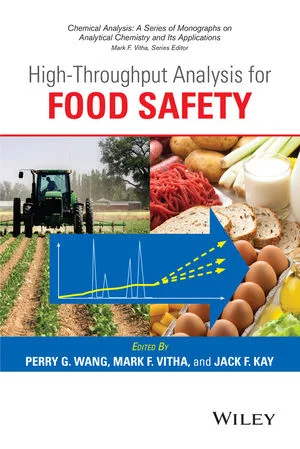
  • 1118396308.jpg

    High Throughput Analysis for Food Safety

  • 1444333348.jpg

    Handbook of Food Safety Engineering

  • Food-Forensics-3D.jpg

    Food Forensics Handbook Practice, Instrumentation, Case Studies

See More Products

Related Directories

  • CDG Environmental

    CDG Solution 3000TM is a ready-to-use liquid chlorine dioxide product designed to control microorganisms over a wide spectrum of applications. Compared to traditional anti-microbials, CDG Solution 3000TM offers ease of application, safety in handling, and superior effectiveness. CDG Solution 3000 is a patented, EPA approved hard-surface disinfectant.
  • Romer Labs

    Romer Labs is a global leader in innovative diagnostic solutions for food and feed safety. With a focus on mycotoxins, food allergens, GMOs, and microbial contaminants, we strive to meet the ever-changing demands of our customers. Furthermore, we operate a global network of 6 ISO accredited laboratories.
×

Never miss the latest news and trends driving the food safety industry

Newsletters | Website | eMagazine

JOIN TODAY!
  • RESOURCES
    • Advertise
    • Contact Us
    • Directories
    • Store
    • Want More
  • SIGN UP TODAY
    • Create Account
    • eMagazine
    • Newsletters
    • Customer Service
    • Manage Preferences
  • SERVICES
    • Marketing Services
    • Reprints
    • Market Research
    • List Rental
    • Survey/Respondent Access
  • STAY CONNECTED
    • LinkedIn
    • Facebook
    • Instagram
    • X (Twitter)
  • PRIVACY
    • PRIVACY POLICY
    • TERMS & CONDITIONS
    • DO NOT SELL MY PERSONAL INFORMATION
    • PRIVACY REQUEST
    • ACCESSIBILITY

Copyright ©2026. All Rights Reserved BNP Media, Inc. and BNP Media II, LLC.

Design, CMS, Hosting & Web Development :: ePublishing