Food Safety
search
Ask Food Safety AI
cart
facebook twitter linkedin instagram youtube
  • Sign In
  • Create Account
  • Sign Out
  • My Account
Food Safety
  • NEWS
    • Latest News
    • White Papers
  • PRODUCTS
  • TOPICS
    • Contamination Control
    • Food Types
    • Management
    • Process Control
    • Regulatory
    • Sanitation
    • Supply Chain
    • Testing and Analysis
  • PODCAST
  • EXCLUSIVES
    • Food Safety Five Newsreel
    • eBooks
    • FSM Distinguished Service Award
    • Interactive Product Spotlights
    • Videos
  • BUYER'S GUIDE
  • MORE
    • NEWSLETTERS >
      • Archive Issues
      • Subscribe to eNews
    • Store
    • Sponsor Insights
    • ASK FSM AI
  • WEBINARS
  • FOOD SAFETY SUMMIT
  • EMAG
    • eMagazine
    • Archive Issues
    • Editorial Advisory Board
    • Contact
    • Advertise
  • SIGN UP!
News

EFSA Publishes 'Stop-the-Clock' Timelines for Regulated Product Applications

January 31, 2014


The European Food Safety Authority (EFSA) today released new guidance that sets out indicative timelines the Authority will use when requesting information it needs to complete its evaluation when it performs risk assessments of regulated products such as food contact materials, GMOs or feed additives.

The guidance document provides deadlines for a range of requests for each regulated product area covered by EFSA. "When this happens, the clock on the regulatory timetable for the risk assessment is stopped until the new data is supplied," an EFSA statement explained. "This will ensure applications are assessed on a case-by-case basis in the most time-efficient way."

The EFSA summarized its Scientific Report as follows:

The Scientific Evaluation of Regulated Products Directorate (REPRO) supports EFSA’s work in the evaluation of substances, products and claims intended to be used in the food chain in order to protect public, plant and animal health as well as the environment. Its units focus on the following specific areas: feed additives, food additives, food contact materials, food flavourings, enzymes, genetically modified organisms, nutrition, food allergies, novel foods and pesticides.

The regulatory processes that form the basis for EFSA’s evaluation activities of regulated products are defined in a number of sector-specific regulations with different requirements. The streamlining of certain steps under the legal acts governing the risk assessment of regulated products within EFSA aims at streamlining the interaction between EFSA and applicants.

A mapping exercise regarding the timelines used by different Panels to request additional or supplementary information during the risk assessment process was performed within EFSA in 2012. As an outcome of this exercise a proposal for the streamlining of these timelines was prepared. The proposal in form of this report was reviewed and consulted with the EFSA Scientific Panels (ANS, CEF, FEEDAP, GMO, NDA), as well as the Scientific Committee during first half of 2013. The Scientific Committee took note and supported this report during the final consultation in December 2013.

The complete text of the EFSA's Scientific Report may be downloaded here.


Author(s): Heidi Parsons

Looking for quick answers on food safety topics?
Try Ask FSM, our new smart AI search tool.
Ask FSM →


Share This Story

Recommended Content

JOIN TODAY
to unlock your recommendations.

Already have an account? Sign In

  • people holding baby chicks

    Serovar Differences Matter: Utility of Deep Serotyping in Broiler Production and Processing

    This article discusses the significance of Salmonella in...
    Testing & Analysis
    By: Nikki Shariat Ph.D.
  • woman washing hands

    Building a Culture of Hygiene in the Food Processing Plant

    Everyone entering a food processing facility needs to...
    Management
    By: Richard F. Stier, M.S.
  • graphical representation of earth over dirt

    Climate Change and Emerging Risks to Food Safety: Building Climate Resilience

    This article examines the multifaceted threats to food...
    Risk Assessment
    By: Maria Cristina Tirado Ph.D., D.V.M. and Shamini Albert Raj M.A.
Manage My Account
  • eMagazine Subscription
  • Subscribe to Newsletters
  • Manage My Preferences
  • Website Registration
  • Subscription Customer Service

More Videos

Sponsored Content

Sponsored Content is a special paid section where industry companies provide high quality, objective, non-commercial content around topics of interest to the Food Safety Magazine audience. All Sponsored Content is supplied by the advertising company and any opinions expressed in this article are those of the author and not necessarily reflect the views of Food Safety Magazine or its parent company, BNP Media. Interested in participating in our Sponsored Content section? Contact your local rep!

close
  • the use of dual-energy X-ray food inspection technology to identify foreign contaminants.
    Sponsored byEagle by METTLER TOLEDO

    Precision Inspection Starts with the Right X-ray Detector

  • This image depicts a worker cleaning stainless steel machinery in a food processing plant
    Sponsored byCintas

    Employee Uniforms: A Frontline Defense Against Food Contamination

  • This image depicts a healthcare professional managing a large volume of paperwork and transitioning to a digital workflow.
    Sponsored bySafetyChain

    The Invisible Plant Tax Starts with Your Records

Popular Stories

curcumin in wooden spoon and bowl

‘Natural’ Food Dyes May Have Health Risks Too, Studies Show

common food allergens and the word ALLERGY

Codex Moves to Adopt Standardized Precautionary Allergen Labeling, Kicks UPFs Can Down the Road

plastic utensils and plates on crumpled plastic film against purple background

FAO Highlights Food Safety Risks of Recycled, Renewable Plastics Used for Food Packaging


Events

May 28, 2026

Advanced Sanitation Strategies for Allergen Risk Reduction in Food Processing

Live: May 28, 2026, at 2:00 pm EDT: From this webinar, attendees will learn why validation and verification are necessary for allergen control, and how analytical tools can support allergen management programs.

June 3, 2026

How to Build a Better Food Safety Training Program

Live: June 3, 2026 at 2:00 pm EDT: Join this webinar to learn how AI is impacting food safety training, and how you can leverage AI in your programs.

June 4, 2026

Building a Stronger Food Safety Program in a Changing GFSI Landscape

Live: June 4, 2026 at 11:00 am EDT: Attend this webinar to understand how GFSI requirements are evolving and what those changes signal for quality programs at food and beverage facilities.

View All

Products

Global Food Safety Microbial Interventions and Molecular Advancements

Global Food Safety Microbial Interventions and Molecular Advancements

See More Products
building a stronger food safety program webinar

Related Articles

  • 3D digital illustration of a hand checking off a box on an application form clipboard

    EFSA Wants to Advise Small and Medium Novel Food Businesses on Product Authorization Applications

    See More
  • the alliance to stop foodborne illness logo

    Applications Open for Alliance to Stop Foodborne Illness’ 2025 Mentorship Program

    See More
  • person in suit extending hand for handshake

    Applications Open for EFSA’s Next Executive Director

    See More

Related Products

See More Products
  • 1119053595.jpg

    Food Safety for the 21st Century: Managing HACCP and Food Safety throughout the Global Supply Chain, 2E

  • 9781138198463.jpg

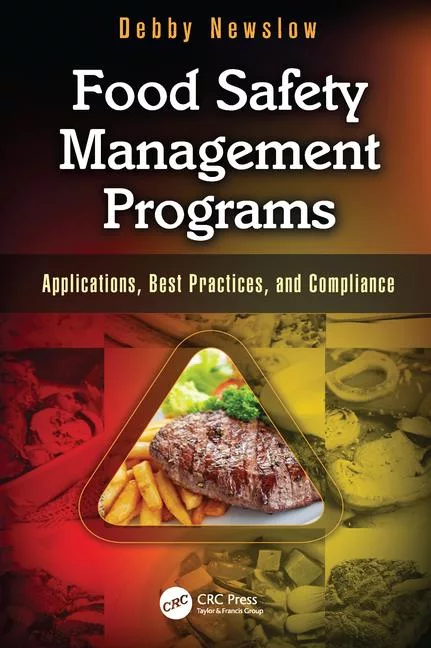
    Food Safety Management Programs: Applications, Best Practices, and Compliance

  • 1119258073.jpg

    FSMA and Food Safety Systems: Understanding and Implementing the Rules

See More Products

Related Directories

  • METTLER TOLEDO Product Inspection

    METTLER TOLEDO provides inspection solutions that boost profits, protect your brand, and help you comply with food safety regulations. Our full range of metal detectors, checkweighers, x-ray and vision inspection systems eliminate metal and foreign material in liquid or packaged products, verify weights, and ensure accuracy and integrity of packaging and labels.
  • ABB Installation Products

    ABB Installation Products is a global leader in the design and manufacturing of premium products used to manage the connection, protection and distribution of electrical power in industrial, construction and utility applications, including food and beverage. With 200,000+ products, ABB Installation Products has over a 100-year heritage and found wherever electricity is used.
×

Never miss the latest news and trends driving the food safety industry

Newsletters | Website | eMagazine

JOIN TODAY!
  • RESOURCES
    • Advertise
    • Contact Us
    • Directories
    • Store
    • Want More
  • SIGN UP TODAY
    • Create Account
    • eMagazine
    • Newsletters
    • Customer Service
    • Manage Preferences
  • SERVICES
    • Marketing Services
    • Reprints
    • Market Research
    • List Rental
    • Survey/Respondent Access
  • STAY CONNECTED
    • LinkedIn
    • Facebook
    • Instagram
    • X (Twitter)
  • PRIVACY
    • PRIVACY POLICY
    • TERMS & CONDITIONS
    • DO NOT SELL MY PERSONAL INFORMATION
    • PRIVACY REQUEST
    • ACCESSIBILITY

Copyright ©2026. All Rights Reserved BNP Media, Inc. and BNP Media II, LLC.

Design, CMS, Hosting & Web Development :: ePublishing