Food Safety
search
Ask Food Safety AI
cart
facebook twitter linkedin instagram youtube
  • Sign In
  • Create Account
  • Sign Out
  • My Account
Food Safety
  • NEWS
    • Latest News
    • White Papers
  • PRODUCTS
  • TOPICS
    • Contamination Control
    • Food Types
    • Management
    • Process Control
    • Regulatory
    • Sanitation
    • Supply Chain
    • Testing and Analysis
  • PODCAST
  • EXCLUSIVES
    • Food Safety Five Newsreel
    • eBooks
    • FSM Distinguished Service Award
    • Interactive Product Spotlights
    • Videos
  • BUYER'S GUIDE
  • MORE
    • NEWSLETTERS >
      • Archive Issues
      • Subscribe to eNews
    • Store
    • Sponsor Insights
    • ASK FSM AI
  • WEBINARS
  • FOOD SAFETY SUMMIT
  • EMAG
    • eMagazine
    • Archive Issues
    • Editorial Advisory Board
    • Contact
    • Advertise
  • SIGN UP!
News

Beef Testing Under Scrutiny

April 1, 2013


According to a new report from the Office of the Inspector General (OIG), the U.S. Department of Agriculture’s Food Safety and Inspection Service (USDA FSIS) should re-evaluate its Escherichia coli testing for boxed beef destined for processed ground beef or tenderized-steaks.
 
The recommendation follows an OIG audit that found that inspectors are not often sampling boxed beef products destined for ground beef or  tenderized steaks and that plants do not have adequate traceback records.
 
OIG’s team realized that there is a potential for downstream processors to grind untested boxed beef products, and they thus attempted to determine whether FSIS was accounting for these untested products. However, large slaughter facilities package cuts into vacuum-sealed bags and often assume that these products are intended for intact products and are thus not subject to FSIS’ E. coli testing.  A downstream processor may decide to grind the meat or use the cuts for mechanically tenderized steaks, processing methods that can potentially introduce pathogens into the center of meat products that consumers might assume are intact.
 
OIG also noted that while the boxed beef is likely not tested for E. coli, it still bears the USDA mark of inspection, so establishments may assume that it is safe for grinding.
 
The report makes a number of recommendations for FSIS take additional steps to ensure any boxed beef headed for grinding is eligible for FSIS E. coli testing and FSIS agreed with all of the recommendations. One of the problems, however, as FSIS has noted, is that a plant’s decision to grind boxed beef is not something FSIS is likely to be aware of ahead of time. According to the report, FSIS is “near completion” on a non-intact beef risk assessment that could inform future food safety policies for mechanically tenderized products.
 
To view all of OIG’s findings and recommendations, see the full report at http://www.usda.gov/oig/webdocs/24601-0003-31.pdf.


Author(s): Staff

Looking for quick answers on food safety topics?
Try Ask FSM, our new smart AI search tool.
Ask FSM →


Share This Story

Recommended Content

JOIN TODAY
to unlock your recommendations.

Already have an account? Sign In

  • people holding baby chicks

    Serovar Differences Matter: Utility of Deep Serotyping in Broiler Production and Processing

    This article discusses the significance of Salmonella in...
    Food Type
    By: Nikki Shariat Ph.D.
  • woman washing hands

    Building a Culture of Hygiene in the Food Processing Plant

    Everyone entering a food processing facility needs to...
    Management
    By: Richard F. Stier, M.S.
  • graphical representation of earth over dirt

    Climate Change and Emerging Risks to Food Safety: Building Climate Resilience

    This article examines the multifaceted threats to food...
    Risk Assessment
    By: Maria Cristina Tirado Ph.D., D.V.M. and Shamini Albert Raj M.A.
Manage My Account
  • eMagazine Subscription
  • Subscribe to Newsletters
  • Manage My Preferences
  • Website Registration
  • Subscription Customer Service

More Videos

Sponsored Content

Sponsored Content is a special paid section where industry companies provide high quality, objective, non-commercial content around topics of interest to the Food Safety Magazine audience. All Sponsored Content is supplied by the advertising company and any opinions expressed in this article are those of the author and not necessarily reflect the views of Food Safety Magazine or its parent company, BNP Media. Interested in participating in our Sponsored Content section? Contact your local rep!

close
  • This image depicts a healthcare professional managing a large volume of paperwork and transitioning to a digital workflow.
    Sponsored bySafetyChain

    The Invisible Plant Tax Starts with Your Records

  • Salmon on rice cracker
    Sponsored byThermoFisher

    Food Microbiology Testing Methods: Listeria species

  • The image displays a person selecting packaged fresh chicken meat from a supermarket display cooler.
    Sponsored byCorbion

    Developing a Future-Proof Food Safety Strategy for Meat and Poultry Products

Popular Stories

chocolate hazelnut spread on toast

40 Sick, One Dead in German Salmonella Outbreak Involving Chocolate-Hazelnut Spread

cheddar cheese wedge on a fork

FDA Finds E. coli in Raw Farm Cheese Matching a Second Outbreak

cotton swab going into tube

Study Shows Poor Recovery of Listeria Using Cotton Swabs for Environmental Monitoring


Events

May 6, 2026

Allergen Uncertainty: Risk Assessment, Reference Doses, and Codex Management Guidance

Live: May 6, 2026 at 2:00 pm EDT: Attendees will gain insight into the importance of preparing for the industry's shift from detection-based methods to risk-based allergen management.

May 11, 2026

The Food Safety Summit

Stay informed on the latest food safety trends, innovations, emerging challenges, and expert analysis. Leave the Summit with actionable insights ready to drive measurable improvements in your organization. Do not miss this opportunity to learn from experts about contamination control, food safety culture, regulations, sanitation, supply chain traceability, and so much more.

May 12, 2026

Leveraging AI for Food Safety: From Strategy to Impact

Live Streaming from Food Safety Summit: This dynamic workshop brings together leaders from industry, academia, and government to demonstrate how AI can be practically applied in food safety—from data strategy to daily execution.

View All

Products

Global Food Safety Microbial Interventions and Molecular Advancements

Global Food Safety Microbial Interventions and Molecular Advancements

See More Products

Related Articles

  • moringa powder and supplements

    Moringa Supply Chains Under Scrutiny: What Recent Contamination Cases Reveal About Botanical Ingredient Risks

    See More
  • Nestle Purina PetCare Under Scrutiny After FDA Inspection Uncovers Violations

    See More
  • Genetically Engineered Plants under Scrutiny

    See More

Related Products

See More Products
  • 1118396308.jpg

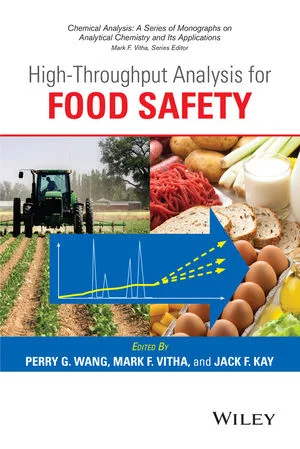
    High Throughput Analysis for Food Safety

  • 1119237963.jpg

    Food Safety in China: Science, Technology, Management and Regulation

  • 0813808774.jpg

    Improving Import Food Safety

See More Products
×

Never miss the latest news and trends driving the food safety industry

Newsletters | Website | eMagazine

JOIN TODAY!
  • RESOURCES
    • Advertise
    • Contact Us
    • Directories
    • Store
    • Want More
  • SIGN UP TODAY
    • Create Account
    • eMagazine
    • Newsletters
    • Customer Service
    • Manage Preferences
  • SERVICES
    • Marketing Services
    • Reprints
    • Market Research
    • List Rental
    • Survey/Respondent Access
  • STAY CONNECTED
    • LinkedIn
    • Facebook
    • Instagram
    • X (Twitter)
  • PRIVACY
    • PRIVACY POLICY
    • TERMS & CONDITIONS
    • DO NOT SELL MY PERSONAL INFORMATION
    • PRIVACY REQUEST
    • ACCESSIBILITY

Copyright ©2026. All Rights Reserved BNP Media, Inc. and BNP Media II, LLC.

Design, CMS, Hosting & Web Development :: ePublishing