Food Safety
search
Ask Food Safety AI
cart
facebook twitter linkedin
  • Sign In
  • Create Account
  • Sign Out
  • My Account
Food Safety
  • NEWS
    • Latest News
    • White Papers
  • PRODUCTS
  • TOPICS
    • Contamination Control
    • Food Types
    • Management
    • Process Control
    • Regulatory
    • Sanitation
    • Supply Chain
    • Testing and Analysis
  • PODCAST
  • EXCLUSIVES
    • Food Safety Five Newsreel
    • eBooks
    • FSM Distinguished Service Award
    • Interactive Product Spotlights
    • Videos
  • BUYER'S GUIDE
  • MORE
    • ENEWSLETTER >
      • Archive Issues
      • Subscribe to eNews
    • Store
    • Sponsor Insights
    • ASK FSM AI
  • WEBINARS
  • FOOD SAFETY SUMMIT
  • EMAG
    • eMagazine
    • Archive Issues
    • Editorial Advisory Board
    • Contact
    • Advertise
  • SIGN UP!

Training

When human behavior clashes with food safety goals

Yaohua Feng, of Purdue Food Science, talks about why companies need to account for irrational human behavior when implementing food safety procedures.

By Crystal Lindell
food safety
March 29, 2018

When Yaohua Feng, an assistant professor at Purdue Food Science, observes home cooks, 64 percent of them don’t wash their hands before making a meal — and that’s when they know they’re being watched.

And unfortunately, employees at processing facilities aren’t always much better.

Feng has a background in microbiology, but her work in food safety isn’t quite what most people assume it would be. She studies how human behavior can be illogical and unpredictable and how that in turn can impact food safety. And she recently spoke during the Food Sure conference on how food and beverage companies can better approach these issues.

For example, even if employees receive good food safety training, and then pass a quiz showing they retained the information, they still may not follow the procedures.

“We try to investigate the discrepancy between knowledge and behavior. And what can we do to bring the gap closer,” Feng says. “We saw a lot of retention problems with even effective training. They will change their behavior, and then after a month people drop out, and after three months you get a significant drop.”

An it’s no secret that food safety issues are a huge economic burden to companies who deal with them. Just one spinach E.coli outbreak in 2006 caused $12 million in direct losses to the spinach industry partly because even after the outbreak cleared up, consumers continued to be in what Feng calls “scared mode.”

“They refuse to buy spinach, not only the spinach that is on the shelf, but also canned,” she explains. “Anything with spinach, they’re scared of.”

Looking for quick answers on food safety topics?
Try Ask FSM, our new smart AI search tool.
Ask FSM →

Unfortunately, many outbreaks are associated with infected workers, but it can be hard to get an entire staff at a processing facility to do all the things they should.

“Even if we [the managers] know the regulation, even if we recite all the words in the FSMA regulation, it doesn’t mean it will be us [practicing it]. It will be our food worker on the front line who will do that. We need to make sure we bring everyone on board and engage them.”

Feng suggests that companies put as much thought into their food safety training plans as they would anything else. For example, they should be validated the same way a sanitation plan would be.

She also says training needs to be repeated on a regular basis, as opposed to being a one-time thing. And, of course, the entire company culture has to be focused on food safety, from the CEO to the factory floor.

Feng also encourages companies to partner with her program at Perdue, which can help them spot problem areas and then address them.

“There is a lot of specialized microbiology in the food safety area, but when it comes to the training efficacy, there is very limited information on that topic, so that is one of the reasons that I really encourage the industry to try to partner with the university,” she says, adding that since they are not inspectors they wouldn’t be penalizing companies that do have issues.

Feng is clearly passionate about her work, with good reason.

“Our ultimate goal to make sure the product is safe,” she says. “I’m very passionate about food safety because it’s not just about our business, or my research, it’s about everyone and it’s about you and me.”


KEYWORDS: food safety training Food Sure

Share This Story

Crystal lindell author photo
Crystal Lindell worked primarily at daily newspapers before joining BNP Media in 2010. While here she has worked on Candy Industry Magazine, Food Engineering Magazine and Food Safety Strategies. She holds a master’s degree in public affairs reporting from the University of Illinois – Springfield and a bachelor’s degree in political science from Western Illinois University. And her favorite breakfast is a cup of espresso and Twix bar.

Recommended Content

JOIN TODAY
to unlock your recommendations.

Already have an account? Sign In

  • people holding baby chicks

    Serovar Differences Matter: Utility of Deep Serotyping in Broiler Production and Processing

    This article discusses the significance of Salmonella in...
    Testing & Analysis
    By: Nikki Shariat Ph.D.
  • woman washing hands

    Building a Culture of Hygiene in the Food Processing Plant

    Everyone entering a food processing facility needs to...
    Management
    By: Richard F. Stier, M.S.
  • graphical representation of earth over dirt

    Climate Change and Emerging Risks to Food Safety: Building Climate Resilience

    This article examines the multifaceted threats to food...
    Contamination Control
    By: Maria Cristina Tirado Ph.D., D.V.M. and Shamini Albert Raj M.A.
Manage My Account
  • eMagazine Subscription
  • Subscribe to eNewsletter
  • Manage My Preferences
  • Website Registration
  • Subscription Customer Service

More Videos

Sponsored Content

Sponsored Content is a special paid section where industry companies provide high quality, objective, non-commercial content around topics of interest to the Food Safety Magazine audience. All Sponsored Content is supplied by the advertising company and any opinions expressed in this article are those of the author and not necessarily reflect the views of Food Safety Magazine or its parent company, BNP Media. Interested in participating in our Sponsored Content section? Contact your local rep!

close
  • Salmonella bacteria
    Sponsored byThermoFisher

    Food Microbiology Testing Methods: Salmonella species

  • a diagram explaining indicator organisms
    Sponsored byHygiena

    How Proactive Listeria Testing Helps Prevent Six- and Seven-Figure Recalls

  • woman grocery shopping
    Sponsored byCorbion

    Designing Safety Into Every Bite: Proactive Risk Mitigation for Refrigerated Foods

Popular Stories

NRTE breaded stuffed chicken

USDA Indefinitely Delays Enforcement of Salmonella as Adulterant in Raw Breaded, Stuffed Chicken

non-conforming product

How to Handle Non-Conforming Product

spoonfuls of food ingredients

FDA’s Developing Rule to Tighten GRAS Oversight Moves to White House

Events

December 11, 2025

How to Develop and Implement an Effective Food Defense Strategy

Live: December 11, 2025 at 2:00 pm EDT: From this webinar, attendees will learn common areas where companies encounter challenges in their food defense strategies and how to address them.

May 11, 2026

The Food Safety Summit

Stay informed on the latest food safety trends, innovations, emerging challenges, and expert analysis. Leave the Summit with actionable insights ready to drive measurable improvements in your organization. Do not miss this opportunity to learn from experts about contamination control, food safety culture, regulations, sanitation, supply chain traceability, and so much more.

View All

Products

Global Food Safety Microbial Interventions and Molecular Advancements

Global Food Safety Microbial Interventions and Molecular Advancements

See More Products

Related Articles

  • recall

    When should the public find out about recalls?

    See More
  • papaya

    CDC shares lessons from the papaya recalls during Food Safety Summit

    See More
  • nororvirus

    Mock norovirus outbreak at Food Safety Summit infects 202 people in one day

    See More

Related Products

See More Products
  • 1119053595.jpg

    Food Safety for the 21st Century: Managing HACCP and Food Safety throughout the Global Supply Chain, 2E

  • 1119160553.jpg

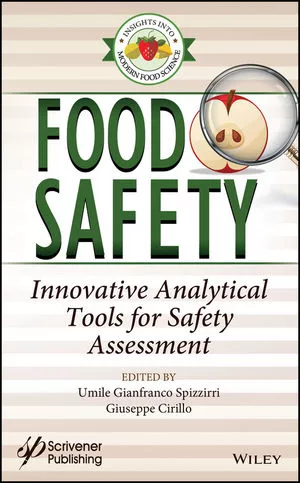
    Food Safety: Innovative Analytical Tools for Safety Assessment

  • 9781498721776.jpg

    Handbook of Food Processing: Food Safety, Quality, and Manufacturing Processes

See More Products

Related Directories

  • BD Food Safety Consultants LLC

    We are a Food Safety Training and Consulting firm located in Naperville, IL. Our primary goal is to provide with effective training and consulting solutions for Food Manufacturing and Distributing companies. Our training services include the following: FSPCA PCQI classes, IAVA Courses, IHA Accredited HACCP classes, FSVP Courses and Internal Auditor Training classes. We also offer Learning Management System for food manufacturing industry.
×

Never miss the latest news and trends driving the food safety industry

eNewsletter | Website | eMagazine

JOIN TODAY!
  • RESOURCES
    • Advertise
    • Contact Us
    • Directories
    • Store
    • Want More
  • SIGN UP TODAY
    • Create Account
    • eMagazine
    • eNewsletter
    • Customer Service
    • Manage Preferences
  • SERVICES
    • Marketing Services
    • Reprints
    • Market Research
    • List Rental
    • Survey/Respondent Access
  • STAY CONNECTED
    • LinkedIn
    • Facebook
    • Instagram
    • X (Twitter)
  • PRIVACY
    • PRIVACY POLICY
    • TERMS & CONDITIONS
    • DO NOT SELL MY PERSONAL INFORMATION
    • PRIVACY REQUEST
    • ACCESSIBILITY

Copyright ©2025. All Rights Reserved BNP Media.

Design, CMS, Hosting & Web Development :: ePublishing