Food Safety
search
Ask Food Safety AI
cart
facebook twitter linkedin instagram youtube
  • Sign In
  • Create Account
  • Sign Out
  • My Account
Food Safety
  • NEWS
    • Latest News
    • Sponsor Insights
    • Sponsored White Papers
  • PRODUCTS
  • TOPICS
    • Contamination Control
    • Food Types
    • Management
    • Process Control
    • Regulatory
    • Sanitation
    • Supply Chain
    • Testing and Analysis
  • PODCAST
  • EXCLUSIVES
    • Food Safety Five Newsreel
    • eBooks
    • FSM Distinguished Service Award
    • Interactive Product Spotlights
    • Videos
  • BUYER'S GUIDE
  • MORE
    • NEWSLETTERS >
      • Archive Issues
      • Subscribe to eNews
    • Store
    • ASK FSM AI
  • WEBINARS
  • FOOD SAFETY SUMMIT
  • EMAG
    • eMagazine
    • Archive Issues
    • Editorial Advisory Board
    • Contact
    • Advertise
  • SIGN UP!
Sponsored White Papers

Drew’s LLC Earns SQF 2000 Code of Food Safety

April 5, 2012


Today’s consumers are demanding safer, healthier foods. That demand moves down the chain with retailers and foodservice providers asking manufacturers to provide verifiable proof those food safety systems have been effectively implemented.

Drew’s LLC, which began operations in 1995, has taken this nationwide initiative to a high level with operational procedures and technologically innovative equipment specifically installed to meet rigid food safety guidelines.

To remain competitive in the demanding and highly scrutinized food industry, Drew’s achieved certification in early 2011 from the Safe Quality Food (SQF) Institute in meeting the SQF 2000 Code of Food Safety. This accomplishment was the culmination of employee training and facility improvements that took place during the second half of 2010 at the company’s Chester, Vermont processing and distribution center.

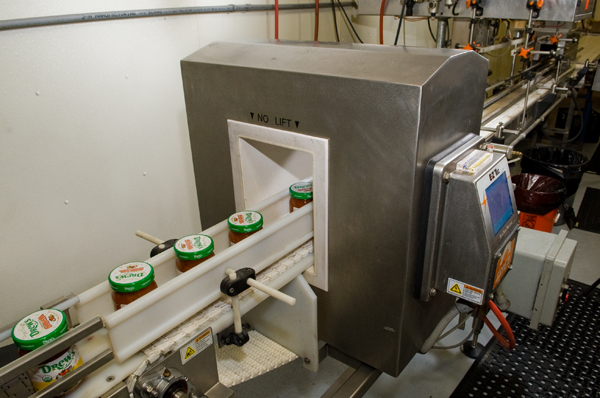
According to Chief Operating Officer John Cummings, certification was earned in part because the company installed an Eriez® E-Z Tec® DSP Liquid Line Metal Detector in November 2010 to detect metal contamination in their all-natural dressings and salsas prior to being bottled. Drew’s previously installed an aperture style E-Z Tec DSP Metal Detector at the end of its production line to inspect the capped bottles prior to being packaged in cartons and shipped to hundreds of stores. With the two metal detectors in place, Drew’s has double protection against any sort of metal particulate reaching customers.

“The SQF certification is important to independently verify our food safety procedures,” Cummings says. “We intend to maintain a leadership position in quality management systems and this achievement gives us a competitive advantage in the industry. We are confident in our ability to guarantee our products are of the highest quality.”

“There’s no question that the Eriez metal detectors helped us achieve the SQF certification,” he adds. “The products are some of our Critical Control Points and they make our inspection process much more robust and credible. The certification was a nice win for us and the Eriez metal detectors were a part of that.”

According to the SQF Institute, the Level 2 certification doesn’t stop at just assessing risk. SQF 2000 is about limiting food safety incidents and recalls. It’s also unique among certification programs in that it focuses on safety and quality, giving retailers and foodservice providers around the world even more reason to seek out manufacturers, processors and distributors that have earned SQF 2000 certification.

Chef Drew’s Inspiration
Drew’s LLC began in 1995 with a line of all natural salad dressings and marinades first offered at the prestigious Deerfield Inn in historic Deerfield, MA. Customers asked for bottles of the dressing to take home and the fledgling business began to grow. Within a year, regional natural food distributors picked up the line, making it available in hundreds of stores in the northeastern United States. In 1999, after outgrowing the initial production facility, the company opened a 40,000 square foot, state-of-the-art facility in Chester, VT, increasing production by 800 percent.

In 2001, Drew’s achieved organic certification for its production facility and that same year, the company introduced its line of all-natural salsas, including hot, medium and mild. In 2003, the original salsa varieties became USDA Certified Organic, while Drew’s introduced a fourth variety: double roasted salsa. Then in 2004, Drew’s was awarded registration by NSF International, the not-for-profit health and safety conformity assessment company, for complying with its stringent Food Manufacturing Practices.
Metal Detectors Bring another Level of Product Purity
Attention to foreign material prevention is a mainstay at Drew’s LLC. All natural and organic dressings and organic salsas flow through an Eriez E-Z Tec DSP Liquid Line Metal Detector to ensure the fresh product is free of metal contamination. When metal is detected in the product flow, a reject signal is channeled to one of the available output relays and is used to activate a reject ball valve.

Once the bottles are filled and capped before shipment, they are conveyed through an aperture style E-Z Tec DSP Metal Detector for further inspection. All bottles with plastic lids are sent through the metal detector, while some salsa bottles and jars with metal lids do not go through the E-Z Tec, according to Cummings.

The Eriez E-Z Tec DSP Metal Detector is particularly useful in harsh environments because of its stainless steel design. The oscillator and receiving coils are wound on a rigid frame and encapsulated in a stainless steel shell. The control is housed in a water-tight, dust-tight and corrosion-resistant stainless steel enclosure (NEMA-4X).

One benefit of the DSP is the ease of operation and set-up with the touch screen (1/4 VGA) interface. The 4” × 5” wide angled control with backlit screen allows the user to quickly make changes to the metal detector without having to scroll through different menus. Numeric data and value entries are made through the on-screen keypad.

The DSP model also offers calibration verification; reject confirmation and quick recovery after detection of tramp metal. The compact cabinet design allows for installation where space is at a premium.

According to Cummings, metal contamination can enter the processing stage at various touch points, starting with supplier ingredients. “We use only the best suppliers, but sometimes contamination can occur with open bags and during the filling stage. That’s why the Eriez metal detectors give us an additional peace of mind and make sure we are meeting those Critical Control Points.”

Eriez is recognized as an authority in advanced technology for magnetic, vibratory and inspection applications. The company’s magnetic separation, metal detection, X-ray, materials feeding, screening, conveying and controlling equipment have application in the process, plastics, metalworking, packaging, recycling, mining, aggregate and textile industries. Eriez manufactures and markets these products through 12 international facilities located on six continents. For more information, call toll-free 888.300.ERIEZ (3743) within the U.S. and Canada. For online users, visit www.eriez.com or send e-mail to eriez@eriez.com.


Author(s): Eriez

Looking for quick answers on food safety topics?
Try Ask FSM, our new smart AI search tool.
Ask FSM →


Share This Story

Recommended Content

JOIN TODAY
to unlock your recommendations.

Already have an account? Sign In

  • people holding baby chicks

    Serovar Differences Matter: Utility of Deep Serotyping in Broiler Production and Processing

    This article discusses the significance of Salmonella in...
    Meat/Poultry
    By: Nikki Shariat Ph.D.
  • woman washing hands

    Building a Culture of Hygiene in the Food Processing Plant

    Everyone entering a food processing facility needs to...
    Food Prep/Handling
    By: Richard F. Stier, M.S.
  • graphical representation of earth over dirt

    Climate Change and Emerging Risks to Food Safety: Building Climate Resilience

    This article examines the multifaceted threats to food...
    Risk Assessment
    By: Maria Cristina Tirado Ph.D., D.V.M. and Shamini Albert Raj M.A.
Manage My Account
  • eMagazine Subscription
  • Subscribe to Newsletters
  • Manage My Preferences
  • Website Registration
  • Subscription Customer Service

More Videos

Sponsored Content

Sponsored Content is a special paid section where industry companies provide high quality, objective, non-commercial content around topics of interest to the Food Safety Magazine audience. All Sponsored Content is supplied by the advertising company and any opinions expressed in this article are those of the author and not necessarily reflect the views of Food Safety Magazine or its parent company, BNP Media. Interested in participating in our Sponsored Content section? Contact your local rep!

close
  • Darkling Beetle
    Sponsored byElanco Animal Health

    Integrated Pest Management: Protecting Poultry Operations as Seasons Change

  • NEVIFIT 3 Compartment BPA-FREE
    Sponsored byCorbion

    The Risks of Ready-to-Eat: Five Ways to Protect Today's Prepared Meals

  • a group of workers in a food production facility
    Sponsored bySkillUp by Registrar Corp

    How to Build a Better Training Program: Data and Insights from the Global Food Safety Training Survey

Popular Stories

half full baby bottle next to rubber duckie on white surface

Organic Infant Formulas Caused Back-to-Back Botulism Outbreaks—What Gives?

Darkling Beetle

Integrated Pest Management: Protecting Poultry Operations as Seasons Change

June26 eBook Cover

eBook | Building a Skilled and Capable Workforce in the Food Industry

building a skilled workforce ebook

Events

June 30, 2026

FSMA 204 in Practice: Building a Traceability-Ready Operation

Live: June 30, 2026 at 11:00 am EDT: Attend this webinar to learn how food businesses can move from fragmented records toward a more reliable approach for recall response, FDA requests, and supply chain visibility.

July 21, 2026

Using AI Responsibly in Food Safety Management Systems

Live: July 21, 2026 at 2:00 pm EDT: This webinar will provide participants with guidance on how to effectively use generative artificial intelligence (AI) tools to develop key components of a food safety management system (FSMS).

August 6, 2026

Beyond Sanitation: Understanding the Hidden System Conditions That Allow Pathogens to Persist

Live: August 6, 2026 at 2:00 pm EDT: Attend this webinar to learn strategies for strengthening environmental control programs through a layered approach to pathogen management.

View All

Products

Global Food Safety Microbial Interventions and Molecular Advancements

Global Food Safety Microbial Interventions and Molecular Advancements

See More Products

Related Articles

  • Graeter’s Ice Cream Earns Level 2 SQF 2000 Certification

    See More
  • restaurant manager talking to servers

    The Synergy Between Food Safety Management and Food Safety Culture in the Governance of Food Safety

    See More
  • FSS news generic image

    We R Food Safety! names VP of Food Safety & Quality Operations

    See More

Related Products

See More Products
  • 1444333348.jpg

    Handbook of Food Safety Engineering

  • 9781498721776.jpg

    Handbook of Food Processing: Food Safety, Quality, and Manufacturing Processes

  • 1119053595.jpg

    Food Safety for the 21st Century: Managing HACCP and Food Safety throughout the Global Supply Chain, 2E

See More Products

Events

View AllSubmit An Event
  • July 22, 2025

    Beyond the Binder: Digital Management of Food Safety

    On Demand: During this webinar, attendees will learn best practices for the use of digital food safety management systems across industry and regulatory agencies.
View AllSubmit An Event

Related Directories

  • Saldesia "Goddess of Food Safety"

    Saldesia is a distributor of Food Safety products and solutions. We are focused on supplying the Quality, Production, Safety and Sanitation departments. Product lines include Color Coded, Metal Detectable, Antimicrobial Flooring & Mats, Workwear, Footwear, Spray Nozzles, and more!
  • Food Safety and Quality Consultants LLC

    Food Safety and Quality Consultants, LLC (FSQC) is a professional full-service food safety and quality consulting firm offering a complete line of training, consulting, and auditing services to meet your needs. We will help you turn the complicated into compliance by making your food safety systems simple and effective!
  • BD Food Safety Consultants LLC

    We are a Food Safety Training and Consulting firm located in Naperville, IL. Our primary goal is to provide with effective training and consulting solutions for Food Manufacturing and Distributing companies. Our training services include the following: FSPCA PCQI classes, IAVA Courses, IHA Accredited HACCP classes, FSVP Courses and Internal Auditor Training classes. We also offer Learning Management System for food manufacturing industry.
×

Never miss the latest news and trends driving the food safety industry

Newsletters | Website | eMagazine

JOIN TODAY!
  • RESOURCES
    • Advertise
    • Contact Us
    • Directories
    • Store
    • Want More
  • SIGN UP TODAY
    • Create Account
    • eMagazine
    • Newsletters
    • Customer Service
    • Manage Preferences
  • SERVICES
    • Marketing Services
    • Reprints
    • Market Research
    • List Rental
    • Survey/Respondent Access
  • STAY CONNECTED
    • LinkedIn
    • Facebook
    • Instagram
    • X (Twitter)
  • PRIVACY
    • PRIVACY POLICY
    • TERMS & CONDITIONS
    • DO NOT SELL MY PERSONAL INFORMATION
    • PRIVACY REQUEST
    • ACCESSIBILITY

Copyright ©2026. All Rights Reserved BNP Media, Inc. and BNP Media II, LLC.

Design, CMS, Hosting & Web Development :: ePublishing