FDA Begins Year-Long Assignment to Test Romaine Lettuce for Pathogens
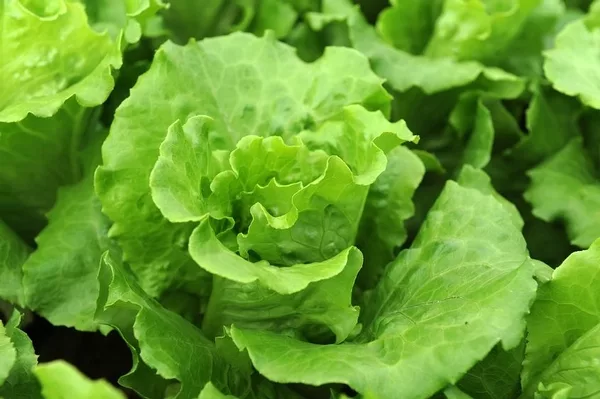
The U.S. Food and Drug Administration (FDA) is conducting a small, focused assignment to collect samples of raw agricultural commodity (RAC) romaine lettuce to test for Salmonella spp. and pathogenic Escherichia coli (also known as Shiga Toxin-producing E. coli or STEC), microbial hazards repeatedly linked to foodborne illnesses associated with romaine lettuce consumption. The assignment begins this month (November 2019) and is expected to last one year.
Why is the FDA conducting this assignment?
The FDA is conducting this assignment following multiple outbreaks of foodborne illness associated with the consumption of romaine lettuce. In 2018, the United States experienced two large multistate outbreaks of E. coli 0157:H7 infections associated with the consumption of romaine lettuce: one in the spring; the other, in the fall. Both prompted nationwide public health advisories. In addition, the agency in October reported on a recent outbreak of E. coli O157:H7 infections that involved 23 illnesses in 12 states and which was suspected to be attributable to romaine lettuce consumption. Salmonella spp. are commonly responsible for foodborne illness outbreaks associated with the consumption of fresh produce in the United States, and in 2012 the nation experienced a multistate outbreak of Salmonella Newport infections associated with the consumption of romaine lettuce.
Consistent with the FDA’s mission to protect consumers, if one of the target pathogens is detected as a result of this assignment, the agency will perform whole-genome sequencing of the microorganism’s DNA to determine its virulence and whether it is genetically related to isolates causing human illness. Determining the genetic relatedness of pathogens isolated from food sources and clinical isolates helps the FDA, the U.S. Centers for Disease Control and Prevention (CDC), and state public health agencies develop targeted investigations into foodborne illness outbreaks. This assignment is intended to help the FDA, CDC, and state public health agencies to identify sources of contamination and factors that may be contributing to them, so that they can be addressed.
What samples will be collected?
The FDA plans to collect RAC romaine lettuce, including trimmed or washed lettuce in its natural form prior to processing. No fresh-cut processed products will be collected or analyzed. Sampling of RAC romaine lettuce before it is commingled during fresh-cut processing or before preparation at point of service where it may be commingled with other produce enables the FDA to quickly trace the lettuce to its point of origin when samples test positive for the presence of a human pathogen.
What hazards will you test for?
The FDA will test the samples collected for Salmonella spp. and pathogenic Escherichia coli (E. coli), also known as Shiga Toxin-producing E. coli (STEC). The agency also will perform whole-genome sequencing on the pathogens it detects.
Where will the samples be collected?
The agency plans to prioritize sampling at FDA registered facilities and farms identified by traceback from 2017 to present amid foodborne illness outbreaks for which romaine lettuce was confirmed or suspected to be the food vehicle. This domestic sampling assignment may include wholesalers, foodservice distribution centers, and commercial cooling and cold storage facilities, including on-farm holding facilities. Samples will only be collected after harvest and not from farm fields.
When will you collect samples?
The agency plans to collect samples from November 2019 to November 2020, throughout the year, with increased frequency in March/April and October/November, the transition periods for the California (Central Coast and Central Valley) to/from the Imperial/Yuma Valley growing regions, when foodborne illness outbreaks associated with romaine lettuce consumption have most frequently occurred. Samples will be collected Mondays through Thursdays, to allow time for shipment and help forestall any delay with respect to the testing.
How many samples will you collect?
The FDA plans to collect 270 samples in all. Each sample will consist of 10 subsamples, with each subsample weighing a minimum of 300 grams. This approach—the collection and testing of samples composed of multiple subsamples—is more reflective of actual conditions, and it increases the odds of finding pathogens if present, given that microbial hazards may not be uniformly present. Accordingly, if one subsample tests positive for a target pathogen, the FDA will regard the entire sample as positive for the organism.
How will the samples be collected?
Consistent with the FDA’s standard approach, agency field staff will collect all samples aseptically to prevent contamination during the collection process. The FDA’s aseptic sampling methods, which entail the use of sterile implements and containers, and prescribed collection procedures, are published in the agency’s Investigations Operations Manual (Chapter 4; SubChapter 4.3).
Samples will be held and shipped at refrigeration temperature. Agency field staff will ship samples in insulated transport container(s) with cooling media. Given that romaine lettuce is highly perishable, all shipment will occur overnight via a next-day courier service.
Per the Investigations Operations Manual (Chapter 4; Sub-Chapter 4.4), FDA field staff will collect information such as the name and address of the product manufacturer and/or distributor, the collection site, photographs of the product label, the food identification code (lot codes), and supply chain information.
What test methods will the FDA use?
In testing for pathogenic E. coli, FDA analysts will follow the methods in Chapter 4A of the FDA’s Bacteriological Analytical Manual (BAM). In testing for Salmonella spp., FDA analysts will follow the methods in BAM Chapter 5.
How soon after sample collection will the FDA provide the test results?
The FDA understands that some firms may opt to hold product pending notification of test results. In all cases the FDA will notify the firm of the test results as soon as possible following the completion of the testing.
Notification of test results generally will occur within three to four days following sample collection (i.e., for negative results and cannot-rule-out initial findings). If the agency detects a cannot-rule-out initial finding, notification of final results may take up to an additional seven days.
The FDA also will perform whole-genome sequencing on the pathogens it detects and then upload the data to the public sequence repository, which generally takes up to an additional week. The agency routinely notifies firms of the results of the bioinformatic analysis of the sequence data, which may include communicating linkages to clinical illness or other food or environmental isolates.
Follow-up and enforcement
If the FDA detects Salmonella spp. or pathogenic E. coli in a sample, the agency will notify the firm of the findings and work with the firm to take appropriate action to protect the public health. The FDA encourages voluntary corrective action and, in all cases, seeks to employ an approach of “educate before and while we regulate.” For samples traced back to a farm in a state that holds a grant with the FDA under the State Produce Implementation Cooperative Agreement Program, the FDA will work with the state to coordinate any necessary follow-up at the farm. The agency may consider multiple compliance and enforcement actions based on the available evidence and the adequacy of the firm’s response to prevent future contamination. Enforcement activities include actions to correct and prevent violations and to remove violative food from the market, as appropriate.
Looking for quick answers on food safety topics?
Try Ask FSM, our new smart AI search tool.
Ask FSM →