Food Safety
search
Ask Food Safety AI
cart
facebook twitter linkedin
  • Sign In
  • Create Account
  • Sign Out
  • My Account
Food Safety
  • NEWS
    • Latest News
    • White Papers
  • PRODUCTS
  • TOPICS
    • Contamination Control
    • Food Types
    • Management
    • Process Control
    • Regulatory
    • Sanitation
    • Supply Chain
    • Testing and Analysis
  • PODCAST
  • EXCLUSIVES
    • Food Safety Five Newsreel
    • eBooks
    • FSM Distinguished Service Award
    • Interactive Product Spotlights
    • Videos
  • BUYER'S GUIDE
  • MORE
    • ENEWSLETTER >
      • Archive Issues
      • Subscribe to eNews
    • Store
    • Sponsor Insights
    • ASK FSM AI
  • WEBINARS
  • FOOD SAFETY SUMMIT
  • EMAG
    • eMagazine
    • Archive Issues
    • Editorial Advisory Board
    • Contact
    • Advertise
  • SIGN UP!
SanitationCleaners/SanitizersSSOPs

10 Reasons Why You Should Be Using Chlorine Dioxide
February 1, 2005

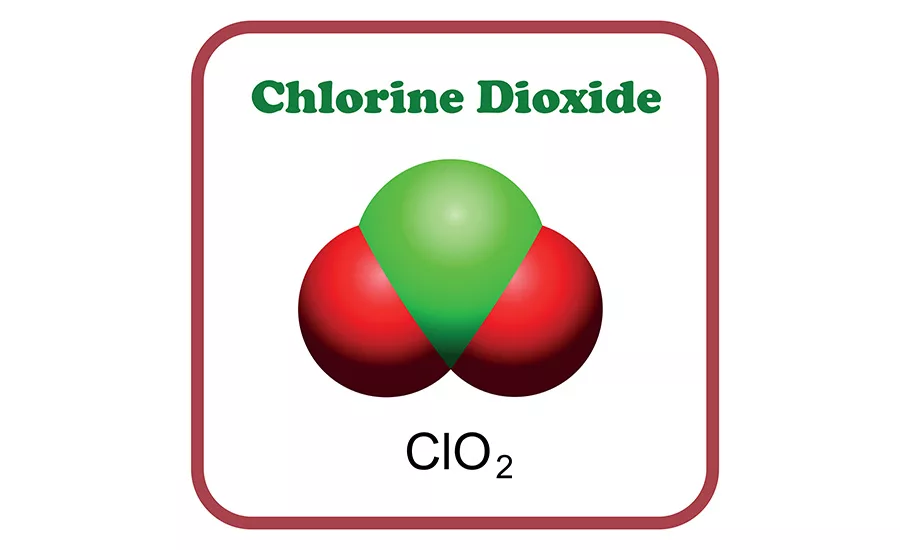
Chlorine dioxide is one powerhouse sanitizer that is getting more attention recently as food processors look for more efficacious products to help them win the sanitation battle. Approved by the U.S. Food and Drug Administration (FDA) and the U.S. Environmental Protection Agency (EPA), it is as powerful as peracetic acid and more economical, yet it has far less of an impact on the environment than quaternary ammonium salts, chlorine or bromine, making it an excellent choice for food processing plants. It costs about the same to use as other sanitizers but is more versatile and less harmful. It’s also been shown to destroy and prevent biofilms, one of the biggest challenges to food processors in destroying harmful bacteria. It also does not have the strong odor or corrosive qualities associated with chlorine.

It is a versatile alternative that can be used in many sanitation applications, including pasteurization equipment, heat exchangers, cooling towers, hard surface disinfecting, potable water treatment and deodorizing stacks in rendering plants. It is already growing in popularity as a tool to control microbiological growth in the dairy industry, the beverage industry, the fruit and vegetable processing industries, canning plants, and in poultry and beef facilities.

“Everybody in the food processing industry is looking for better cleaning and sanitation processes,” says Fred Holzhauer, Director of Business Development with Birko Corp., a leading specialty chemical manufacturer that provides a product line of more than 200 cleaning and sanitizing chemicals and application equipment to the meat, poultry, microbrewery and food industries.

“Chlorine dioxide eliminates sources and transfers of harmful pathogens in the food plant and attacks biofilms that form on equipment and other food-contact surfaces—all while doing less harm to the environment than other choices that do not have comparable strength.” Chlorine dioxide is the answer, says Holzhauer. Here are 10 reasons why:

  1. Chlorine dioxide has 2.6 times the oxidizing power of waterborne chlorine (from bleach), giving it a wide spectrum of sanitizing uses and making it extraordinarily effective against a host of bugs. Studies have shown that it produces as high as a 6-log reduction.
  2. Chlorine dioxide has a much wider pH spectrum than chlorine, making it more versatile and forgiving in a variety of application situations. Unlike chlorine, chlorine dioxide remains a true gas dissolved in solution. The lack of any significant reaction of chlorine dioxide with water is partly responsible for its ability to retain its biocidal effectiveness over a wide pH range. It also has limited reactions with organics, indicating that much more of the chlorine dioxide added to a system is available as a biocidal agent, and is not consumed to the degree that chlorine would be under the same circumstances. In addition, chlorine will react with, and be consumed by ammonia or any amine, while chlorine dioxide reacts very slowly with secondary amines, and sparingly with primary amines or ammonia.
  3. Chlorine dioxide is registered with EPA (Registration No. 74986-1), and is considered an excellent bactericide, fungicide and antimicrobial agent. It has passed the EPA’s stringent DIS/TISS guidelines for use as a disinfectant and as a food-contact surface sanitizer.
  4. The FDA and the U.S. Department of Agriculture (USDA) have approved stabilized sodium chlorite (a precursor) and chlorine dioxide in food processing plants for sanitizing and controlling bacteria and mold.
  5. Chlorine dioxide is currently under EPA review as a surface sanitizer for E. coli O157:H7 and drug-resistant Salmonella. It is also currently under EPA review as a viricide for HIV and Hepatitis A and for use as a fungicide, viricide, and algaecide.
  6. Chlorine dioxide has been found to be one of the most effective tools for dispersing biofilms, and in some cases, inhibiting the formation of future biofilms. This function is especially valuable in the small cooling towers of food processing facilities where food product contamination can contribute to heavy films or algal slimes. Biofilm is a polysaccharide film or coating that protects and harbors viable bacteria colonies making surfaces more difficult to clean and disinfect.
  7. Chlorine dioxide can be used on food-contact surfaces at diluted concentrations as low as 5 parts-per-million (ppm). In some cases, the compound has demonstrated a rapid kill of bacteria much less than the 30-minute period typically used in disinfection studies. Because it is so powerful in such small amounts, it is also extremely economical.
  8. So far, problem cells have shown little ability to develop resistance to chlorine dioxide, as they can with other sanitizers, making it a consistent tool in the sanitation toolbox.
  9. Chlorine dioxide generating systems can be used for odor control, sanitation and water purification applications. Birko Corp. offers an exclusive ClO2 generation system, which eliminates older, conventional “vacuum draw” technology, for outstanding consistency, accuracy and practical yield.
  10. Unlike chlorine bleach and bromide, which make carcinogenic trihalomethanes that get washed down the drain and deposited in the environment, chlorine dioxide donates oxygen, breaking down to water, oxygen and common table salt. This makes it much less corrosive to equipment and a superb environmental choice. It also breaks down quickly, which means it won’t harm the soil or add toxic deposits to the ground.

“Chlorine dioxide has such a wide spectrum of uses,” Holzhauer says. “It’s got amazing firepower, it’s economical, and its environmental profile is safer than other choices. There’s nothing else out there that can compete.”


Birko: www.birko.com

Author(s): Birko

Looking for quick answers on food safety topics?
Try Ask FSM, our new smart AI search tool.
Ask FSM →


Share This Story

Recommended Content

JOIN TODAY
to unlock your recommendations.

Already have an account? Sign In

  • people holding baby chicks

    Serovar Differences Matter: Utility of Deep Serotyping in Broiler Production and Processing

    This article discusses the significance of Salmonella in...
    Testing & Analysis
    By: Nikki Shariat Ph.D.
  • woman washing hands

    Building a Culture of Hygiene in the Food Processing Plant

    Everyone entering a food processing facility needs to...
    Management
    By: Richard F. Stier, M.S.
  • graphical representation of earth over dirt

    Climate Change and Emerging Risks to Food Safety: Building Climate Resilience

    This article examines the multifaceted threats to food...
    Best Practices
    By: Maria Cristina Tirado Ph.D., D.V.M. and Shamini Albert Raj M.A.
Manage My Account
  • eMagazine Subscription
  • Subscribe to eNewsletter
  • Manage My Preferences
  • Website Registration
  • Subscription Customer Service

More Videos

Sponsored Content

Sponsored Content is a special paid section where industry companies provide high quality, objective, non-commercial content around topics of interest to the Food Safety Magazine audience. All Sponsored Content is supplied by the advertising company and any opinions expressed in this article are those of the author and not necessarily reflect the views of Food Safety Magazine or its parent company, BNP Media. Interested in participating in our Sponsored Content section? Contact your local rep!

close
  • Salmonella bacteria
    Sponsored byThermoFisher

    Food Microbiology Testing Methods: Salmonella species

  • a diagram explaining indicator organisms
    Sponsored byHygiena

    How Proactive Listeria Testing Helps Prevent Six- and Seven-Figure Recalls

  • woman grocery shopping
    Sponsored byCorbion

    Designing Safety Into Every Bite: Proactive Risk Mitigation for Refrigerated Foods

Popular Stories

baby eating bottle

Infant Botulism Spike Exceeds 100 Cases, Extent of ByHeart's Involvement Unclear

NRTE breaded stuffed chicken

USDA Indefinitely Delays Enforcement of Salmonella as Adulterant in Raw Breaded, Stuffed Chicken

digital map of europe

EU Publishes Food Fraud Tool Mapping Thousands of Cases Since 2016

Events

December 11, 2025

How to Develop and Implement an Effective Food Defense Strategy

Live: December 11, 2025 at 2:00 pm EDT: From this webinar, attendees will learn common areas where companies encounter challenges in their food defense strategies and how to address them.

May 11, 2026

The Food Safety Summit

Stay informed on the latest food safety trends, innovations, emerging challenges, and expert analysis. Leave the Summit with actionable insights ready to drive measurable improvements in your organization. Do not miss this opportunity to learn from experts about contamination control, food safety culture, regulations, sanitation, supply chain traceability, and so much more.

View All

Products

Global Food Safety Microbial Interventions and Molecular Advancements

Global Food Safety Microbial Interventions and Molecular Advancements

See More Products

Related Articles

  • X-ray Inspection

    Five Reasons Why You Need X-Ray Inspection

    See More
  • The Top 10 Reasons Why I Couldn’t Keep Sanitation People

    See More
  • Top Reasons Sanitarians Fear Sanitation Software–and Why Those Fears are Unfounded

    See More

Related Products

See More Products
  • 1118396308.jpg

    High Throughput Analysis for Food Safety

  • 9781498721776.jpg

    Handbook of Food Processing: Food Safety, Quality, and Manufacturing Processes

  • 1118474600.jpg

    Practical Food Safety: Contemporary Issues and Future Directions

See More Products

Related Directories

  • Pureline Solutions

    We are the experts in the manufacture, generation, and application of chlorine dioxide. PureLine specializes in designing and implementing chlorine dioxide solutions utilizing our broad line of proved chlorine dioxide generators and pre-cursor chemicals. In locations across the nation and around the world, PureLine’s patented and proven high purity chlorine dioxide generation equipment is enhancing the safety, reliability, efficiency, and cost-effectiveness of the water treatment process.
  • CDG Environmental

    CDG Solution 3000TM is a ready-to-use liquid chlorine dioxide product designed to control microorganisms over a wide spectrum of applications. Compared to traditional anti-microbials, CDG Solution 3000TM offers ease of application, safety in handling, and superior effectiveness. CDG Solution 3000 is a patented, EPA approved hard-surface disinfectant.
×

Never miss the latest news and trends driving the food safety industry

eNewsletter | Website | eMagazine

JOIN TODAY!
  • RESOURCES
    • Advertise
    • Contact Us
    • Directories
    • Store
    • Want More
  • SIGN UP TODAY
    • Create Account
    • eMagazine
    • eNewsletter
    • Customer Service
    • Manage Preferences
  • SERVICES
    • Marketing Services
    • Reprints
    • Market Research
    • List Rental
    • Survey/Respondent Access
  • STAY CONNECTED
    • LinkedIn
    • Facebook
    • Instagram
    • X (Twitter)
  • PRIVACY
    • PRIVACY POLICY
    • TERMS & CONDITIONS
    • DO NOT SELL MY PERSONAL INFORMATION
    • PRIVACY REQUEST
    • ACCESSIBILITY

Copyright ©2025. All Rights Reserved BNP Media.

Design, CMS, Hosting & Web Development :: ePublishing